
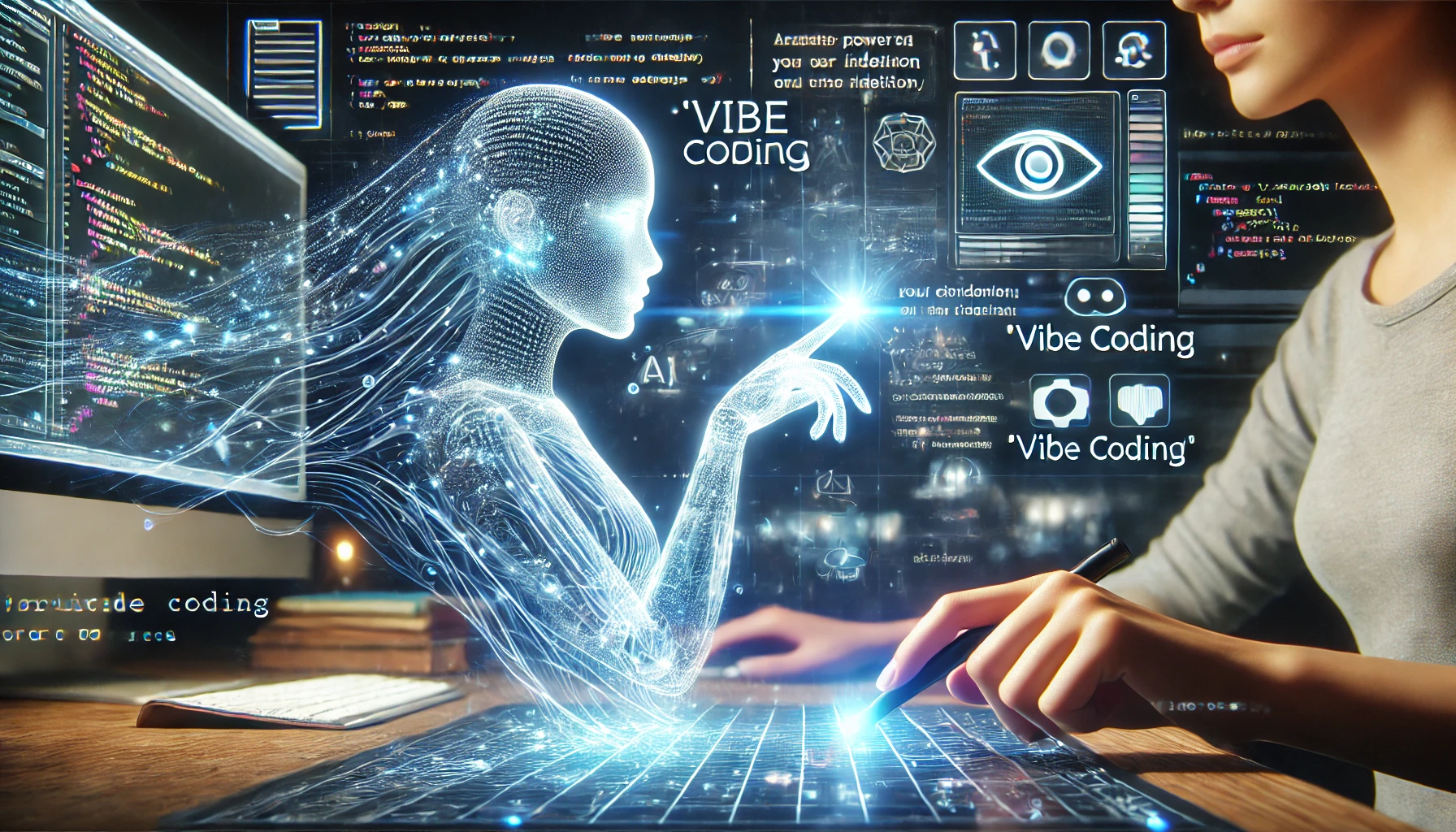
Imagine describing what you want an app to do in plain language, and AI instantly turns your words into working code. This futuristic concept, known as "vibe coding," is quickly becoming a reality, raising an intriguing question: Is AI making everyone a programmer?
What Is "Vibe Coding"?
"Vibe coding" refers to a new wave of AI-assisted development where users interact with code intuitively rather than through traditional syntax-heavy programming. Instead of meticulously writing lines of code, people simply describe their intent, and AI-powered coding assistants generate, refine, and debug the necessary scripts.
Tech companies like OpenAI, Meta, and Google have been at the forefront of this movement, developing tools that allow users to build websites, automate tasks, or even create AI applications—without deep programming knowledge.
Can Anyone Be a Coder Now?
Proponents argue that AI-driven coding tools could democratize software development, allowing more people to build digital solutions:
-
Entrepreneurs can prototype apps without hiring developers.
-
Artists and designers can create interactive experiences without needing to learn JavaScript or Python.
-
Students and educators can use AI-generated scripts to enhance learning, without spending years mastering syntax.
"It's like having an expert coder sitting next to you, translating your ideas into real software," says Alex Warren, an AI researcher specializing in human-computer interaction.
Does This Make Traditional Programming Obsolete?
Not exactly. While AI-powered coding tools make development more accessible, they still require human oversight to:
-
Ensure efficiency and optimization in code.
-
Maintain security and avoid vulnerabilities.
-
Adapt AI-generated code to complex, real-world applications.
Professional developers still play a crucial role in customizing, debugging, and maintaining AI-assisted projects. However, as AI continues to improve, the barrier to entry for coding is undeniably lowering.
The Future of "Vibe Coding"
As AI becomes more sophisticated, experts predict that:
-
Coding will shift from syntax-based to conceptual problem-solving.
-
AI-assisted development will accelerate software innovation.
-
Ethical and security challenges will emerge as AI-generated code becomes widespread.
For now, "vibe coding" is not replacing programmers—it’s expanding who can participate in software creation. Whether this means everyone is now a "programmer" is up for debate, but one thing is clear: AI is changing the game.