
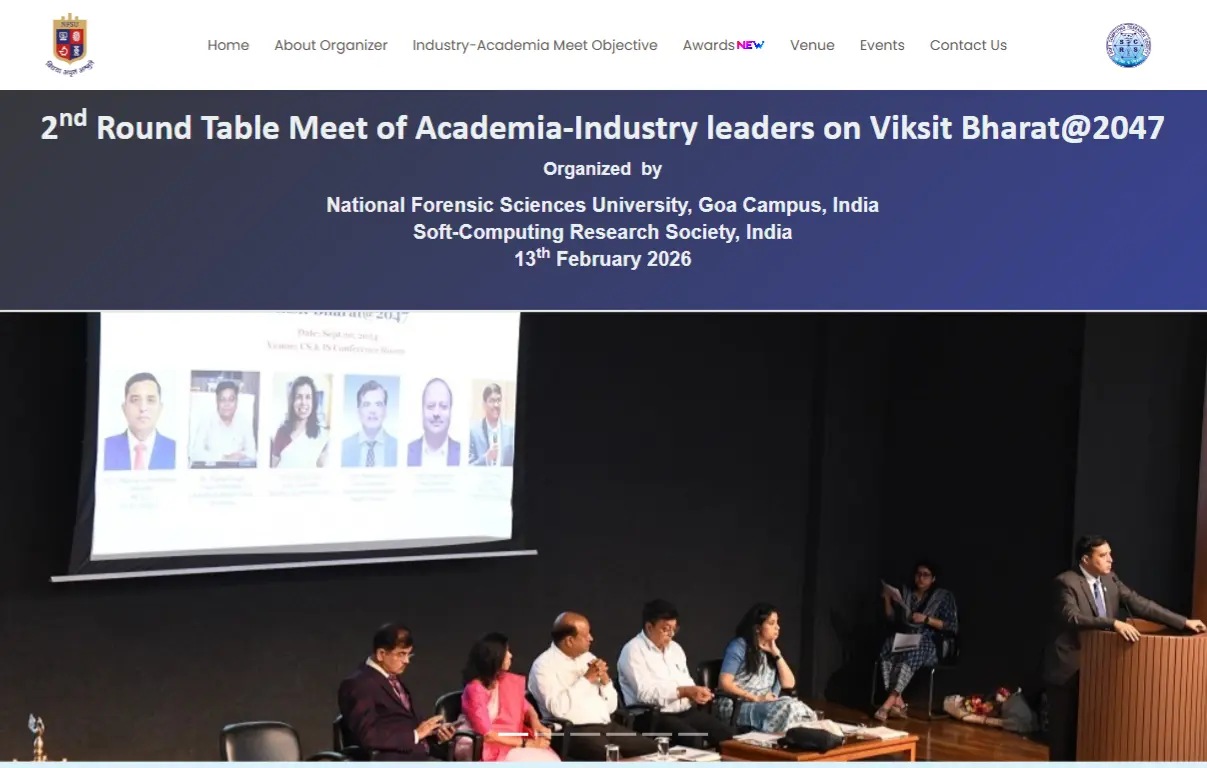
The Viksit Bharat @2047 Conference, convened by the Society for Civil Research and Services (SCRS), served as a strategic platform to examine India’s long-term development priorities as the country approaches 100 years of independence. The conference brought together experts from public policy, academia, industry, and civil society to discuss how India can transition into a developed economy through structural reforms and inclusive growth.
Economic Growth Anchored in Structural Reforms
Deliberations at the conference highlighted the need for sustained economic expansion driven by manufacturing, services, and innovation-led entrepreneurship. Speakers emphasised reforms in taxation, labour markets, and ease of doing business as essential to maintaining high growth rates while generating employment at scale. Strengthening MSMEs and boosting domestic value chains were also identified as key economic enablers.
Technology and Digital Public Infrastructure
A major focus area was the role of digital public infrastructure in accelerating development. Participants discussed how platforms such as digital identity, financial inclusion tools, and e-governance systems can improve service delivery and reduce inefficiencies. Emerging technologies including artificial intelligence, data analytics, and advanced connectivity were seen as critical to improving productivity across sectors.
Education, Skills and Human Capital Development
Experts underlined that India’s demographic advantage can only be realised through large-scale investments in education and skill development. Discussions centred on curriculum modernisation, vocational training, and industry-academia collaboration to align education outcomes with future workforce needs. Higher education and research were highlighted as pillars for innovation and global competitiveness.
Sustainability and Climate-Responsive Growth
Environmental sustainability formed a core theme of the conference agenda. Speakers stressed the importance of balancing economic growth with climate responsibility through renewable energy adoption, resource efficiency, and sustainable urban planning. Climate-resilient infrastructure and green finance were identified as long-term priorities for India’s development path.
Governance, Institutions and Policy Execution
Effective governance and strong institutions were repeatedly cited as critical to achieving the Viksit Bharat vision. Panel discussions focused on policy consistency, data-driven decision-making, and administrative capacity building. Strengthening cooperative federalism and empowering local governance bodies were also highlighted as necessary for last-mile delivery.
Youth Engagement and Citizen Participation
The conference placed special emphasis on the role of youth and citizen engagement in nation-building. Participants called for greater inclusion of young professionals, researchers, and entrepreneurs in policy dialogues, viewing them as both contributors and beneficiaries of India’s long-term development goals.
Building Consensus for a Shared National Vision
Concluding sessions stressed that achieving the Viksit Bharat @2047 objective will require alignment across government, private sector, academia, and civil society. The conference advocated sustained collaboration, continuous policy review, and research-backed interventions to translate long-term vision into measurable outcomes.