
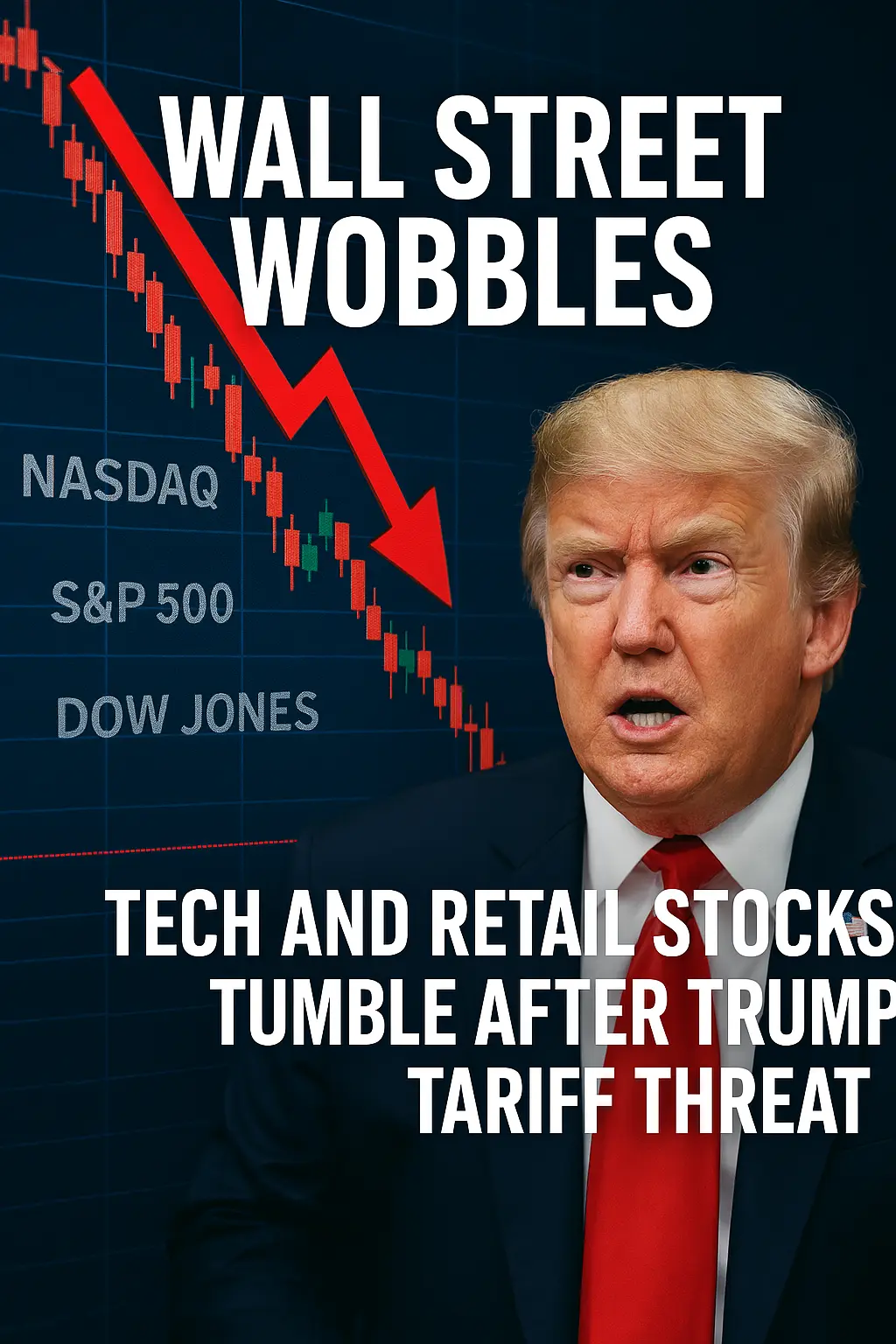
Markets plunged on Thursday as renewed trade tensions rattled investor confidence, with US tech and retail stocks bearing the brunt of the selloff. The sharp downturn followed former President Donald Trump’s surprise pledge to impose sweeping new tariffs on Chinese imports should he be re-elected in November.
In a fiery speech during a campaign rally in Ohio late Wednesday, Trump vowed to implement a 60% tariff on all goods from China, reigniting fears of a full-scale trade war. The announcement caught Wall Street off guard, triggering a broad selloff during Thursday’s trading session.
The Nasdaq Composite dropped 3.2%, marking its worst single-day decline since October 2023. The S&P 500 fell 2.1%, while the Dow Jones Industrial Average shed 1.8%, led by steep losses in consumer discretionary and technology sectors.
Tech Giants Take a Hit
Shares of major technology firms tumbled amid concerns that tariffs would disrupt global supply chains and increase operating costs. Apple Inc. fell over 4.5%, with analysts warning that the company’s heavy reliance on Chinese manufacturing makes it particularly vulnerable to punitive trade measures.
Other tech giants, including Nvidia, Microsoft, and Tesla, saw declines ranging between 3% and 6%. Semiconductor stocks were among the hardest hit, with the Philadelphia Semiconductor Index down nearly 5%.
“Investors are pricing in the potential return of a more aggressive trade posture, and the tech sector is directly in the crosshairs,” said Alicia Grant, senior analyst at Riverview Capital.
Retail Sector Slumps on Cost Fears
Retailers, especially those dependent on Chinese imports, saw sharp declines as well. Walmart and Target both dropped over 3%, while apparel brands such as Nike and VF Corporation faced steeper losses. Online giant Amazon saw its shares fall nearly 4%, reflecting broader concerns about higher import costs and squeezed margins.
“With the holiday inventory planning season approaching, the threat of tariffs is causing alarm in the retail industry,” said Dana Yates, an economist at the Retail Policy Forum. “Companies could face significant cost increases that may be passed onto consumers.”
Market Volatility Spikes
The CBOE Volatility Index (VIX), often referred to as Wall Street’s fear gauge, spiked 20% to its highest level in three months, signaling rising investor anxiety.
While the Federal Reserve has maintained a cautious approach on rate policy in recent months, some analysts suggest that resurgent geopolitical risks could complicate the economic outlook ahead of the summer.
Political, Economic Repercussions Loom
The tariff threat comes amid an already fragile global trade landscape. Though current President Joe Biden has maintained some of Trump’s prior tariffs on China, his administration has focused more on rebuilding alliances and supply chain resilience.
Trump’s latest pledge — part of a broader push to appear tough on China ahead of the 2024 election — threatens to undo some of that diplomatic work, potentially leading to retaliatory actions from Beijing.
In a statement Thursday, China’s Ministry of Commerce said it “firmly opposes” unilateral tariff threats and “will take all necessary measures to defend its interests.”
Outlook Uncertain
With Trump continuing to dominate Republican primary polls and the general election approaching, markets could face extended periods of uncertainty. Investors are now closely watching for additional policy signals from both campaigns.
“This is not just about tariffs anymore — it’s about the future of US-China economic relations,” said Mark Chen, head of global strategy at GoldLeaf Partners. “If we return to an era of tit-for-tat trade policies, the implications for global growth are profound.”
As the dust settles, analysts caution that volatility may remain elevated in the coming weeks, especially as corporate earnings season kicks off and the election narrative intensifies.