 TECH TIMES NEWS
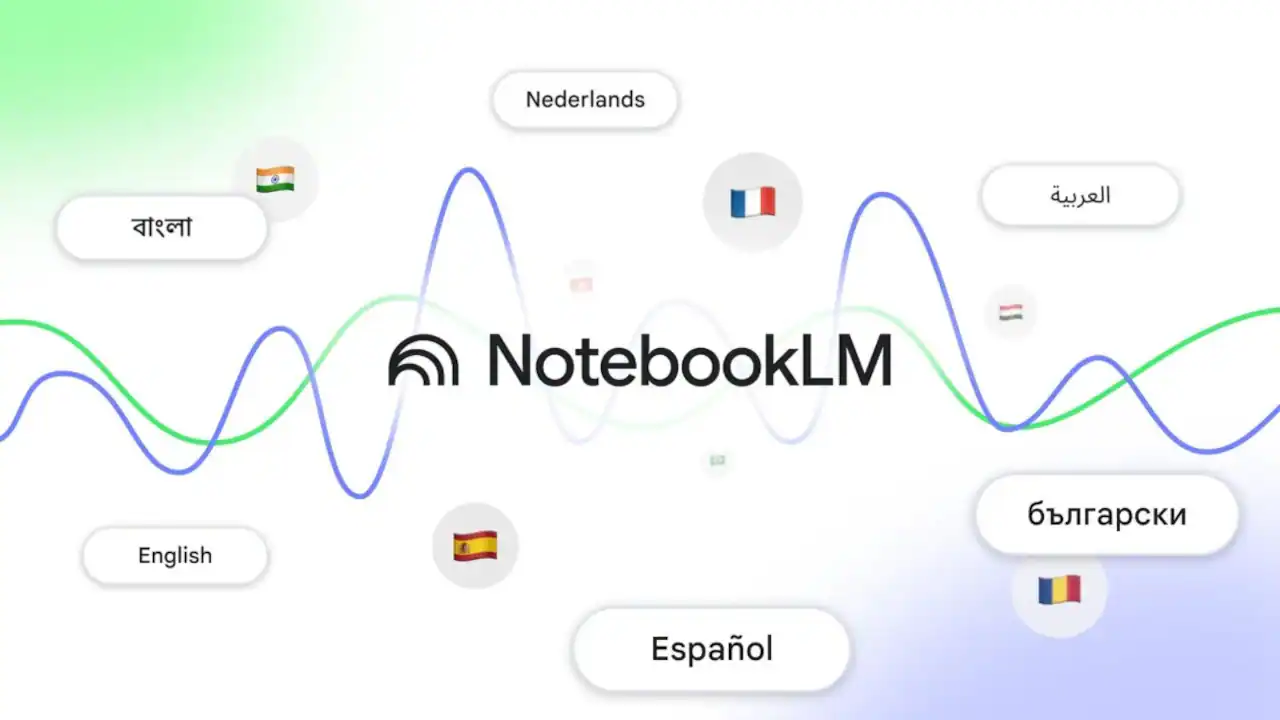
In a significant move toward global accessibility and inclusivity, Google has announced a major expansion of its AI-powered NotebookLM tool, now offering support for Hindi and more than 50 other languages. The enhancement focuses specifically on the “AI Overviews” feature, which has been at the heart of the tool’s user experience since its debut.
A Smarter Research Assistant
NotebookLM, initially launched in 2023 as an experimental product, is designed to function like a personalized research assistant. It allows users to upload their own content—such as notes, articles, research papers, or PDFs—and then leverages Google's large language models (LLMs) to summarize, explain, and synthesize information from these documents.
The “AI Overviews” feature, which uses generative AI to create concise summaries and contextual insights from user-provided sources, has until now been limited to English. With this latest update, users across a wide linguistic spectrum—including Hindi, Arabic, Bengali, Tamil, Spanish, Portuguese, and Swahili—will now be able to interact with the tool in their native languages.
Democratizing Knowledge Across Borders
Google’s expansion of language support aims to remove the language barrier for millions of users worldwide, enabling students, professionals, and researchers to benefit from AI-assisted learning and content comprehension.
"Language should not be a barrier to information," said a Google spokesperson in the official blog post. "By expanding NotebookLM’s AI Overviews to more languages, we’re helping users around the world organize and understand their information more effectively."
The new update is particularly significant for India, where Hindi is spoken by over 600 million people. With regional languages gaining increasing importance in digital platforms, Google’s inclusion of Hindi reflects the tech giant’s broader commitment to serving multilingual populations.
How It Works
The AI Overviews feature automatically pulls out key points, themes, and questions from the uploaded documents and presents them in a simplified format. Users can ask follow-up questions in their chosen language and receive responses contextualized within their uploaded content.
This update is especially useful in educational and research settings, where students and teachers often work with large volumes of material. The ability to ask questions or generate summaries in a native language opens the door to deeper understanding and better retention of complex concepts.
Privacy and Control at the Core
Google emphasized that user privacy remains a priority. NotebookLM works with user-provided content only, and none of the uploaded materials are used to train the underlying language models. This ensures that documents remain private and secure.
What’s Next for NotebookLM
Google hinted that further enhancements are in the pipeline. These include deeper integration with Google Workspace apps like Docs and Slides, more powerful summarization tools, and advanced citation support. There are also plans to expand accessibility features and fine-tune the language models for higher accuracy in low-resource languages.
Availability
The multilingual AI Overviews feature is being rolled out gradually and will be available in the latest version of NotebookLM on desktop and mobile web. Users can check the official NotebookLM website or Google’s support channels to see if the update has reached their region.
Conclusion
With this expansion, Google is reinforcing its position in the AI productivity space while making strides toward linguistic inclusion. As more users gain access to these intelligent tools in their native languages, the potential for democratized learning and knowledge sharing grows exponentially.