 TECH TIMES NEWS
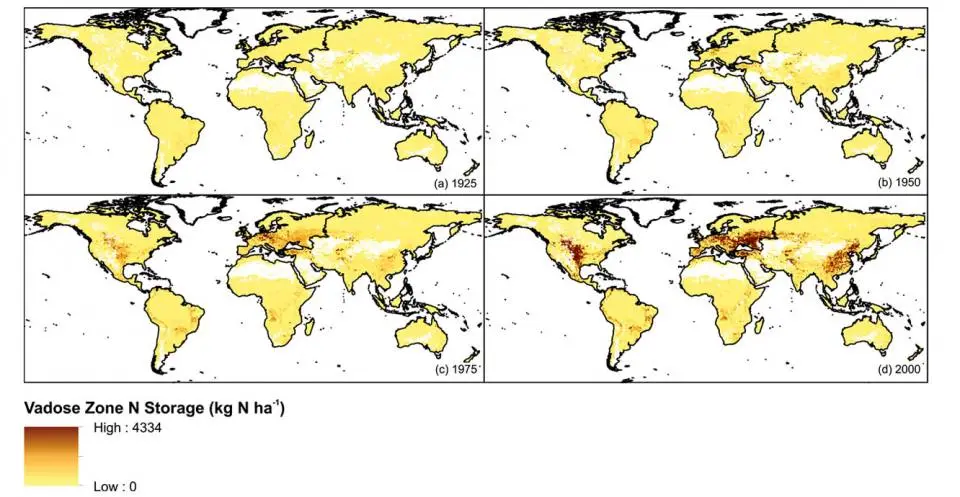
Nitrogen — a colorless, odorless gas that makes up nearly 78% of Earth’s atmosphere — has long been heralded as essential to life. It fuels plant growth, supports ecosystems, and lies at the core of the proteins and DNA that make up all living things. But in recent years, scientists and environmentalists are sounding the alarm on what some now call the “nitrogen paradox”: the very element that sustains life might also be quietly undermining the planet's health.
The Boon That Became a Burden
In its natural cycle, nitrogen moves harmlessly between the atmosphere, plants, animals, and soil in a delicate balance. However, the 20th century brought about a dramatic shift. The development of the Haber-Bosch process in the early 1900s — a method to synthesize ammonia from atmospheric nitrogen — revolutionized agriculture. Synthetic fertilizers fueled the Green Revolution, dramatically boosting crop yields and feeding billions.
But there’s a catch.
The overuse of these fertilizers, along with emissions from burning fossil fuels, has disrupted the nitrogen cycle. Excess nitrogen is now leaching into waterways, saturating soils, and drifting through the air in various reactive forms. Scientists argue this buildup is creating a cascade of ecological and health crises — from algal blooms to respiratory problems and even climate change.
The Eutrophication Epidemic
One of the most visible consequences of nitrogen overload is eutrophication — the over-enrichment of water bodies with nutrients, leading to explosive algae growth. These algal blooms deplete oxygen in the water, creating “dead zones” where aquatic life cannot survive.
According to recent data from the United Nations Environment Programme, over 400 such dead zones have been identified worldwide, some the size of small countries. The Gulf of Mexico, the Baltic Sea, and parts of China’s Yangtze River are among the worst-affected.
"The nitrogen runoff from farms and urban landscapes is slowly suffocating our coastal ecosystems," says Dr. Lila Khatri, a marine biologist at the Ocean Conservancy. "What we once considered a sign of progress is now a symptom of imbalance."
Invisible Threats in the Air
Nitrogen doesn’t just threaten water — it’s also a menace in the air we breathe. Nitrogen oxides (NOx), byproducts of fossil fuel combustion, are major contributors to smog and acid rain. Long-term exposure to NOx has been linked to asthma, lung disease, and cardiovascular issues, especially in urban and industrial areas.
Furthermore, nitrous oxide (N₂O), a lesser-known but potent greenhouse gas, is rising rapidly. With a global warming potential nearly 300 times that of carbon dioxide, N₂O is now the third most impactful greenhouse gas, primarily emitted by agricultural activities.
A Global Wake-Up Call
In response to the growing nitrogen crisis, a coalition of scientists recently called for a “nitrogen boundary” — a limit to human-induced nitrogen inputs to maintain planetary health. The concept echoes the broader "planetary boundaries" framework, which warns against exceeding safe limits for Earth’s vital systems.
“The nitrogen issue is a silent emergency,” says Dr. Johan Rockström, one of the authors of the framework. “It doesn’t make headlines like carbon emissions, but it’s just as urgent — and perhaps even more complex to manage.”
Some countries are beginning to act. The Netherlands has implemented strict nitrogen emission limits that have even halted major construction projects. In India, researchers are developing slow-release fertilizers to minimize leaching. And in the United States, several states have introduced buffer zones and nutrient management plans to curb runoff.
The Road Ahead: Balance or Breakdown?
As the world grapples with feeding a growing population and preserving planetary health, the nitrogen conundrum lies at the heart of the challenge. Solutions must straddle agriculture, industry, and climate policy — with cooperation from farmers, policymakers, and scientists alike.
The irony remains stark: the very element that underpins life may also be quietly destabilizing it.
Whether nitrogen becomes a tool for regeneration or remains a latent time-bomb depends on how swiftly and wisely we respond. The clock, like nitrogen in the soil and sky, is ticking.