 TECH TIMES NEWS
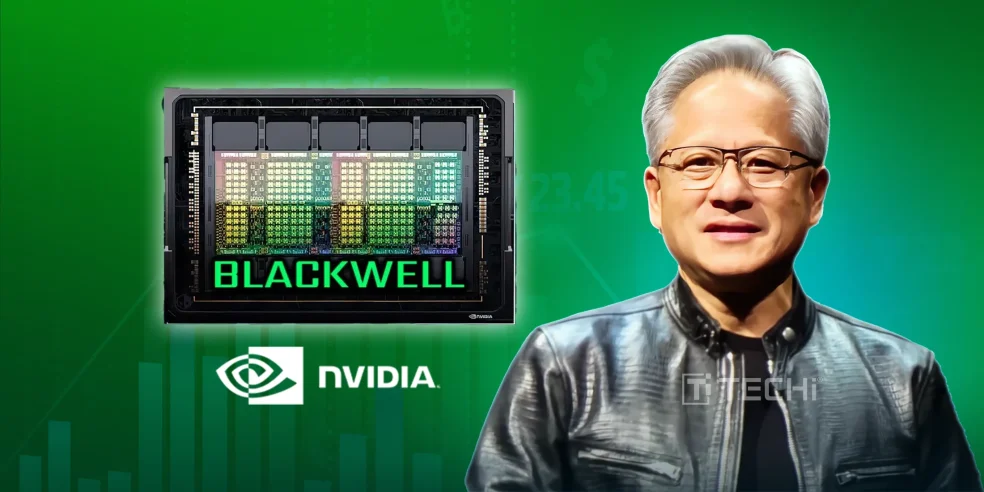
In a strategic response to continued U.S. export restrictions, Nvidia is reportedly preparing to launch a more affordable version of its Blackwell-series AI chip tailored for the Chinese market. This move marks Nvidia's latest adaptation to maintain its foothold in China, one of the world’s largest and fastest-growing markets for artificial intelligence hardware, despite intensifying geopolitical tensions.
A Strategic Pivot
According to industry insiders, Nvidia has developed a scaled-down version of its flagship Blackwell GPU—dubbed the B100CN or a similar variant—that complies with U.S. export regulations while still catering to the computing demands of Chinese tech firms. The chip is expected to deliver lower performance than its U.S.-market counterparts, such as the B100 and B200, but will still be optimized for AI workloads including large language model training, inference, and cloud services.
The design of this new chip is reportedly influenced by the lessons Nvidia learned from its previous H800 and A800 series, which were similarly created to replace restricted models like the A100 and H100 in China. Like its predecessors, the new Blackwell variant is expected to have reduced interconnect bandwidth and lower compute throughput to meet regulatory thresholds set by the U.S. Department of Commerce.
Maintaining Market Presence
The move highlights the growing challenges U.S. tech companies face in navigating export regulations while attempting to preserve market access in China. Nvidia, which derives a significant portion of its revenue from AI chip sales, has been under pressure since late 2022, when Washington imposed sweeping export controls to limit China's access to advanced semiconductor technology, citing national security concerns.
Despite these curbs, Chinese demand for AI chips remains robust. Domestic giants such as Alibaba, Tencent, Baidu, and ByteDance continue to build data centers and develop AI capabilities, fueling demand for high-performance accelerators. Nvidia's modified Blackwell chip aims to serve this market, even if it means compromising on peak performance.
Industry Implications
The release of the new chip underscores how major semiconductor firms are recalibrating their strategies in response to shifting geopolitical realities. Analysts suggest that while these restricted chips may offer lower performance, they still hold appeal due to Nvidia’s software ecosystem, particularly its CUDA platform and AI model optimization tools, which remain industry standards.
Meanwhile, the rise of domestic Chinese alternatives like Huawei’s Ascend series and Biren’s AI chips has introduced more competition, especially as government-backed projects push for technological self-reliance. Nvidia’s continued presence, even in a constrained form, reflects its determination to remain relevant in a rapidly evolving market.
What’s Next?
Details on the chip’s official name, specifications, and launch date have not yet been disclosed, but sources expect an announcement by mid-2025. Nvidia is also likely to unveil accompanying software updates and strategic partnerships with Chinese cloud providers to support deployment.
While geopolitical tensions show little sign of easing, Nvidia’s move illustrates a growing trend: Western tech firms are finding creative ways to thread the needle between regulatory compliance and global market demand.
As the AI race intensifies, the battle over chip supremacy is being redrawn—not just in terms of silicon, but in how companies adapt to the rules of an increasingly divided digital world.