 TECH TIMES NEWS
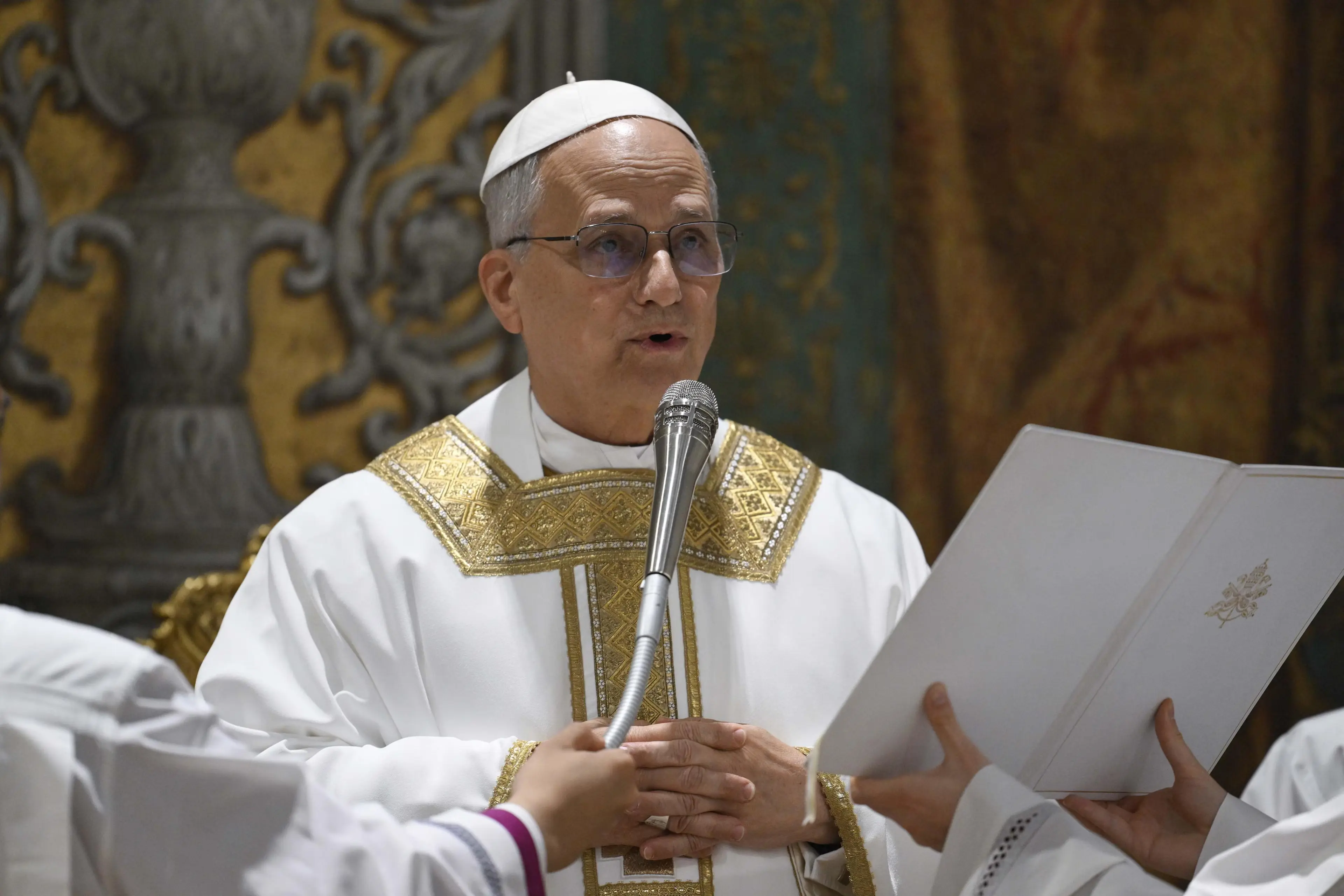
In a landmark address delivered at the Vatican today, Pope Leo XIV urged religious leaders and global policymakers to assert stronger moral and ethical oversight over artificial intelligence, framing the moment as a “crossroads for humanity’s conscience.”
Speaking to a crowd gathered in St. Peter’s Square and millions watching via livestream, the Pontiff emphasized that while artificial intelligence offers “unparalleled promise for innovation and welfare,” it also harbors “the seeds of profound spiritual and societal disruption” if left unchecked.
“The rise of machines capable of autonomous thought challenges not only our laws but our very understanding of personhood, dignity, and divine purpose,” Pope Leo XIV declared. “Faith must have a voice in this technological renaissance.”
A Vatican First: Framework for AI Ethics
The address marked the release of a 38-page Vatican white paper titled Custodians of Creation: Faith in the Age of AI, which outlines a theological and ethical framework for how the Church—and by extension, other faith traditions—might engage with AI technologies.
The document calls for:
-
AI systems to be designed and deployed in ways that uphold human dignity and avoid exploitation;
-
International regulation to prevent AI from becoming tools of surveillance, discrimination, or warfare;
-
Faith-based ethics committees to work alongside scientists and tech companies;
-
Education initiatives to equip clergy and laypeople with a better understanding of AI’s impact.
The white paper, prepared by the Pontifical Academy for Life in cooperation with leading ethicists and engineers, is the first formal Church doctrine to address AI in such detail.
Global Christian Response
Pope Leo’s address has reverberated across the Christian world. Within hours, Archbishop Elijah Mensah of the Anglican Church in Ghana praised the Pope’s “visionary leadership,” adding that the African Council of Churches would convene to discuss adapting the Vatican’s guidelines to local contexts.
In the United States, the National Association of Evangelicals released a statement of cautious agreement. “AI must not become an idol of efficiency or dominance,” said Rev. Maria Torres, a spokesperson for the organization. “We echo the Pope’s call for discernment, humility, and justice.”
Meanwhile, the Eastern Orthodox Patriarch of Constantinople, Bartholomew II, signaled willingness to collaborate on an interdenominational ethical charter. “Technology must not alienate us from God’s image, but rather bring us closer to one another,” he said in a televised message from Istanbul.
Tech Industry Reacts
The tech community’s response has been mixed. Executives from several major AI firms, including a spokesperson from NeuralNetix, said they welcomed “constructive moral dialogue” but warned against “overregulation that might stall innovation.”
Privately, some Silicon Valley insiders expressed concern about religious institutions encroaching on what they view as a scientific domain. However, others acknowledged the potential of faith communities to shape more humane AI policies.
Bridging Faith and Algorithms
This is not the first time Pope Leo XIV has waded into contemporary debates. Since his election in 2023, the 86-year-old Pontiff—once a theologian specializing in moral philosophy—has spoken frequently about climate change, digital addiction, and economic justice in the era of automation.
But today’s speech may prove to be the most influential of his papacy.
“Artificial intelligence is not merely a tool,” Pope Leo said in closing. “It is a mirror. And what we see in it will reflect the values we choose to encode. Let us choose love, truth, and the dignity of every soul.”