 TECH TIMES NEWS
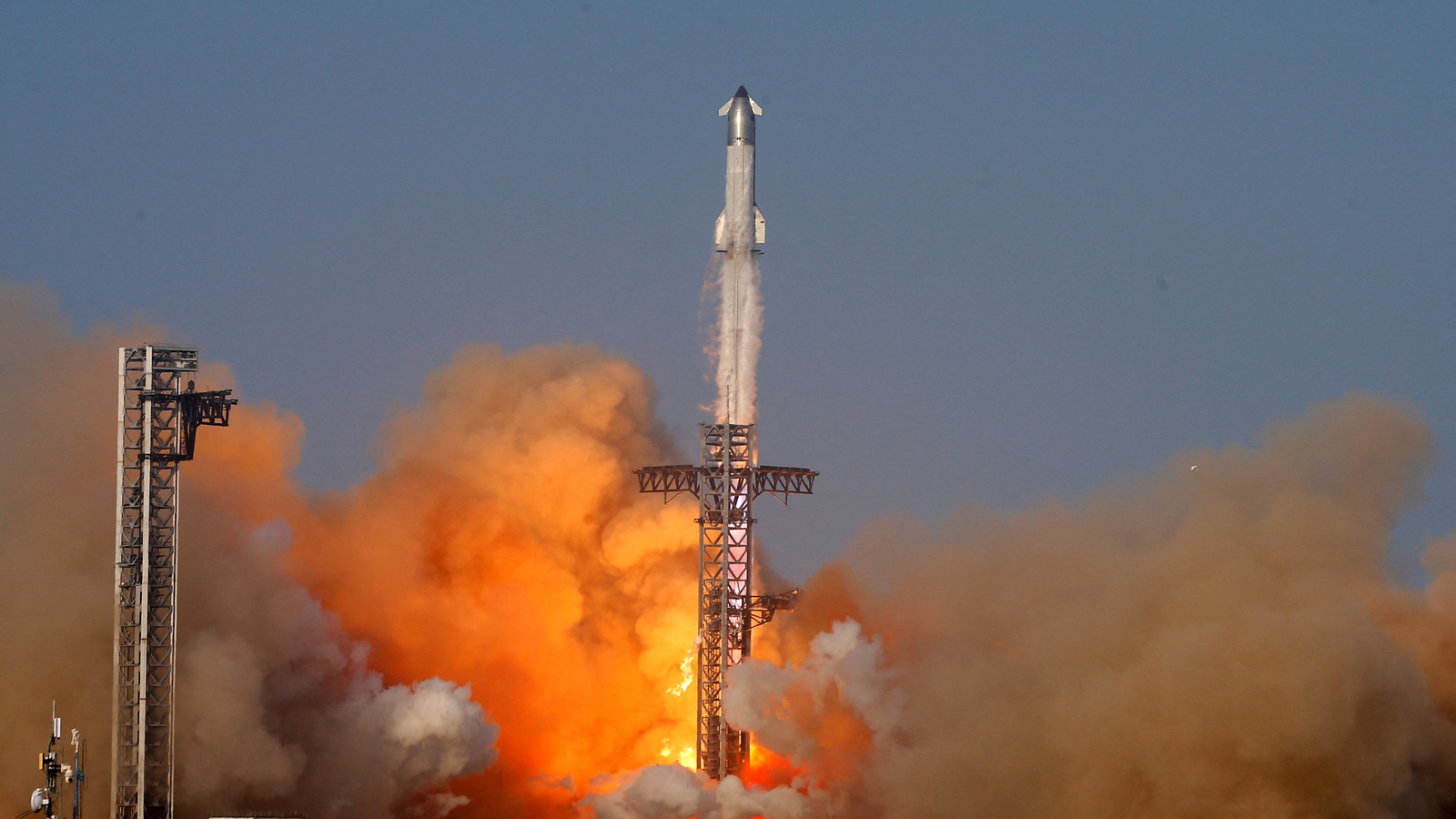
In yet another dramatic milestone for SpaceX’s ambitious deep-space program, the company’s massive Starship rocket experienced a high-altitude failure and disintegrated over the Indian Ocean during its fourth integrated flight test. Though the mission achieved several new performance benchmarks, the ultimate destruction of the spacecraft underscored the immense engineering challenges involved in building a fully reusable launch system for interplanetary travel.
A Mixed Outcome for Starship’s Fourth Test
The test launch, which took place from SpaceX’s Starbase facility in Boca Chica, Texas, initially proceeded according to plan. The 120-meter-tall Starship, mounted atop its Super Heavy booster, lifted off at around 8:50 a.m. local time. Both stages separated successfully — a critical step in the vehicle’s development that has been improved over the course of previous flights.
The Super Heavy booster completed a controlled descent and executed a water landing in the Gulf of Mexico, marking progress in SpaceX’s effort to recover and reuse the booster.
However, problems arose later in the flight. Starship’s upper stage continued its planned suborbital trajectory toward a targeted splashdown zone in the Indian Ocean. About 49 minutes into the mission, SpaceX lost telemetry contact with the vehicle. Live footage showed the rocket tumbling before breaking apart, suggesting it succumbed to aerodynamic or structural stresses as it reentered Earth’s atmosphere at hypersonic speeds.
SpaceX later confirmed that the Starship had been destroyed during reentry.
Signs of Progress Despite Failure
Although the upper stage failed to complete its return, SpaceX and its founder Elon Musk have characterized the mission as a partial success. The company managed to test several new systems, including improved heat shield tiles, Raptor engine configurations, and software upgrades meant to improve guidance and control.
“We got far enough to collect invaluable data,” said a SpaceX engineer during the livestream. “This is how we learn. This is how we make Starship better.”
Musk echoed that sentiment in a post on X (formerly Twitter), emphasizing that every flight brings the company closer to launching cargo — and eventually humans — to the Moon, Mars, and beyond.
Regulatory and Strategic Implications
The Federal Aviation Administration (FAA) is expected to work with SpaceX to investigate the anomaly and determine the cause of the vehicle’s failure. While the outcome may delay future launches, SpaceX’s iterative testing approach is fundamentally designed to accept — and learn from — such explosive setbacks.
NASA, which has tapped Starship to land astronauts on the Moon as part of the Artemis III mission, is closely monitoring the rocket’s progress. With the crewed lunar landing tentatively scheduled for late 2026, Starship’s performance remains a critical variable in the space agency’s timeline.
Looking Ahead
Despite the fiery ending to this latest flight, SpaceX remains undeterred. Engineers are already preparing hardware for Starship’s fifth test, expected later this year. The company has made rapid progress in building and testing successive prototypes, using each failure as a data-rich stepping stone.