 TECH TIMES NEWS
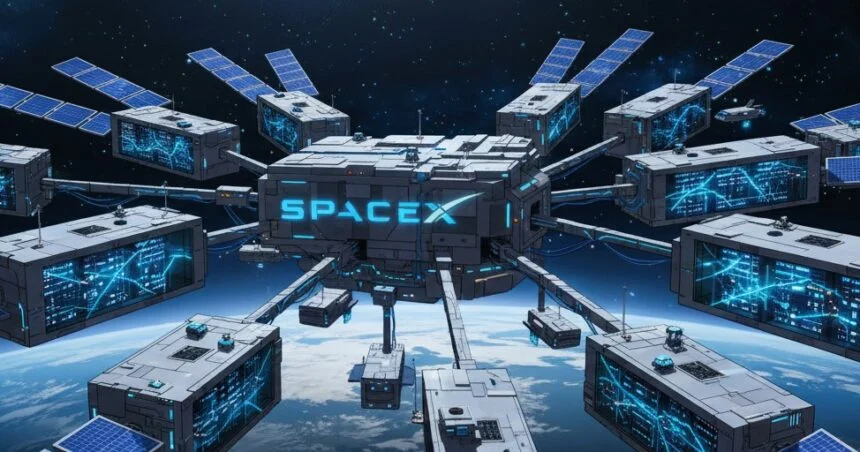
SpaceX is reportedly exploring the idea of deploying orbital data centres—server infrastructure hosted in space, potentially integrated with its Starlink satellite network. The concept aims to deliver ultra-low latency services, enhance global connectivity, and support the rapidly growing demand for AI-driven computing.
At a time when terrestrial data centres are under pressure from energy consumption, land constraints, and cooling limitations, moving infrastructure into orbit may seem like a futuristic solution. However, industry experts caution that this vision comes with significant technical and economic risks.
Lessons from Microsoft’s Project Natick
The idea of placing data centres in extreme environments is not new. Microsoft’s Project Natick, launched in 2015, tested underwater data centres submerged off the coast of Scotland.
While the project demonstrated some advantages—such as improved energy efficiency and reduced hardware failure rates due to stable underwater conditions—it was ultimately discontinued as a scalable solution. Key issues included:
- High deployment and retrieval costs
- Limited accessibility for maintenance and upgrades
- Complex logistics for global scaling
These challenges offer a cautionary blueprint for SpaceX’s orbital ambitions.
Extreme Environment, Extreme Challenges
Operating a data centre in space introduces a new level of complexity. Unlike underwater environments, space presents:
1. Thermal Management Constraints
Cooling servers in space is significantly harder. Without air or water, heat dissipation relies on radiative cooling, which is less efficient and requires advanced engineering solutions.
2. Radiation Exposure
Cosmic radiation can damage sensitive hardware, increasing the risk of data corruption and system failures. Shielding adds weight—directly impacting launch costs.
3. Maintenance Limitations
Repairing or upgrading hardware in orbit is far more difficult than servicing terrestrial or underwater systems. Even with robotics, maintenance missions would be expensive and infrequent.
The Economics May Not Add Up
Beyond technical feasibility, the financial model remains uncertain. Launching and maintaining infrastructure in orbit is orders of magnitude more expensive than building land-based data centres.
Although SpaceX has significantly reduced launch costs with reusable rockets, experts argue that:
- Capital expenditure per server unit remains high
- Return on investment is unclear without mass adoption
- Competition from improving terrestrial edge computing could limit demand
In contrast, land-based data centres continue to evolve with renewable energy integration and advanced cooling technologies, narrowing the gap that space-based systems aim to fill.
Potential Use Cases Still Exist
Despite the challenges, orbital data centres are not without merit. They could serve niche but critical applications, such as:
- Military and secure communications
- Real-time satellite data processing
- Remote regions with limited connectivity
- AI inference closer to data generated in space
These specialized use cases may justify smaller-scale deployments, even if large-scale commercial adoption remains uncertain.
Regulatory and Space Traffic Concerns
Another overlooked hurdle is regulation. Deploying data centres in orbit raises questions around:
- Space debris and congestion
- International data governance laws
- Cybersecurity risks in space-based infrastructure
As low Earth orbit becomes increasingly crowded, adding large-scale computing infrastructure could intensify space traffic management challenges.
The Bigger Picture: Innovation vs Practicality
SpaceX’s orbital data centre concept reflects a broader trend—pushing computing closer to where data is generated. However, history suggests that engineering ambition must align with economic and operational realities.
Microsoft’s Project Natick proved that even technically successful experiments can fall short commercially. SpaceX now faces a similar test: whether its expertise in launch and satellite systems can overcome the fundamental constraints of operating infrastructure in extreme environments.
Conclusion: A High-Risk, High-Reward Bet
SpaceX’s vision of orbital data centres is undeniably bold, aligning with the company’s track record of redefining space technology. Yet, the challenges—ranging from thermal physics to cost economics—are substantial.
For now, the concept remains promising but unproven. Whether it becomes the next leap in cloud computing or joins the list of ambitious experiments like Project Natick will depend on how effectively SpaceX can balance innovation with practicality.
Takeaway: Moving data centres to space may sound revolutionary, but without solving fundamental engineering and cost barriers, the idea risks repeating past experiments—just in a more extreme environment.