 TECH TIMES NEWS
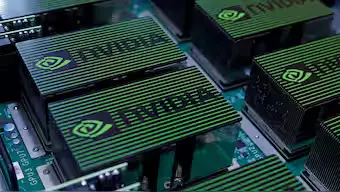
Despite strict US export restrictions on advanced AI hardware, Nvidia is still legally allowed to sell certain chips to China. Washington’s rules are designed to block access to cutting-edge AI accelerators that could be used for military or strategic purposes—not to impose a blanket prohibition on all semiconductor exports. As a result, Nvidia can ship modified or lower-performance processors that comply with US regulations.
China Remains a Critical Market for Nvidia
China has historically contributed a significant share of Nvidia’s data-centre revenue. Walking away entirely would mean billions of dollars in lost sales and weaker global market positioning. By offering compliant alternatives, Nvidia protects its commercial interests while staying within the boundaries set by US authorities.
Custom Chips Are Designed to Meet Compliance
To navigate the rules, Nvidia has created specially tailored versions of its AI chips for the Chinese market. These variants are deliberately capped in performance—such as reduced interconnect speeds or limited computing throughput—so they fall below export control thresholds. While less powerful than Nvidia’s flagship chips, they remain valuable for cloud services, research, and commercial AI workloads.
Regulators Allow Sales to Preserve US Industry Influence
US policymakers are aware that an outright cutoff could accelerate China’s domestic chip development. Allowing limited sales helps US companies retain some influence in the Chinese tech ecosystem and prevents local rivals from completely replacing American suppliers. This balancing act aims to slow China’s access to top-tier AI hardware without fully severing economic ties.
Chinese Tech Firms Still Need Nvidia’s Ecosystem
Even with rising competition from local chipmakers, Nvidia’s software stack—especially CUDA—remains deeply embedded in AI development. Chinese companies continue to prefer Nvidia-compatible hardware for ease of deployment, developer support, and compatibility with global AI tools, making compliant Nvidia chips an attractive option.
Geopolitics and Business Continue to Collide
The renewed flow of Nvidia chips to China highlights the tension between national security and global commerce. While export controls are likely to tighten further, complete disengagement remains unlikely in the near term. For now, Nvidia is threading a narrow path—selling what it can, where it can, without crossing regulatory red lines.