 TECH TIMES NEWS
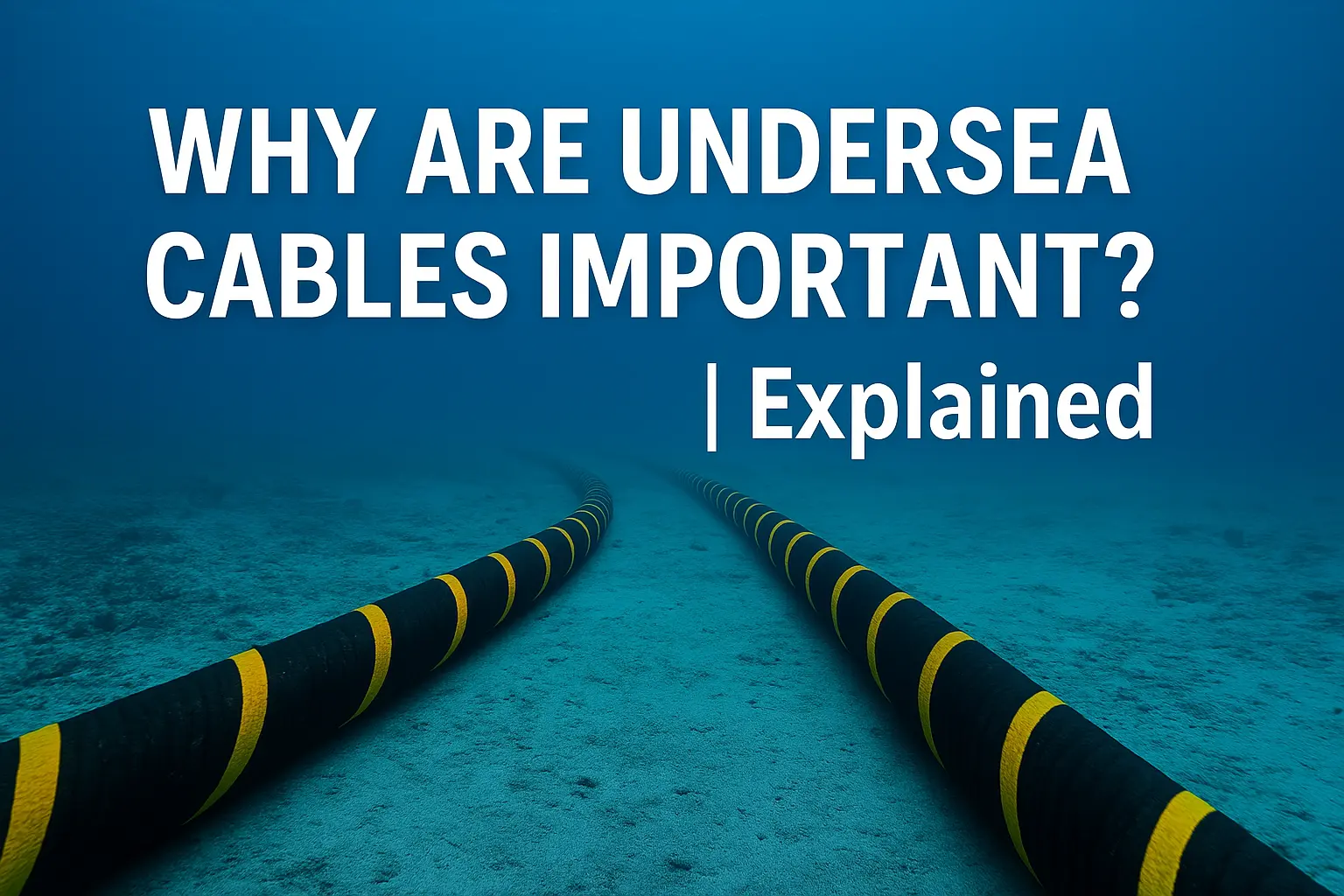
In an age where digital connectivity powers economies, businesses, and daily life, undersea cables remain one of the most critical yet underappreciated components of global infrastructure. These submarine fiber-optic cables form the backbone of the internet, carrying over 95% of global data traffic across continents. Despite advancements in satellite technology, undersea cables remain faster, more reliable, and cost-effective, making them indispensable for modern communication.
How Do Undersea Cables Work?
Undersea cables are fiber-optic cables laid on the ocean floor, stretching thousands of kilometers to connect different countries and regions. They use light signals to transmit data at incredibly high speeds, enabling instant communication between continents. These cables are typically installed by specialized ships, which carefully lower them into place, ensuring they follow the safest and most efficient route under the ocean.
Why Are They So Important?
-
Powering the Global Internet
Nearly all international internet traffic—including emails, video calls, cloud computing, and financial transactions—relies on undersea cables. Without them, global connectivity would slow down significantly. -
Supporting Financial Systems
Stock markets, banking systems, and real-time transactions depend on fast, secure data transfers. Financial hubs like New York, London, and Tokyo rely on submarine cables for high-frequency trading and seamless global banking. -
Facilitating Business and Cloud Services
Tech giants like Google, Microsoft, Amazon, and Facebook invest heavily in undersea cables to support their cloud computing services, streaming platforms, and AI-driven technologies. -
National Security and Geopolitical Influence
Governments see undersea cables as strategic assets. Many nations are investing in cable security and alternative routes to reduce reliance on foreign networks and prevent cyber threats. -
Resilience Against Natural Disasters
Unlike satellites, which can be affected by space weather and have limited bandwidth, undersea cables provide more stable and scalable internet infrastructure, especially for disaster-prone regions.
Challenges and Vulnerabilities
Despite their advantages, undersea cables face multiple risks:
-
Physical Damage: Ships, fishing activities, and natural disasters like earthquakes can damage cables, leading to disruptions in internet service.
-
Cybersecurity Threats: Nations and cybercriminals are increasingly targeting undersea cables for espionage and data interception.
-
Geopolitical Tensions: Countries are racing to control key undersea cable routes, especially in regions like the South China Sea and Arctic Ocean.
The Future of Undersea Cables
With the demand for faster and more secure internet growing, the future of undersea cables is expanding rapidly. New projects, such as Google’s Equiano cable in Africa and Meta’s 2Africa project, are set to improve connectivity in underserved regions. Additionally, advancements in AI-driven network management and quantum encryption aim to make undersea cables even more secure and efficient.
Conclusion
While satellites and wireless technologies continue to evolve, undersea cables remain irreplaceable in global communication. As the world becomes more dependent on digital infrastructure, ensuring the security, expansion, and resilience of these cables will be key to sustaining the internet-driven economy.