 TECH TIMES NEWS
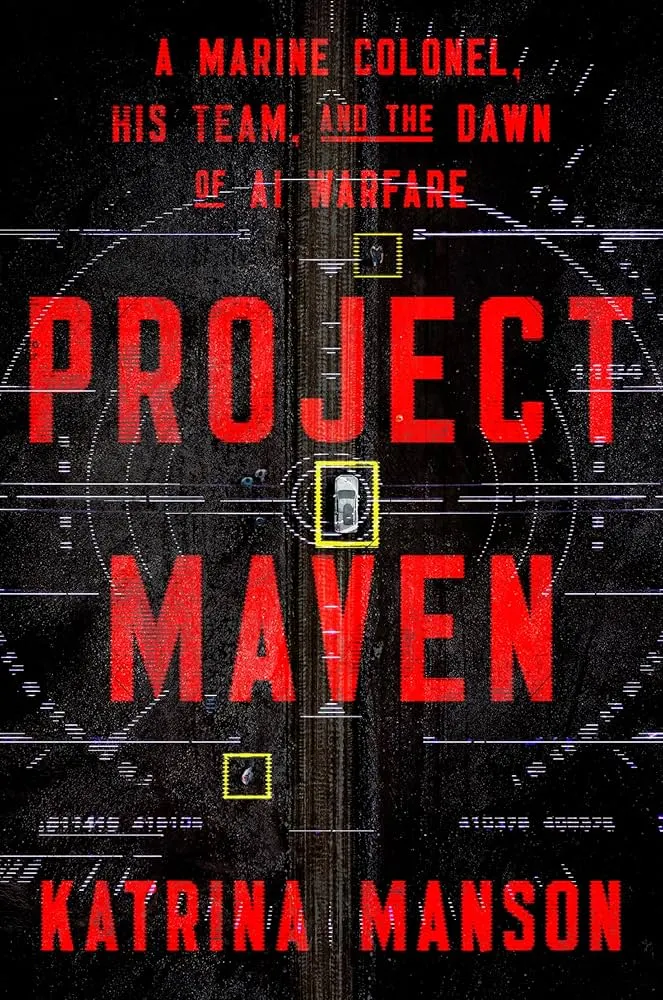
Project Maven, officially known as the Algorithmic Warfare Cross-Functional Team, was launched by the U.S. Department of Defense (DoD) in 2017. Its core objective was straightforward but urgent: process the overwhelming volume of surveillance data generated by military drones.
Modern warfare produces massive amounts of video intelligence (Full Motion Video - FMV). Human analysts were struggling to keep up. Maven was designed to bridge that gap using machine learning and computer vision, helping analysts detect objects, track movements, and identify potential threats faster and more accurately.
The takeaway: Maven is less about replacing humans and more about scaling intelligence analysis in data-heavy combat environments.
How Project Maven Works in Practice
At its core, Project Maven uses AI models trained on visual data to recognize patterns in drone footage. These systems can:
- Detect objects such as vehicles, buildings, or weapons
- Classify activity patterns (e.g., suspicious movement)
- Flag footage for human review
This creates a human-in-the-loop system, where AI filters and prioritizes data, but final decisions remain with human operators.
Technically, it relies on:
- Deep learning models (CNNs) for image recognition
- Cloud computing infrastructure for scalable processing
- Continuous model training using real-world combat data
The result: analysis time reduced from hours to minutes in some cases, significantly improving operational efficiency.
Big Tech Meets the Battlefield: The Google Controversy
Project Maven became globally controversial in 2018 when it was revealed that Google was providing AI technology to the Pentagon.
Thousands of Google employees protested, arguing that their work should not contribute to warfare. The backlash led to:
- Google declining to renew its contract
- The company publishing its AI ethical guidelines, restricting certain military uses
This moment marked a turning point in tech-industry ethics, raising a key question:
Should private tech companies build tools for military applications?
Ethical and Legal Concerns: The Debate Intensifies
Project Maven sits at the heart of a growing debate around AI in warfare. Key concerns include:
1. Autonomy vs Human Control
While Maven currently supports human decision-making, critics worry about a gradual shift toward fully autonomous weapons systems.
2. Bias and Accuracy Risks
AI systems can make errors, especially in complex environments. Misidentification in a military context can have life-or-death consequences.
3. Accountability
If an AI-assisted decision leads to civilian harm, who is responsible — the operator, the developer, or the system?
4. Global AI Arms Race
Countries like China and Russia are heavily investing in military AI, increasing pressure on the U.S. to accelerate programs like Maven.
Operational Impact: What Has Changed So Far
Despite controversy, Project Maven has delivered measurable results:
- Faster intelligence processing in combat zones
- Reduced cognitive load on analysts
- Improved surveillance accuracy in certain scenarios
The DoD has since expanded its AI initiatives under broader frameworks like the Joint Artificial Intelligence Center (JAIC) and later the Chief Digital and AI Office (CDAO).
The takeaway: Maven is not a standalone project anymore—it’s part of a larger AI-driven defense ecosystem.
The Future of AI in Warfare: Where Maven Leads
Project Maven is widely seen as a prototype for next-generation military systems. Its trajectory points toward:
- Integration with autonomous drones and robotics
- Real-time battlefield decision support systems
- Multi-domain AI across air, land, sea, cyber, and space
However, its evolution will depend heavily on:
- International regulations on AI weapons
- Public and industry pushback
- Advances in AI safety and explainability
Bottom Line: Why Project Maven Matters
Project Maven represents a fundamental shift in how wars are fought and decisions are made. It highlights both the power and the risks of AI in high-stakes environments.
For readers, the key takeaway is clear:
AI is no longer a future concept in defense—it is already embedded in modern warfare, and its role is only expanding.
The real question isn’t whether AI will shape warfare, but how responsibly it will be deployed.