 TECH TIMES NEWS
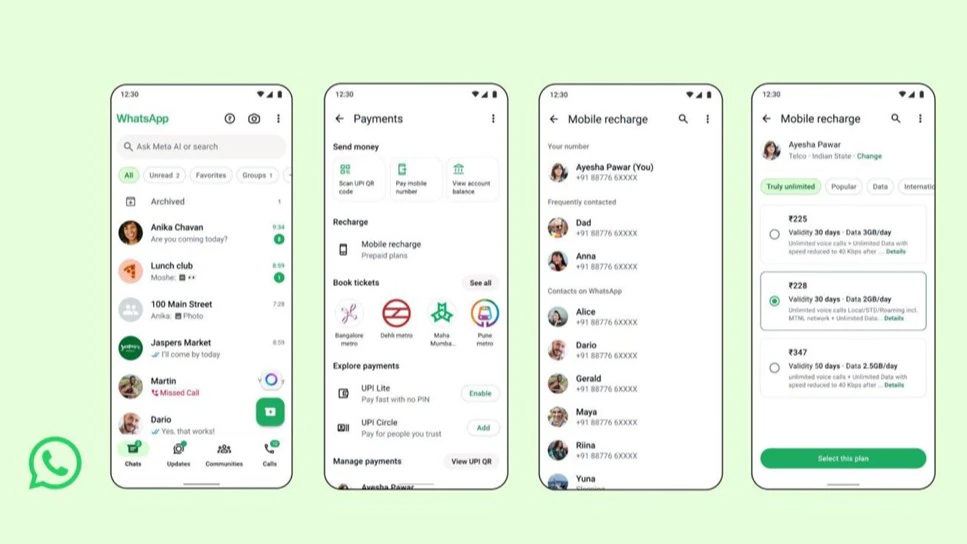
WhatsApp is steadily evolving beyond a messaging platform, and its latest move in India underscores that ambition. The company has introduced a feature that allows users to recharge prepaid mobile numbers directly within the app. This development positions WhatsApp closer to becoming an all-in-one digital utility platform—something often described as a “super app.”
India, WhatsApp’s largest market with over 500 million users, serves as a natural testing ground for such integrations. By embedding mobile recharge services into its ecosystem, WhatsApp aims to reduce friction in everyday transactions and keep users engaged within the app for longer durations.
How the Feature Works
The prepaid recharge option is integrated into WhatsApp’s existing payments interface. Users can access it through the payments section, where they can:
- Enter or select a mobile number
- Choose from available prepaid plans across telecom operators
- Complete the transaction using UPI-enabled payment methods
The process mirrors what users typically experience on dedicated recharge apps but eliminates the need to switch platforms. This seamless experience is expected to appeal especially to users already familiar with WhatsApp Pay.
Why This Matters in India’s Digital Ecosystem
India’s prepaid mobile market remains one of the largest globally, with millions of users recharging frequently in small denominations. Traditionally, this space has been dominated by platforms like Paytm, Google Pay, and PhonePe.
WhatsApp’s entry introduces a new competitive layer. Its advantage lies in user familiarity and daily engagement—most users already spend significant time on the app. By integrating recharge services, WhatsApp reduces dependency on third-party apps and strengthens its foothold in India’s fast-growing digital payments ecosystem.
Expert Insight: A Step Toward the ‘Super App’ Vision
Industry analysts view this move as part of Meta’s broader strategy to transform WhatsApp into a multi-service platform. Globally, companies like WeChat have demonstrated how messaging apps can evolve into comprehensive ecosystems offering payments, commerce, and services.
In India, however, achieving this vision comes with challenges. Regulatory scrutiny around digital payments, data privacy concerns, and strong competition from established fintech players could influence how quickly WhatsApp scales such offerings.
At the same time, the integration aligns with India’s UPI-driven digital economy, where ease of access and interoperability are key growth drivers.
User Benefits: Convenience Meets Familiarity
For users, the biggest advantage is simplicity. Instead of juggling multiple apps, they can now manage communication and essential transactions in one place. This is particularly useful in semi-urban and rural markets, where app fatigue and storage limitations can affect user behavior.
The feature also leverages WhatsApp’s intuitive interface, making it accessible even for less tech-savvy users. By combining familiarity with functionality, WhatsApp is lowering the barrier to digital transactions.
Potential Concerns and Limitations
Despite the convenience, the move raises some important considerations:
- Market dominance: Expanding services within a widely used app could concentrate too much power in a single platform
- Data privacy: Increased financial activity within WhatsApp may intensify scrutiny over how user data is handled
- Feature adoption: Competing apps still offer rewards, cashback, and broader financial services that WhatsApp may need to match
These factors will play a crucial role in determining how widely the feature is adopted.
The Bigger Picture
WhatsApp’s prepaid recharge feature is more than just a utility update—it’s a signal of where digital platforms are heading. As the lines between communication, payments, and commerce continue to blur, platforms that successfully integrate these experiences stand to gain significant user loyalty.
For India, this also reflects the maturity of its digital infrastructure, where services can be layered onto widely used platforms with relative ease. Whether WhatsApp can convert this advantage into long-term dominance will depend on execution, trust, and regulatory alignment.
Key Takeaway
WhatsApp’s entry into prepaid mobile recharge is a calculated step toward becoming an everyday digital hub in India. For users, it means greater convenience; for competitors, it signals intensified rivalry; and for the industry, it marks another shift toward integrated digital ecosystems.