 TECH TIMES NEWS
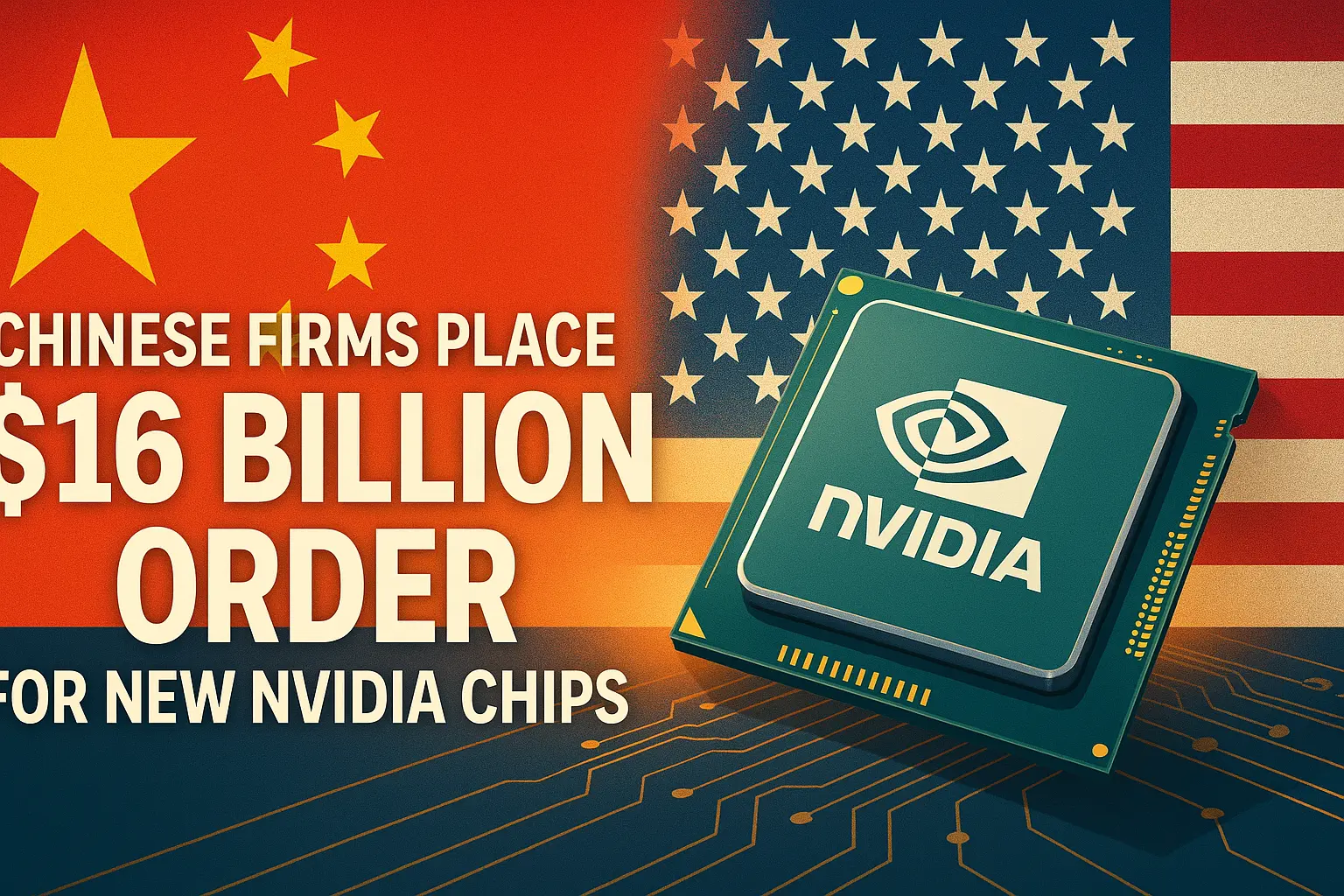
Chinese technology companies have reportedly placed orders worth $16 billion for Nvidia’s latest AI chips, signaling a strong demand for cutting-edge semiconductor technology despite ongoing trade restrictions. The massive order underscores China’s ambition to remain competitive in artificial intelligence and high-performance computing.
According to industry sources, several Chinese firms, including leading cloud service providers and AI startups, have secured a significant number of Nvidia’s advanced processors. The order comes as global competition for AI chipsets intensifies, with businesses racing to acquire the most powerful computing resources for machine learning, data analytics, and autonomous systems.
High Demand for AI Chips Despite Trade Restrictions
The purchase follows stringent U.S. export controls aimed at limiting China’s access to state-of-the-art semiconductor technology. However, Chinese firms have continued to find ways to procure high-performance GPUs and AI accelerators, demonstrating their determination to maintain leadership in AI-driven innovation.
“China’s tech giants are aggressively investing in AI infrastructure to stay ahead in the global AI race,” said semiconductor industry analyst Daniel Wong. “Even with trade restrictions, the demand for advanced processors like Nvidia’s remains exceptionally high.”
While Nvidia has previously adjusted its chip offerings to comply with U.S. regulations, the latest bulk order suggests that Chinese firms are still managing to access AI hardware critical for training and deploying large-scale machine learning models.
Implications for the AI Industry and Global Tech Market
The surge in AI chip orders reflects the escalating demand for computing power in industries ranging from cloud computing and robotics to generative AI and self-driving technology. Analysts predict that Nvidia, already a dominant force in AI hardware, will continue to see strong revenue growth despite geopolitical tensions.
Meanwhile, the U.S. government is expected to closely monitor these transactions, ensuring that technology exports comply with existing restrictions. The ongoing competition between China and Western nations in the semiconductor sector is likely to shape the future of AI development and global supply chains.
As the situation develops, industry stakeholders will be watching Nvidia’s next moves and how regulatory measures impact global AI chip distribution. Stay tuned for further updates on this evolving story.