 TECH TIMES NEWS
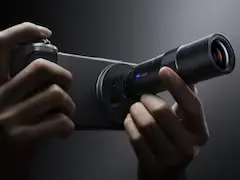
When Vivo announced its strategic imaging partnership with legendary optics brand ZEISS five years ago, the goal was clear: bring professional-grade optical science to everyday smartphone photography. ZEISS, known for its century-old legacy in camera lenses, microscopes, and cinema optics, offered credibility, while Vivo brought scale, innovation, and aggressive iteration in mobile hardware.
What followed was not just better cameras, but a steady shift in how smartphone photography began to balance technical precision with artistic expression.
Engineering Meets Aesthetic Vision
Over the years, the Vivo–ZEISS collaboration has focused heavily on optical calibration, lens coating, and color science. Instead of chasing megapixel numbers alone, the duo emphasized image character—contrast, depth, natural color reproduction, and realistic skin tones. ZEISS’ influence became particularly visible in portrait modes, where background separation and bokeh rendering leaned closer to traditional photography than software-heavy effects.
This approach helped Vivo carve out a distinct imaging identity in an increasingly crowded smartphone market.
The Rise of Signature Color and Portrait Styles
One of the most visible outcomes of the partnership has been the development of ZEISS-inspired portrait styles and color profiles. These modes were designed to mimic classic lens looks rather than exaggerated smartphone aesthetics. The intent was subtlety—photos that feel timeless instead of overly processed.
For mobile photographers and creators, this marked a shift: smartphones were no longer just tools for convenience but instruments capable of intentional visual storytelling.
Hardware–Software Co-Design as a Differentiator
Unlike many camera collaborations that remain largely branding exercises, Vivo and ZEISS invested in co-engineering. Lens coatings to reduce flare, improved low-light handling, and optimized image pipelines worked in tandem with Vivo’s imaging chips and AI algorithms.
The result was consistency—images that looked reliable across lighting conditions, focal lengths, and shooting modes, something that even flagship smartphones often struggle to deliver.
Walking the Line Between Precision and Emotion
Perhaps the most interesting aspect of the partnership is its philosophy. Vivo and ZEISS have repeatedly emphasized that great photography is not only about accuracy but also emotion. This belief reflects in tuning choices that prioritize mood, depth, and realism over dramatic sharpening or artificial colors.
In doing so, the collaboration has tried to answer a difficult question: can computational photography still feel human?
What the Next Chapter Could Hold
Five years in, the Vivo–ZEISS partnership stands as one of the more meaningful collaborations in mobile imaging. As smartphone cameras move toward larger sensors, hybrid zoom systems, and generative AI enhancements, the challenge will be preserving artistic intent while embracing automation.