 TECH TIMES NEWS
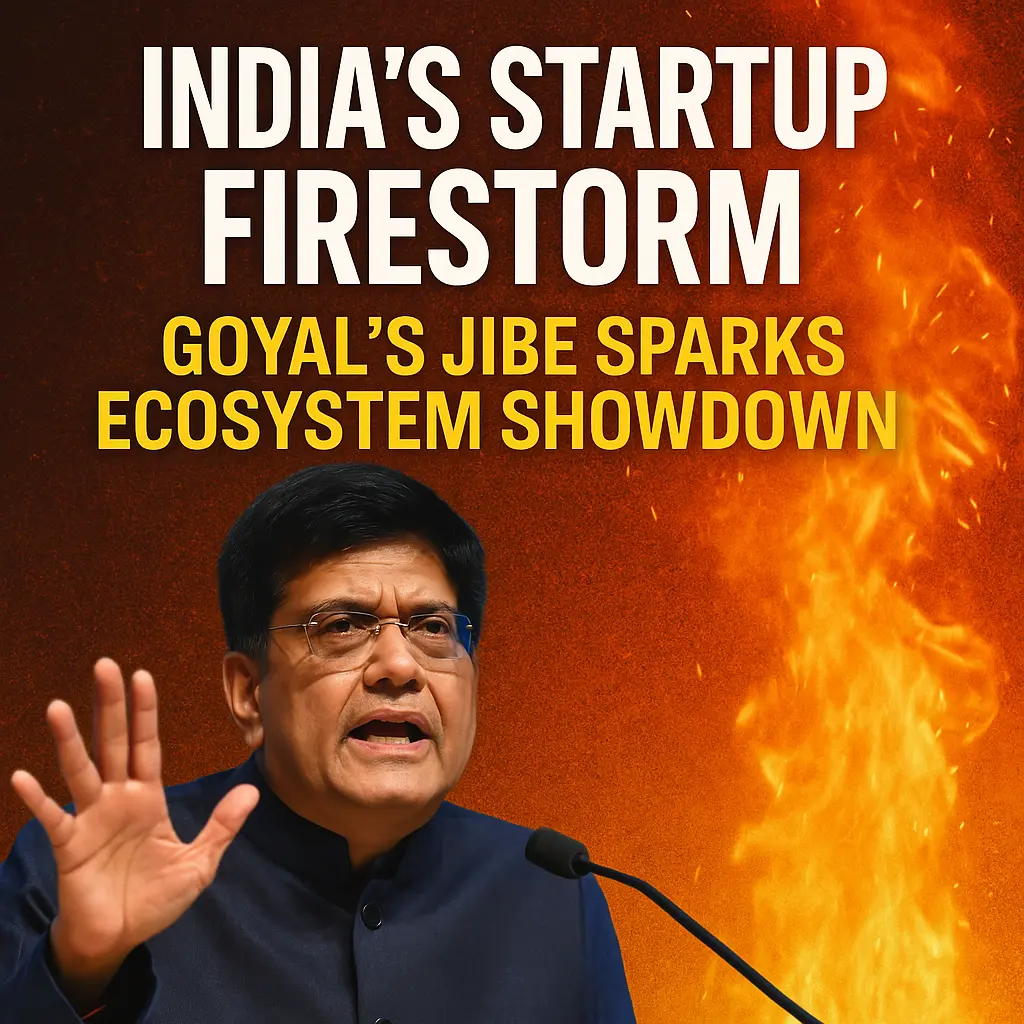
India’s thriving startup landscape has found itself at the center of a heated national conversation after Union Minister Piyush Goyal made remarks questioning the sustainability and business models of some Indian startups. While speaking at a recent industry forum, the Commerce and Industry Minister raised eyebrows by stating that "some startups are burning investor money without real value creation," igniting reactions across India’s entrepreneurial and investor communities.
His comments have triggered a mixed response—some defending his realism, others criticizing the sweeping nature of the remark. In the aftermath, leading startup founders and venture capitalists have stepped forward to defend the country’s innovation ecosystem, pointing out its resilience, global success stories, and evolving maturity.
🔥 The Spark: Goyal’s Critique
At an industry roundtable last week, Goyal emphasized the need for "financial prudence and long-term sustainability" among startups. He warned that the Indian startup ecosystem, despite its global prominence, must not fall into the trap of mimicking unsustainable Silicon Valley trends.
"Burning cash and creating valuations with no path to profitability is not entrepreneurship. It's speculation," Goyal said.
While the statement may have been intended as a cautionary note, it quickly snowballed into a national debate—raising concerns among some that it might paint the entire ecosystem with a broad brush.
💼 The Startup Community Responds
Top founders and investors were quick to respond, with many highlighting the vast strides India’s startup sector has made over the past decade. Venture Catalysts, Blume Ventures, and industry figures like Kunal Bahl (Snapdeal) and Nithin Kamath (Zerodha) acknowledged that while some companies have struggled, the overall narrative is far more balanced.
“Every ecosystem has a mix of sustainable and experimental models. To label the entire community based on outliers is unfair,” said Nasscom in a statement. The IT industry body emphasized that over 100 Indian startups have turned profitable in the past two years, and the country has seen over 110 unicorns, with many setting benchmarks globally.
📊 Data Speaks: Strength in Numbers
India is currently the third-largest startup ecosystem in the world, with over 90,000 registered startups and more than 30,000 tech-led ventures, according to data from DPIIT (Department for Promotion of Industry and Internal Trade). Sectors like fintech, edtech, agritech, and healthtech have shown remarkable resilience, even amid global funding slowdowns.
In 2024 alone, over 20 Indian startups expanded globally, and several, including Zepto, CRED, and OYO, have raised substantial funding from international investors.
🧭 A Sector at Crossroads
Industry insiders agree that the startup ecosystem must adapt to evolving market realities—moving from high cash burn to sustainable unit economics. However, many caution that discouraging risk-taking or undervaluing innovation may undermine India’s goal to be a global technology and startup hub.
“Constructive criticism is welcome,” said Ankita Singh, co-founder of a Delhi-based SaaS startup. “But blanket skepticism risks eroding the confidence of budding entrepreneurs just finding their footing.”
🤝 Government’s Balancing Act
Interestingly, Goyal’s own ministry has backed several startup incentives, including the Startup India initiative, tax breaks, and easier access to credit. Experts believe the government must now strike a balance between encouraging responsible business practices and maintaining a positive narrative for India’s startup ambitions.
“Critique should lead to reform, not retreat,” remarked a senior executive at Invest India.
🌍 The Bigger Picture
Globally, 2024 and 2025 have seen tightening VC flows, valuation corrections, and increasing scrutiny on profitability. India is not an exception—but it’s also not uniquely at fault. Many believe that framing the startup conversation in a nuanced way will help the country stay competitive in the global innovation race.
As India prepares for a new phase of digital and economic growth, the startup sector remains a critical pillar. While debates like this are healthy for introspection, the need of the hour is clarity, confidence, and collaborative problem-solving between policymakers and entrepreneurs.