 TECH TIMES NEWS
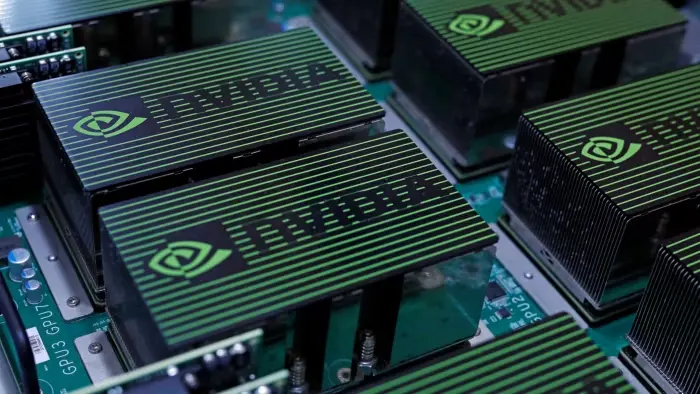
Nvidia, the American semiconductor giant known for its cutting-edge graphics processing units (GPUs), is bracing for a significant financial blow after the U.S. government tightened export restrictions on advanced chip technologies to China. The company announced it expects to take a charge of approximately $5.5 billion in the current fiscal year due to halted shipments and projected losses stemming from the new trade limitations.
Background of the Restrictions
The Biden administration has ramped up efforts to curb China’s access to high-performance computing technologies amid growing concerns over national security and the potential military applications of artificial intelligence. The updated export rules, enforced by the U.S. Department of Commerce, specifically target chips used in AI training, supercomputing, and advanced data centers—sectors where Nvidia plays a dominant global role.
Under the revised rules, Nvidia is now barred from selling several of its top-tier chips to Chinese firms without obtaining a special license. These include models from its powerful H100 and A100 series—hardware widely used in AI development by companies and research institutions worldwide.
Nvidia’s Financial Outlook
In a filing released this week, Nvidia disclosed that it anticipates a $5.5 billion charge, citing unsold inventory, lost contracts, and supply chain adjustments required to comply with the new regulations. A significant portion of this amount is tied to orders placed by Chinese technology firms, some of which have been suspended or canceled altogether.
Nvidia has also acknowledged that the restrictions could have long-term implications for its position in the global AI chip market, especially in Asia. China has historically accounted for nearly 20–25% of Nvidia’s data center revenue, making the new barriers a major challenge to its growth strategy.
CEO Comments and Strategic Response
In a statement, Nvidia CEO Jensen Huang expressed disappointment over the tightening export rules but reaffirmed the company’s commitment to regulatory compliance.
"While these new restrictions present short-term headwinds, we remain focused on delivering breakthrough innovation to our global customers and expanding into new markets," Huang said.
The company is reportedly accelerating efforts to expand its customer base in regions outside of China, including Southeast Asia, the Middle East, and Latin America. Nvidia is also investing heavily in the development of export-compliant chip variants that meet U.S. trade standards while still delivering strong performance for AI workloads.
Industry Impact and Global Response
The restrictions have sent ripples across the global semiconductor industry, with other U.S.-based chipmakers such as AMD and Intel also reviewing their China-bound product lines. Meanwhile, Chinese tech giants are increasing investments in domestic chip design as part of Beijing's broader push for self-reliance in critical technologies.
Analysts suggest that the ongoing geopolitical tension is likely to reshape the competitive landscape in the AI hardware market over the next several years. While Nvidia remains a leader in GPU technology, its future dominance may hinge on how effectively it can navigate the evolving trade environment.
Market Reaction
Following the announcement, Nvidia’s stock dipped slightly in after-hours trading, though some investors appeared optimistic about the company’s adaptability and strong position in other regions. Wall Street analysts have expressed mixed reactions, with some downgrading short-term forecasts while maintaining long-term confidence in Nvidia’s innovation pipeline.
As U.S.-China tech relations continue to strain, Nvidia’s $5.5 billion charge underscores the growing cost of economic decoupling. For one of Silicon Valley’s crown jewels, the challenge now lies in balancing compliance with growth—and in staying ahead in a rapidly shifting global tech landscape.