 TECH TIMES NEWS
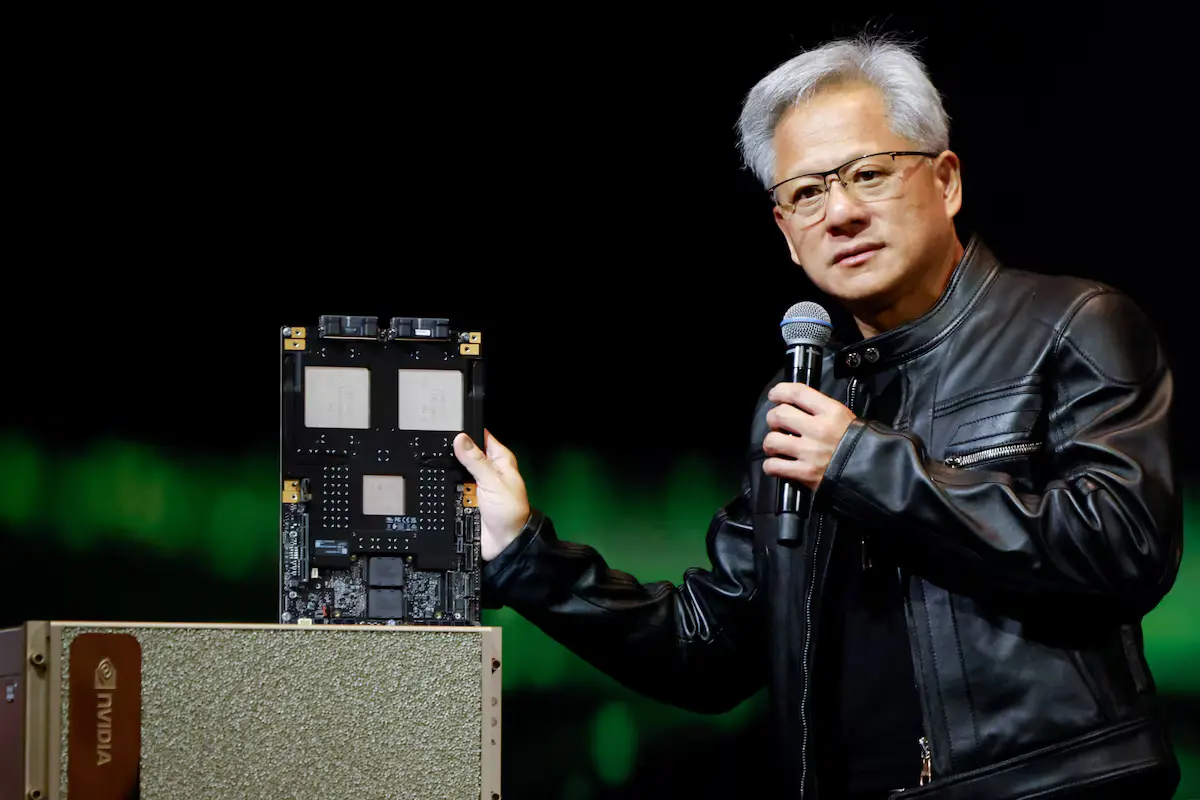
In a development that underscores the fragile dynamics of U.S.-China tech relations, Nvidia Corporation has raised fresh concerns about its exposure to China’s semiconductor market. In a recent regulatory filing, the chipmaker flagged increased geopolitical and regulatory risks associated with its business in China — even as CEO Jensen Huang made headlines for his comments praising former President Donald Trump’s economic stance.
Heightened Risks Amid U.S.-China Tensions
In its latest quarterly filing with the Securities and Exchange Commission (SEC), Nvidia highlighted escalating challenges in maintaining its business foothold in China, citing ongoing U.S. export restrictions on advanced chip technologies. The company noted that evolving U.S. policies limiting the sale of high-performance GPUs to Chinese firms could materially impact future revenue streams.
“The U.S. government’s export control measures — particularly those affecting AI and data center products — have introduced significant uncertainty into our operations in China,” the filing stated.
This disclosure comes on the heels of several U.S. government initiatives aimed at curbing China’s access to critical semiconductor technologies, including the cutting-edge GPUs that Nvidia manufactures and dominates globally. In late 2023 and throughout 2024, the Biden administration expanded export restrictions on AI chips such as the A100 and H100, effectively blocking Nvidia from selling its most powerful products to key Chinese customers.
Although Nvidia had introduced China-specific alternatives like the H20 and L20 chips to comply with regulations, further tightening of controls continues to pose strategic challenges.
CEO Jensen Huang’s Surprising Remarks on Trump
While Nvidia underscores its vulnerabilities in China, CEO Jensen Huang recently attracted attention during a panel discussion where he offered unexpected praise for former President Donald Trump’s economic policies. Speaking at a technology conference in Las Vegas, Huang acknowledged Trump’s emphasis on domestic manufacturing and reshoring efforts.
“President Trump brought attention to the need for strengthening American industrial capacity,” Huang said. “That shift in narrative helped catalyze investments in semiconductor production right here in the United States.”
Though Huang stopped short of making any political endorsement, his comments sparked conversations across the tech and business sectors, particularly as the 2024 U.S. presidential election cycle reintroduced Trump to the national stage as a potential frontrunner for 2028.
Trump's administration was known for its aggressive trade stance toward China, which included the imposition of tariffs and broader efforts to decouple U.S. supply chains from Chinese dependencies — a move that received mixed reactions across Silicon Valley. However, some executives like Huang are now reflecting on those strategies with a more favorable lens, especially in the context of national chip independence and recent CHIPS Act investments.
Industry Implications
Nvidia’s disclosure highlights a broader concern in the tech industry about overdependence on the Chinese market. Although China has traditionally been a key revenue driver — especially for data center and AI applications — companies are increasingly diversifying due to regulatory and geopolitical headwinds.
The company has already made strategic moves to mitigate exposure. It is accelerating investments in regions like India, Southeast Asia, and the Middle East, while simultaneously benefiting from CHIPS Act incentives for expanding manufacturing and R&D in the U.S.
Still, analysts warn that the balancing act between geopolitical compliance and maintaining global competitiveness will remain a significant challenge for Nvidia.
The Road Ahead
As Nvidia navigates tightening controls and shifting alliances, its future success may depend on how it adapts to a world where access to international markets is increasingly governed by politics, not just performance.
With its dominant position in AI hardware and software ecosystems, Nvidia remains a bellwether not only for semiconductor innovation but also for how the tech industry responds to a rapidly fragmenting global order.