 TECH TIMES NEWS
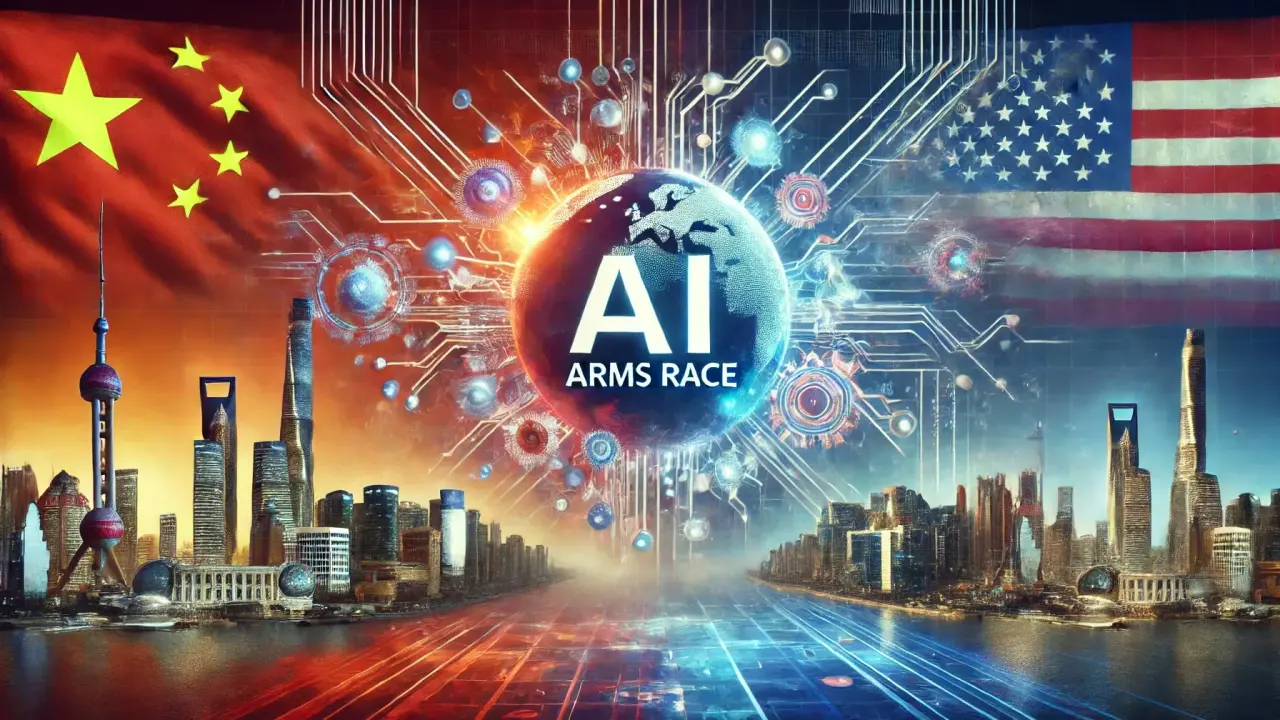
A silent but rapidly escalating arms race is reshaping geopolitics, economics, and even personal freedoms — and its weapon of choice is not nuclear, but artificial intelligence. Once confined to academic labs and niche startups, AI has become the new frontier of global power projection, pulling governments, tech giants, and even private individuals into an intense technological contest.
This AI race isn’t just about smarter machines — it’s about dominance in cybersecurity, finance, military strategy, surveillance, and information control. What once seemed like science fiction is now strategic doctrine.
From Algorithms to Ammunition: AI as a Geopolitical Tool
Nations are no longer building firepower with missiles; they are building intelligence with machine learning models. The United States, China, the European Union, and emerging powers like India and the UAE are all funneling billions into AI infrastructure. National security agencies now rely on generative AI for cyber defense, drone coordination, threat analysis, and propaganda detection.
But with each nation pushing the boundaries of what AI can do, the global equilibrium becomes less stable.
“AI is becoming the fifth domain of warfare, after land, sea, air, and space,” says Dr. Lina Hargrove, an analyst at the Global AI Observatory. “The risks aren’t just in code — they are in how quickly and unpredictably that code evolves.”
Big Tech as Private Superpowers
While governments set policies, it’s private corporations leading the charge — and sometimes pulling the strings. Google DeepMind, OpenAI, Meta, Amazon, Baidu, and several defense contractors are locked in fierce competition to build the most advanced large language models (LLMs) and autonomous systems.
These AI systems now influence everything from election outcomes to market volatility. OpenAI’s GPT-5.5 and Google’s Gemini Ultra have surpassed human-level fluency in multiple languages, legal reasoning, and even strategic planning.
“Private AI labs are no longer startups — they’re superpowers in disguise,” says Kalpana Roy, a tech ethicist based in Bangalore. “They have the data, the compute, and now, increasing control over critical infrastructure.”
The result? A tension between state interests and corporate ambition. Regulation struggles to keep up, and new norms are yet to be defined.
The Personal Frontline: Citizens as Collateral
As this AI arms race intensifies, individuals are increasingly caught in the middle. Deepfake misinformation campaigns have influenced political discourse in over a dozen countries. AI-driven surveillance systems, originally intended for security, now track citizens’ every move in parts of China, Iran, and even some Western democracies.
Privacy is no longer a right but a privilege — and a fading one at that.
At the same time, AI's benefits are undeniable: medical breakthroughs, accessible education, personalized services. But the same tools can be used to manipulate public opinion or profile dissidents.
“AI affects your credit score, your job application, even your dating profile — all without your full understanding,” warns Roy. “The arms race isn’t just between countries; it’s between transparency and opacity.”
Toward an Ethical Framework — Or a Digital Cold War?
Efforts to regulate AI development are underway, but progress is slow. The UN’s AI Treaty negotiations have stalled due to disagreements between the U.S. and China over data sovereignty and model transparency. Meanwhile, the EU’s AI Act faces criticism from open-source communities who fear overregulation will stifle innovation.
Without global standards, the risk is not just a fragmented digital world — it’s a divided one.
“Every superpower building its own AI silo, with incompatible ethics and goals — that’s a recipe for digital Cold War,” says Dr. Hargrove.
Conclusion: The Stakes Are Higher Than Ever
As the AI arms race becomes more personal, the choices made today will shape humanity's path for decades. Will artificial intelligence be a force for shared progress, or a tool of division and control?
The world watches — and increasingly, it watches back.