 TECH TIMES NEWS
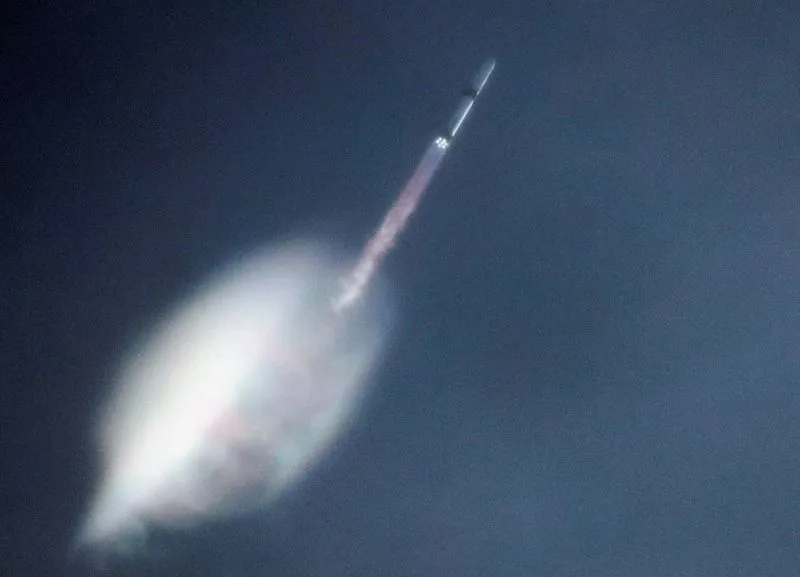
Blue Origin has marked a significant milestone in the evolution of commercial spaceflight, successfully landing a reused booster from its New Glenn heavy-lift rocket. This is the first time the company has demonstrated reuse and recovery of a previously flown New Glenn booster, bringing it closer to operational reusability—long seen as the key to lowering launch costs and increasing mission frequency.
The landing signals Blue Origin’s transition from testing phases to a more mature, scalable launch system, aligning with industry trends driven largely by reusable rocket technology.
What Makes New Glenn Critical to Blue Origin’s Strategy
New Glenn is Blue Origin’s flagship orbital launch vehicle, designed to compete directly in the heavy-lift segment. Standing over 95 meters tall, the rocket is engineered to carry large payloads into low Earth orbit (LEO), geostationary orbit (GEO), and beyond.
The first stage booster—powered by BE-4 engines—is designed for multiple reuses, with a targeted lifespan of up to 25 flights. Achieving a successful landing of a reused booster validates not just the recovery system, but also the structural durability and refurbishment processes behind the rocket.
Technical Insight: How the Landing Was Achieved
The reused booster executed a controlled descent using a combination of aerodynamic guidance and engine burns, ultimately landing vertically on a designated recovery platform. Blue Origin has focused heavily on precision landing systems, including advanced navigation algorithms and autonomous flight controls.
While booster landings are no longer novel in the industry, executing one with a previously flown heavy-lift stage adds complexity. Factors like material fatigue, engine reliability after reuse, and thermal stress management become critical—and this successful attempt suggests Blue Origin is overcoming those challenges.
Why This Matters: Cost, Competition, and Scale
Reusable rockets are central to reducing the cost per launch. By recovering and reusing boosters, companies can avoid rebuilding expensive components, potentially cutting launch costs by a substantial margin.
This achievement positions Blue Origin more competitively against SpaceX, which has already demonstrated rapid reuse cycles with its Falcon 9 and Falcon Heavy rockets. However, New Glenn operates in a slightly different class, targeting larger payload capacities and long-duration missions.
Industry analysts suggest that if Blue Origin can scale reuse reliably, it could:
- Expand access to affordable satellite launches
- Strengthen its position in government and defense contracts
- Support future ambitions like space stations and lunar missions
Industry Context: The Race for Reusability
The commercial space sector is increasingly defined by reusability. SpaceX set the benchmark, but competitors—including Blue Origin—are now closing the gap.
What sets this milestone apart is its timing. With global demand for satellite deployments, broadband constellations, and deep-space missions rising, the need for efficient launch systems has never been higher. Blue Origin’s progress indicates that the market may soon have multiple players capable of delivering reusable heavy-lift solutions.
Expert Perspective: A Step Toward Operational Maturity
Aerospace experts view this landing as more than a technical success—it’s a signal of operational readiness. Reusability isn’t just about landing a rocket; it’s about doing so consistently, safely, and economically.
If Blue Origin can demonstrate rapid turnaround times between flights and maintain booster integrity across multiple missions, it could fundamentally shift its position in the launch market.
What Comes Next for Blue Origin
Following this milestone, the focus will likely shift toward:
- Increasing the frequency of reused booster flights
- Demonstrating quick refurbishment cycles
- Securing commercial and government launch contracts
- Integrating New Glenn into long-term space infrastructure plans
The company has already hinted at ambitions beyond Earth orbit, including lunar logistics and deep space missions—areas where reusable heavy-lift rockets will play a critical role.
The Takeaway
Blue Origin’s successful landing of a reused New Glenn booster is a pivotal step toward making reusable heavy-lift rockets a practical reality. While challenges remain, the achievement narrows the gap with established competitors and strengthens the broader shift toward cost-efficient, sustainable spaceflight.