 TECH TIMES NEWS
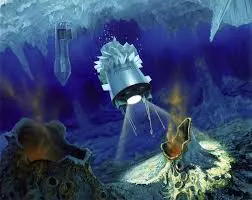
A new scientific study suggests that Jupiter’s moon Europa may have a surprisingly efficient way to supply its hidden subsurface ocean with vital chemicals: sinking salted ice. The findings add weight to the idea that Europa’s ocean — buried beneath kilometers of ice — could be chemically active and potentially capable of supporting life.
Europa has long fascinated scientists because of strong evidence that a global ocean lies beneath its frozen crust. What remained uncertain was how nutrients and surface materials might reach the ocean below. The latest research proposes that salt trapped in Europa’s ice shell may be the key.
How Salted Ice Breaks the Rules of Floating
On Earth, pure ice floats because it is less dense than liquid water. However, researchers say Europa’s ice behaves differently. When ice forms on Europa, it can trap salts from the moon’s salty surface and underlying water. As temperatures fluctuate, this salty ice can become dense enough to sink.
According to the study, this process could drive a slow but persistent downward movement of material, carrying oxidants and nutrients from the surface into the ocean below — a critical ingredient for life as we know it.
A Natural Nutrient Pipeline Beneath the Ice
The research team modeled Europa’s ice shell and found that salt-rich ice may sink in plumes, similar to convection currents. These sinking ice masses could deliver oxygen and other chemically reactive compounds produced by radiation at the surface into the dark ocean beneath.
This mechanism may help resolve a long-standing puzzle: how Europa’s ocean could remain chemically balanced and energy-rich over long geological timescales.
Why This Matters for the Search for Life
Life requires more than water — it also needs chemical energy. The sinking ice process could allow Europa’s ocean to sustain complex chemistry, making it one of the most promising places in the solar system to search for extraterrestrial life.
Scientists note that even slow material exchange between the surface and ocean could dramatically increase Europa’s habitability over millions of years.
NASA’s Europa Clipper Mission Gains New Relevance
The findings arrive as NASA prepares for future exploration of Europa, including missions designed to study the moon’s ice shell, chemistry, and potential habitability. Instruments aboard upcoming spacecraft could look for signatures of salt movement, ice convection, and chemical exchange.