 TECH TIMES NEWS
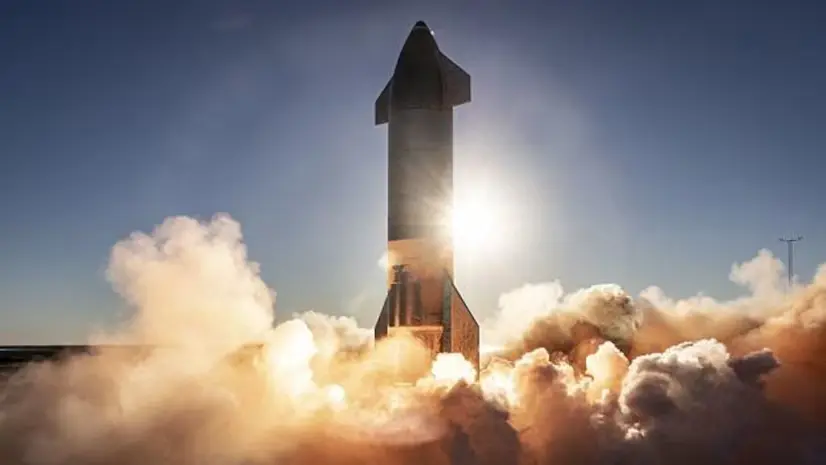
SpaceX’s ambitious Starship program took another step forward with its third integrated flight test (IFT-3), but the mission ended dramatically as both the Super Heavy booster and Starship vehicle experienced failures during descent. Despite the setbacks, the test provided crucial data that will inform future launches.
The Test Flight Overview
On March 14, 2024, SpaceX launched its fully stacked Starship and Super Heavy booster from the company’s Starbase facility in Boca Chica, Texas. The mission aimed to test several key objectives, including stage separation, payload door operation, and controlled reentry of the Starship upper stage.
The launch itself was a success, with all 33 Raptor engines on the Super Heavy booster firing as planned. Shortly after liftoff, the booster successfully separated from the upper stage, marking a significant improvement over previous test flights. The Starship spacecraft then continued on its intended trajectory, reaching space and performing several in-flight maneuvers.
Super Heavy Booster’s Fiery End
Following stage separation, the Super Heavy booster was programmed to execute a controlled descent and splash down in the Gulf of Mexico. However, during its return, an issue arose that led to a rapid unscheduled disassembly (RUD)—a term SpaceX humorously uses for explosions. While details remain under investigation, preliminary data suggests that a problem during the landing burn may have triggered the failure.
Starship’s Reentry Failure
Meanwhile, the Starship upper stage continued its journey, successfully opening and closing its payload door—a first for the vehicle. It also performed an engine burn that aligned it for controlled reentry. However, as the spacecraft hit the Earth’s atmosphere at extreme speeds, it lost telemetry and likely succumbed to intense aerodynamic forces and heating, leading to its disintegration before reaching its planned splashdown in the Indian Ocean.
What This Means for SpaceX and Starship’s Future
Despite the high-profile explosions, SpaceX considers IFT-3 to be a major step forward for the Starship program. The test provided valuable insights into critical systems such as:
-
Stage separation mechanics
-
Heat shield performance during reentry
-
Flight stability and aerodynamics at hypersonic speeds
-
Payload deployment mechanisms
The data gathered from this mission will inform modifications for IFT-4, the next test flight, which could take place in the coming months. SpaceX’s ultimate goal is to develop Starship into a fully reusable spacecraft capable of supporting deep-space missions, including NASA’s Artemis program for lunar exploration and potential human missions to Mars.
Elon Musk’s Response and Next Steps
Following the test, SpaceX CEO Elon Musk acknowledged the challenges but expressed optimism about future Starship flights. In a post on social media, Musk emphasized the importance of rapid iteration, stating that each test brings the company closer to a fully operational Starship system.
With the Federal Aviation Administration (FAA) overseeing investigations, SpaceX will need to implement corrective measures before proceeding with the next test flight. However, given the company’s fast-paced development approach, another launch attempt could happen within a few months.
Conclusion
While the explosive end of the Starship and Super Heavy booster highlights the immense challenges of developing the world’s most powerful rocket, SpaceX remains undeterred. The progress made in IFT-3 represents a significant leap forward in SpaceX’s mission to build a fully reusable interplanetary spacecraft. All eyes will now be on the next test flight as SpaceX continues its relentless push toward the future of space exploration.