 TECH TIMES NEWS
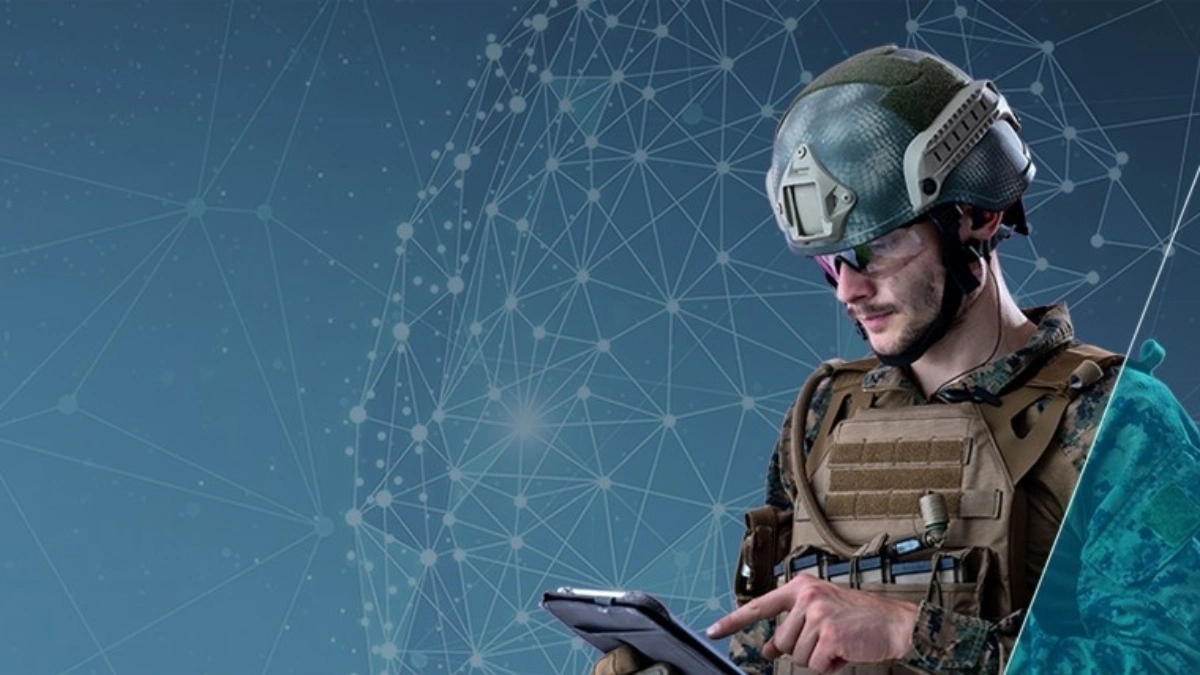
The ethical line dividing Silicon Valley from European tech has officially blurred. Paris-based Mistral AI, widely considered Europe’s premier challenger to American tech giants, has explicitly stated that it will not police or interfere with how defence customers deploy its artificial intelligence models.
Speaking on the sidelines of the company’s first AI conference in Paris, Chief Executive Arthur Mensch made the company's boundaries clear, stating that deployment and usage choices are simply not the business of the technology provider. The announcement marks a definitive departure from the restrictive end-user agreements traditionally maintained by consumer-focused AI platforms, signaling a highly calculated pivot toward industrial and state sovereignty.
HIGHLIGHT: Strategic Geopolitics and the Moral Rebuttal of Papal Directives
This bold policy stance landed exactly three days after the Vatican issued Magnifica Humanitas, a sweeping 42,300-word encyclical by Pope Leo XIV calling for the global "disarmament of AI" and a ban on autonomous weapons systems. Rather than dodging the ethical friction, Mensch directly addressed the critique, framing military AI development as an existential necessity for Europe.
"We are all for peace, but if you look at our rivals and adversaries in the world, they are using artificial intelligence. As long as we have adversaries that are threatening, and they are threatening, we do need to have our own capabilities." — Arthur Mensch, CEO of Mistral AI
By arguing that European tech firms cannot afford unilateral ethical restraint while global adversaries actively weaponize data, Mistral has become the first major European AI developer to formally align its business strategy with the continent's hardening defence posture.
HIGHLIGHT: The Balance Sheet of Battlefield AI Partnerships
Mistral's pivot is backed by solid commercial numbers, proving that its defence focus is an active, revenue-generating reality rather than a speculative future path.
-
Current Revenue: Defence operations already account for between 10% and 15% of Mistral's total revenue stream.
-
Active Contracts: The company has ongoing operational agreements with the armed forces of France, Singapore, and Luxembourg.
-
Infrastructure Ramp-Up: To power these data-heavy operations, Mistral announced a new 10-megawatt data center in Les Ulis, France, scheduled to open in the third quarter of 2026. This forms part of a larger €4 billion investment plan aimed at reaching 200 megawatts of compute power by the end of 2027.
Coinciding with this policy defense, Mistral announced a landmark five-year partnership with European aerospace titan Airbus. The agreement gives Airbus full access to Mistral’s integrated software stack, allowing the aviation giant to deploy localized AI across commercial, helicopter, space, and highly confidential military aerospace applications.
HIGHLIGHT: Autonomous Agents on the Frontline and the Edge
From a technical standpoint, Mistral’s architecture is uniquely suited for the rigorous, air-gapped demands of national security. Unlike cloud-dependent American models that risk data leaks across sovereign borders, Mistral’s smaller, high-performance models are built for localized, on-premise installation and "edge AI" execution.
+-----------------------------------------------------------------+
|               Mistral AI Defence Applications                   |
+-----------------------------------------------------------------+
|  [Tactical Coordination]  -> Aggregates multi-source battlefield |
|                              data for real-time commander intel. |
|                                                                  |
|  [Edge Deployment]        -> Compact code built directly into    |
|                              hardware like autonomous drones.    |
|                                                                  |
|  [Sovereign Sovereignty]  -> Air-gapped, on-premise systems      |
|                              independent of foreign clouds.      |
+------------------------------------------------------------------+
On the battlefield, these autonomous systems can instantly synthesize immense quantities of data coming from disparate sources, assisting commanders with rapid tactical coordination during high-stress operations. Furthermore, because these models require less raw computing power to run, they can be embedded directly into tactical hardware, such as drones and reconnaissance vehicles, allowing them to process visual and geographical data independently if their communication links are severed.
By passing the ethical buck to state ministries—whom Mensch notes possess vastly more democratic legitimacy to make wartime deployment decisions than a private software vendor—Mistral has successfully positioned itself as the indispensable, no-strings-attached operating system for Europe’s next generation of defense infrastructure.