 TECH TIMES NEWS
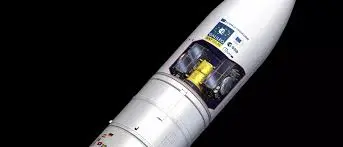
Europe marked a major milestone in spaceflight as the Ariane 6 rocket successfully lifted off, carrying its first pair of Galileo navigation satellites into orbit. The launch signals the operational entry of Europe’s next-generation heavy-lift launcher and reinforces the continent’s long-term commitment to autonomous access to space.
🛰️ Galileo Constellation Gets a Strategic Upgrade
The newly deployed satellites are part of the Galileo global navigation satellite system, Europe’s answer to GPS. Once fully integrated, they will enhance positioning accuracy, timing reliability, and service continuity for civilian and government users across Europe and beyond.
🌍 Boosting Europe’s Technological Sovereignty
With Ariane 6 replacing the retired Ariane 5, Europe aims to reduce reliance on foreign launch providers. This mission underscores the European Space Agency’s (ESA) strategy to secure independent navigation, defense, transport, and digital infrastructure amid growing geopolitical competition in space.
⚙️ Ariane 6: Designed for Flexibility and Efficiency
Ariane 6 introduces a modular design, allowing configurations tailored for different payload sizes. Engineers say this flexibility lowers launch costs while maintaining reliability, making Ariane 6 competitive against commercial launch systems from the U.S. and Asia.
📡 Why Galileo Matters for Daily Life
Galileo satellites support smartphones, aviation, maritime navigation, emergency services, power grids, and financial networks. The new satellites are expected to improve signal availability in dense urban environments and offer better resilience against interference.
🔭 What Comes Next for Europe’s Space Program
ESA plans a steady cadence of Ariane 6 missions in the coming years, including additional Galileo launches, Earth observation payloads, and scientific missions. Successive flights will be closely watched as Europe rebuilds confidence in its independent launch capabilities.