 TECH TIMES NEWS
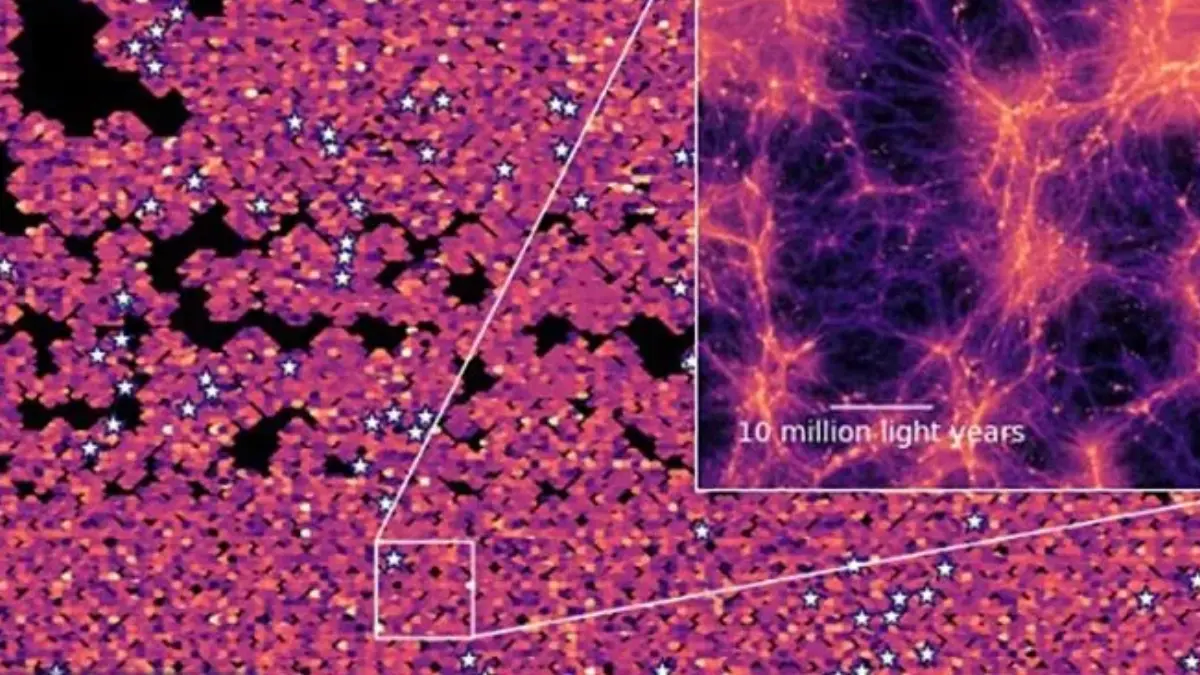
Astronomers have produced the most detailed three-dimensional map ever created of the early universe by tracing the faint glow of hydrogen gas that filled space billions of years ago. The new map provides scientists with an unprecedented look at how matter was distributed shortly after the universe formed, offering clues about how galaxies, stars, and large cosmic structures gradually emerged.
The research relies on detecting extremely weak radio signals emitted by hydrogen atoms. Because hydrogen was the most abundant element in the early universe, tracking its signals allows astronomers to reconstruct the large-scale structure of the cosmos during its formative stages.
Using Hydrogen’s Cosmic Signal
The team focused on what scientists call the “21-centimeter signal,” a specific wavelength of radio emission produced by neutral hydrogen atoms. By measuring how this signal changes across vast distances in space, astronomers can determine where hydrogen existed and how it was distributed.
Because light takes billions of years to reach Earth, these signals act like a time machine. Observing them allows researchers to examine the universe as it appeared billions of years ago, long before many modern galaxies fully formed.
Advanced Instruments and Data Analysis
To build the massive 3D map, scientists collected enormous amounts of radio telescope data over several years. Sophisticated algorithms were then used to filter out interference from Earth-based radio sources and foreground emissions from nearby galaxies.
After removing these unwanted signals, the team reconstructed the hydrogen distribution across a vast region of the universe. The resulting map spans an enormous cosmic volume, making it the largest three-dimensional representation of early hydrogen structures ever created.
Revealing the Universe’s Cosmic Web
The new map reveals patterns of hydrogen forming large filaments and clusters that resemble the cosmic web, a vast network of matter that stretches across the universe. These structures eventually became the framework around which galaxies formed.
By studying the arrangement and density of hydrogen across this map, scientists can better understand how gravity shaped matter over time and how the earliest cosmic structures evolved.
Helping Answer Key Questions in Cosmology
Researchers say the map could help address some of the biggest questions in cosmology. For example, it may provide insights into the mysterious force known as dark energy, which is believed to drive the accelerating expansion of the universe.
The data could also help refine measurements of how matter clumped together over billions of years. This information is critical for testing current theories about the universe’s evolution and the role of dark matter in shaping cosmic structures.
A Step Toward Even Larger Cosmic Surveys
Astronomers believe this achievement is only the beginning. Future observatories and radio telescope arrays are expected to produce even more detailed maps of hydrogen across the universe.
As these projects expand, scientists hope to observe earlier cosmic epochs and capture a clearer picture of the universe’s first billion years. Such discoveries could transform our understanding of how the cosmos transitioned from a nearly uniform cloud of hydrogen into the complex universe filled with galaxies that we see today.