 TECH TIMES NEWS
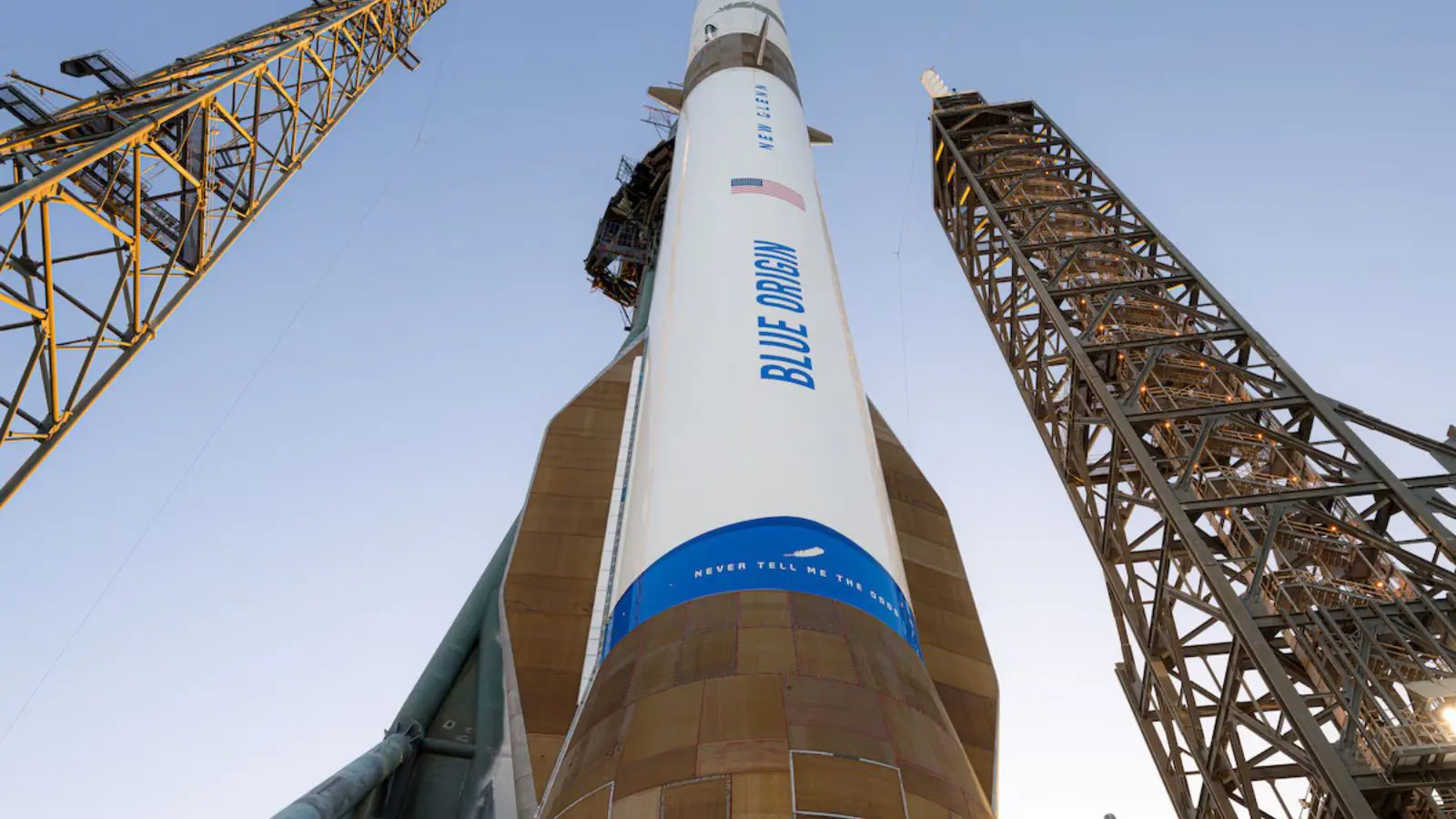
Blue Origin has taken a decisive step into the modern era of reusable spaceflight, successfully reusing a New Glenn first-stage booster for the first time. The achievement marks a critical turning point for the company, which has spent years developing the heavy-lift rocket amid delays and growing competition.
The mission, conducted from Cape Canaveral Space Force Station, demonstrated that New Glenn’s reusable architecture is not just theoretical—it is now operational. For Blue Origin, this moment is as much about credibility as it is about capability.
What Makes New Glenn Significant
New Glenn is Blue Origin’s flagship orbital rocket, designed to compete directly in the heavy-lift launch market. Standing over 95 meters tall, the two-stage rocket is powered by seven BE-4 engines in its first stage—engines that also power United Launch Alliance’s Vulcan rocket.
The booster is designed for multiple reuses, with Blue Origin targeting up to 25 flights per stage. Its large payload capacity positions it for a wide range of missions, including commercial satellites, national security payloads, and deep-space exploration support.
The Reuse Breakthrough Explained
In this mission, the previously flown first-stage booster completed a full flight cycle—launch, stage separation, atmospheric reentry, and a controlled landing on Blue Origin’s recovery vessel stationed in the Atlantic Ocean. After refurbishment and inspection, the same booster was cleared for another mission.
This successful reuse validates several key systems: thermal protection, structural durability, engine reliability, and landing precision. These are the same pillars that have enabled SpaceX to dominate the reusable launch market—making this milestone strategically important for Blue Origin.
Why Reusability Matters for the Industry
Reusable rockets fundamentally change the economics of spaceflight. By recovering and reflighting boosters, companies can significantly reduce launch costs, increase cadence, and improve mission flexibility.
For customers, this translates into lower prices and more frequent launch opportunities. For the industry, it accelerates innovation and competition. Blue Origin’s success with New Glenn reuse signals that the market will no longer be defined by a single dominant player.
Competitive Pressure and Market Dynamics
Until now, SpaceX has largely set the standard for orbital reusability with its Falcon 9 and Falcon Heavy rockets. Blue Origin’s entry into this space introduces a credible alternative, especially for customers seeking diversified launch options.
However, challenges remain. Blue Origin must demonstrate consistent turnaround times, high reliability across multiple flights, and a steady launch cadence to truly compete. One successful reuse is a milestone—but sustained performance will define long-term success.
Expert Insight: A Turning Point, Not the Finish Line
Industry analysts view this achievement as a foundational moment rather than a final victory. Reusability is not just about landing rockets—it’s about operational efficiency.
If Blue Origin can reduce refurbishment time and cost per flight, New Glenn could become a strong contender in both commercial and government launch markets. Otherwise, the gap with competitors may persist despite technical success.
What Comes Next for New Glenn
Blue Origin is expected to increase the flight rate of New Glenn missions in the coming months, using both new and previously flown boosters. Upcoming launches may include satellite deployments, interplanetary payloads, and potential participation in NASA programs.
The company’s long-term vision includes supporting lunar missions and enabling infrastructure for future space exploration—areas where heavy-lift, reusable rockets are essential.
The Bigger Picture: Reusability Becomes the Standard
With this milestone, reusable launch systems are no longer an emerging concept—they are becoming the industry baseline. Blue Origin’s progress reinforces a broader shift toward sustainability and efficiency in space operations.
For readers and industry watchers, the takeaway is clear: the space race is evolving from who can reach orbit to who can do it smarter, faster, and more economically.