 TECH TIMES NEWS
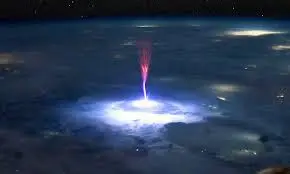
NASA is preparing to unlock one of the least understood connections in Earth science: how lightning in our atmosphere can ripple upward and influence space weather. A compact satellite mission, built with focused scientific instruments and a targeted objective, aims to study the chain reaction that begins in thunderstorms and may extend all the way to near-Earth space.
The core takeaway is simple but powerful—space weather isn’t driven only by the Sun. Activity inside Earth’s own atmosphere, especially lightning, could play a measurable role in shaping the environment satellites operate in.
Why Lightning Matters for Space Weather
Space weather typically refers to conditions in space influenced by solar activity—solar flares, coronal mass ejections, and charged particles streaming toward Earth. These can disrupt satellites, GPS systems, radio communications, and even power grids.
But scientists have increasingly found evidence that terrestrial weather—particularly lightning—can inject energy into the upper atmosphere, triggering electromagnetic effects that propagate into space. These include phenomena like:
- Terrestrial Gamma-ray Flashes (TGFs): Extremely short bursts of high-energy radiation produced during thunderstorms
- Electromagnetic pulses: Signals that can travel along Earth’s magnetic field lines
- Ionospheric disturbances: Changes in the electrically charged layer of the atmosphere that affects communication systems
NASA’s small satellite is designed to capture these signals with higher precision than before, helping researchers understand how often and how strongly lightning contributes to space weather variability.
Mission Design: Small Satellite, Focused Science
Unlike large, multi-purpose missions, this satellite follows a smallsat approach—lower cost, faster development, and highly specialized instruments. While exact mission specs vary, such satellites typically operate in low Earth orbit and carry sensors capable of detecting:
- High-energy radiation bursts
- Radio frequency emissions from lightning
- Electric and magnetic field changes
This focused design allows scientists to isolate lightning-related effects without the noise of broader space weather measurements.
The mission also aligns with NASA’s broader shift toward distributed, smaller missions that can work together or independently to answer targeted scientific questions more efficiently.
Connecting the Dots: From Thunderstorms to Orbit
The science behind the mission revolves around tracing a multi-step process:
- Lightning discharge occurs within a thunderstorm
- Energy is released upward, not just toward the ground
- High-energy particles and radiation are generated
- These signals travel through the ionosphere and magnetosphere
- They potentially interact with satellites and communication systems
By observing these steps in real time, the satellite could help quantify how significant lightning’s contribution really is—something that remains uncertain despite decades of study.
Implications for Technology and Forecasting
If the mission confirms that lightning has a measurable impact on space weather, it could reshape forecasting models. Currently, most operational systems focus heavily on solar inputs. Integrating atmospheric lightning data could:
- Improve GPS accuracy predictions
- Enhance satellite anomaly forecasting
- Support more reliable aviation and maritime communications
- Strengthen early warning systems for space weather disruptions
For a world increasingly dependent on satellite infrastructure, even small improvements in prediction accuracy can have outsized economic and operational benefits.
A Broader Shift in Earth-Space Science
This mission reflects a growing scientific perspective: Earth and space are not separate systems but deeply interconnected. The boundary between atmospheric weather and space weather is more blurred than previously thought.
Understanding this coupling is critical as satellite constellations expand and as human activity in orbit increases. Missions like this one help build a more complete picture of the environment just beyond our atmosphere—an area that is becoming more crowded and more essential.
What Comes Next
Data from the satellite will likely be combined with ground-based lightning detection networks and other space missions to build a comprehensive dataset. Over time, this could lead to:
- New models of atmosphere-space interaction
- Better integration of weather and space weather forecasting systems
- Identification of previously unknown high-energy processes
While the satellite itself may be small, the scientific payoff could be substantial—potentially redefining how we understand the relationship between Earth’s storms and the space environment.