 TECH TIMES NEWS
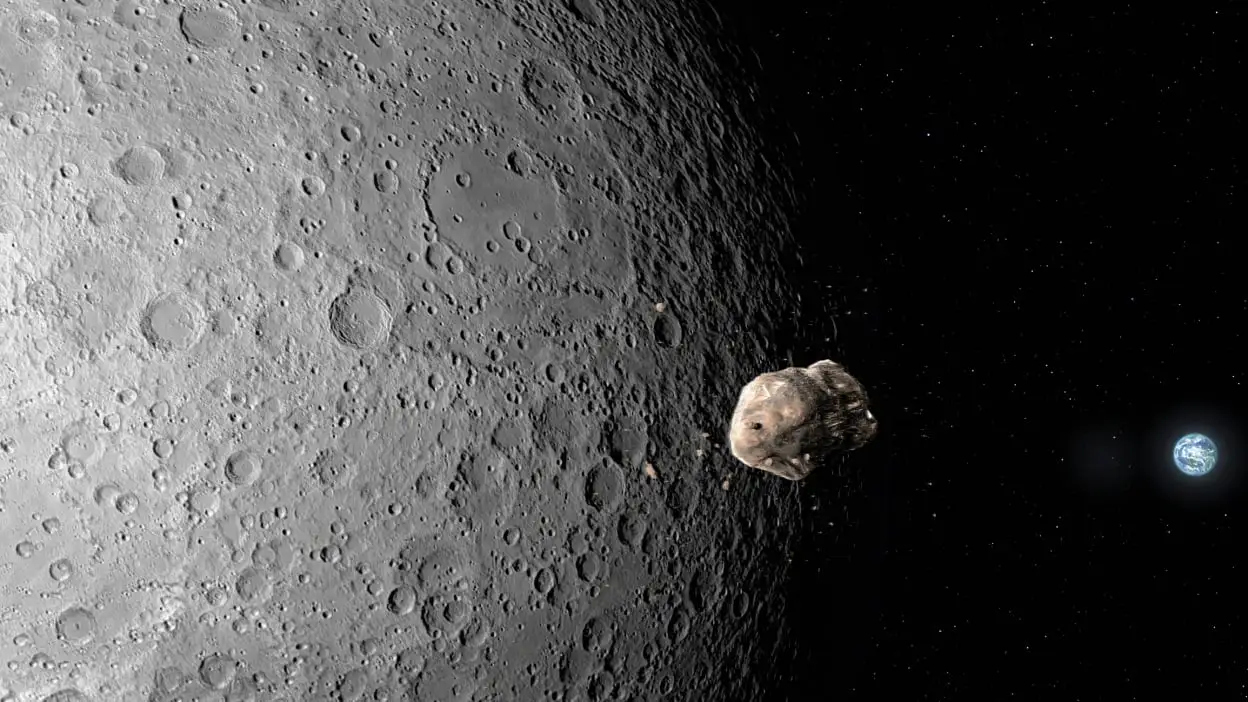
NASA scientists have confirmed that asteroid 2024 YR4 will not collide with the Moon, following detailed observations made by the James Webb Space Telescope (JWST). Earlier calculations had left a very small possibility that the near-Earth asteroid could pass extremely close to the Moon in the early 2030s. However, Webb’s advanced infrared instruments allowed astronomers to measure the asteroid’s trajectory with far greater precision, eliminating any remaining impact concerns.
Researchers explained that the new data significantly refined the asteroid’s orbit, showing that its path will safely bypass both Earth and the Moon. The finding highlights how next-generation space telescopes can help improve planetary defense monitoring.
Why Asteroid 2024 YR4 Drew Attention
Asteroid 2024 YR4 was first detected by automated sky-survey telescopes designed to track near-Earth objects (NEOs). Its size and orbital path initially made it an object of interest among astronomers because early projections suggested a close approach to the Earth-Moon system.
While the chance of a collision was always extremely low, scientists continued monitoring the asteroid to reduce uncertainties. With more observations collected over time, particularly from space-based telescopes, its orbit has now been determined with much higher confidence.
James Webb’s Role in Planetary Defense
The James Webb Space Telescope, primarily designed to study distant galaxies and the early universe, is also capable of observing smaller objects within our solar system. Its sensitive infrared instruments can detect faint objects and track their movement against the background of space.
By analyzing the heat signature and motion of asteroid 2024 YR4, Webb provided critical measurements that helped astronomers pinpoint the asteroid’s exact trajectory. This demonstrates how powerful telescopes can contribute to planetary defense efforts by improving predictions about potentially hazardous objects.
No Threat to Earth or the Moon 🌍
NASA has reassured the public that asteroid 2024 YR4 poses no threat to Earth or the Moon. Updated calculations show that the asteroid will pass safely at a considerable distance when it approaches the Earth-Moon system in the future.
Astronomers will continue to track the object as part of routine monitoring programs, but it is no longer considered a potential impact risk.
Growing Global Efforts to Track Space Objects
The confirmation also underscores the importance of international asteroid-tracking initiatives. Agencies like NASA, ESA, and other observatories worldwide collaborate to detect and monitor thousands of near-Earth objects every year.
Advanced tools such as the James Webb Space Telescope, ground-based observatories, and planetary defense missions like NASA’s DART experiment are helping scientists better understand asteroid behavior and improve early warning systems.
As observation technologies continue to advance, researchers expect that predictions about asteroid trajectories will become even more precise, ensuring better preparedness for any future cosmic threats.