 TECH TIMES NEWS
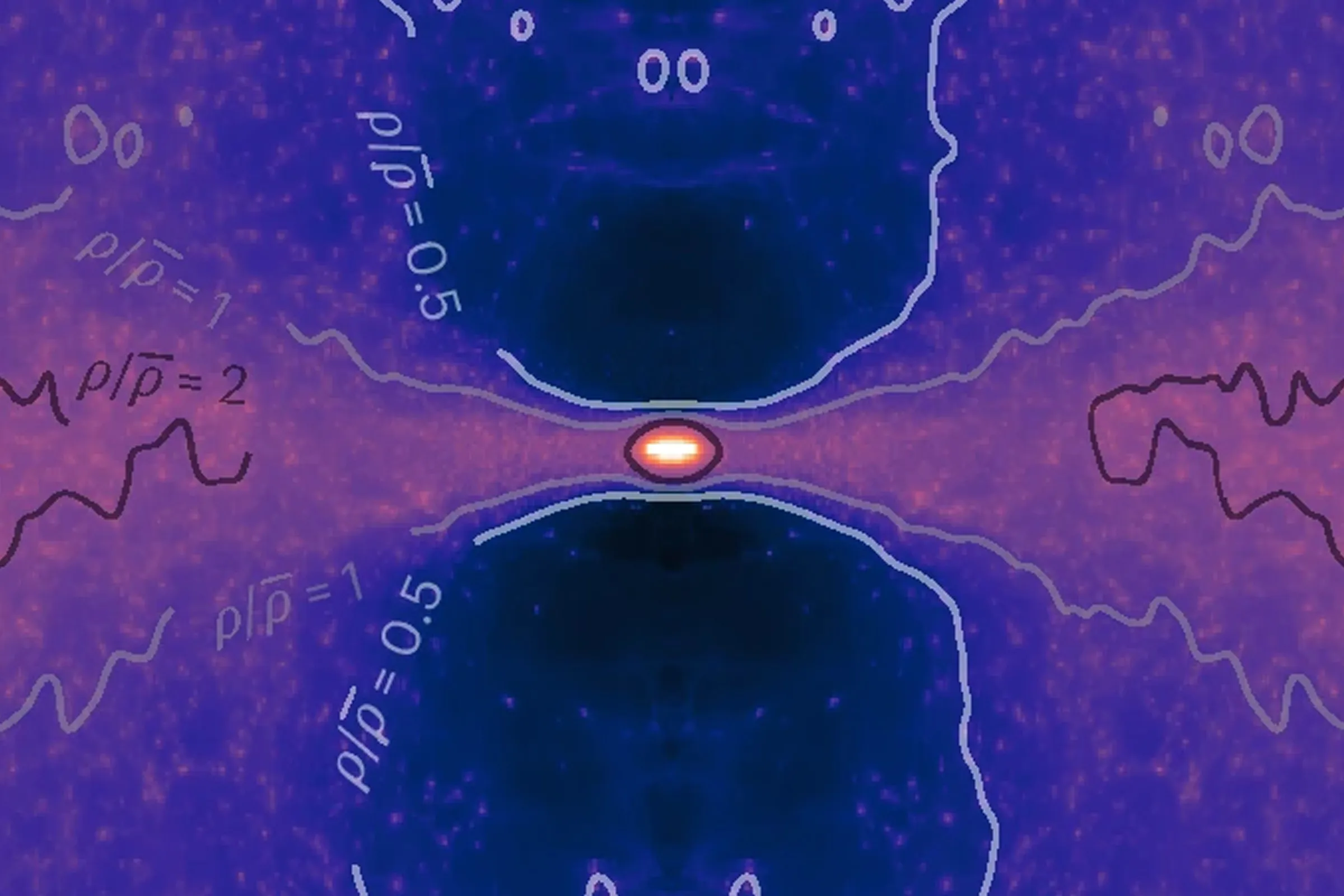
Astronomers have proposed a fascinating new idea about the structure surrounding our galaxy: the Milky Way may be located inside an enormous sheet of dark matter. This theory challenges the traditional view that galaxies are surrounded only by roughly spherical dark matter halos and suggests a much larger and flatter cosmic structure may also play a role.
Dark matter, an invisible substance believed to make up about 85% of the universe’s matter, cannot be observed directly. Instead, scientists detect it through its gravitational effects on stars, galaxies, and cosmic structures. The new study indicates that dark matter might be arranged in large-scale sheets or “pancake-like” formations that extend across vast regions of space.
Understanding Dark Matter and Its Role in the Universe
Dark matter remains one of the biggest mysteries in modern astrophysics. Although it does not emit, reflect, or absorb light, its gravitational influence shapes the formation and motion of galaxies.
For decades, scientists have believed that galaxies like the Milky Way are embedded in spherical halos of dark matter that keep them gravitationally bound. However, recent theoretical models and simulations suggest that dark matter may also form flattened layers or sheets as part of the cosmic web — the enormous network of filaments, clusters, and voids that make up the universe’s large-scale structure.
Evidence from Galactic Motion and Cosmic Simulations
The new research draws on advanced cosmological simulations and observations of how galaxies move within their local cosmic environment. Researchers noticed patterns in the motions of nearby galaxies and galaxy groups that could be explained if our galaxy were embedded in a broad dark matter sheet.
These structures may stretch millions of light-years across and influence how galaxies form and interact with one another. If confirmed, such a sheet could affect gravitational dynamics across the Milky Way’s neighborhood in ways scientists had not previously considered.
Part of the Universe’s Vast Cosmic Web
Astrophysicists already know that galaxies are not randomly distributed. Instead, they are arranged along gigantic filaments of dark matter that form a cosmic web stretching across the universe.
The proposed dark matter sheet surrounding the Milky Way could be one of these large structures, acting like a flattened layer within the web. Such sheets are predicted in cosmological models, but identifying one that includes our own galaxy would offer valuable evidence supporting these theories.
What This Could Mean for Future Research
If further observations support the idea, it could reshape how astronomers understand the Milky Way’s place in the universe. It may also help scientists better understand how galaxies grow, cluster, and evolve over billions of years.
Future observations from next-generation telescopes and space missions, along with improved computer simulations, could help verify whether our galaxy truly lies inside such a massive dark matter sheet. Confirming this structure would provide new insights into the hidden architecture of the universe.