 TECH TIMES NEWS
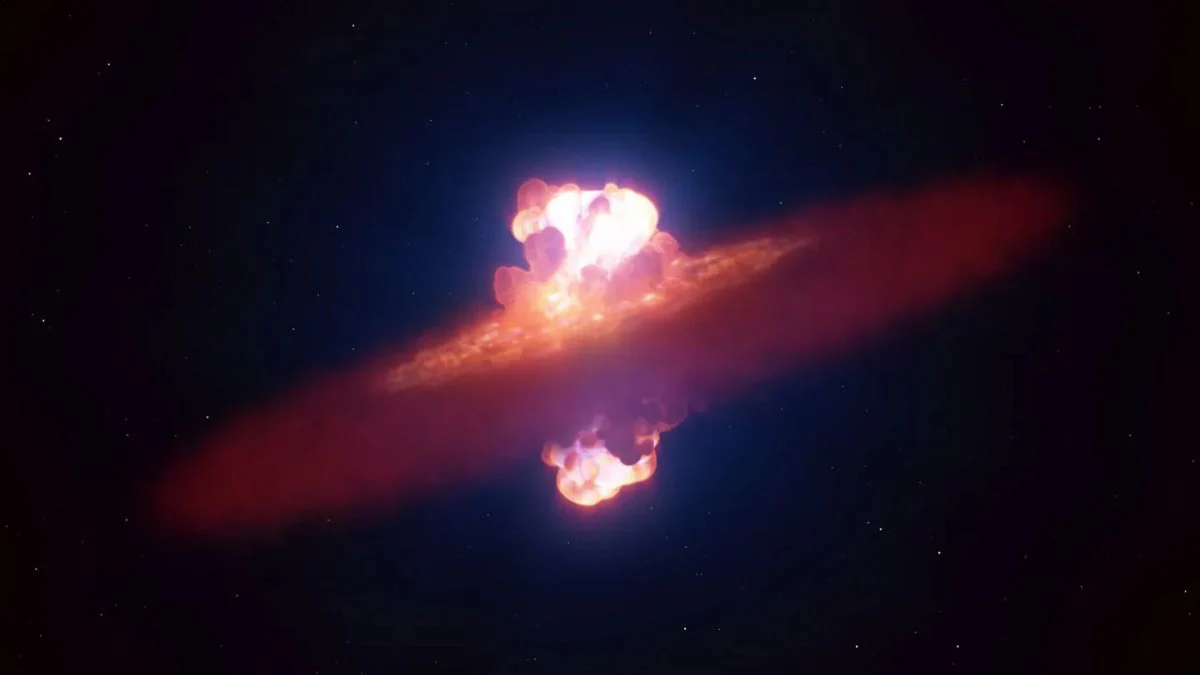
In a remarkable achievement for astrophysics, scientists have captured the earliest moments of a supernova explosion—revealing an unexpected olive-shaped blast rather than the spherical pattern long assumed. The discovery marks the first time astronomers have witnessed the initial light signatures of such a cosmic event with this level of clarity.
Unexpected Shape Challenges Classical Models
The unusual elongated structure surprised researchers, who previously believed that stellar explosions generally expand uniformly. The new observation indicates that supernovae may begin with highly asymmetric shock waves, hinting at deeper complexities in the dying stages of massive stars.
Captured Just Minutes After Explosion
Astronomers used a network of high-speed telescopes equipped with ultra-sensitive detection systems to identify the explosion shortly after it occurred. This near-instant response allowed scientists to study the event’s earliest light curve — a phase rarely documented due to the short-lived and unpredictable nature of stellar collapses.
Data Offers Fresh Insights Into Stellar Evolution
The observation provides valuable clues about how heavy elements are produced and distributed across galaxies. Researchers say such early data could refine existing supernova models and improve predictions of how these explosions influence cosmic matter formation.
Breakthrough Enabled by Next-Generation Instruments
This discovery was made possible by advanced wide-field monitoring systems capable of scanning vast regions of the sky in real time. These instruments allow astronomers to detect sudden flashes of light milliseconds after they occur in distant galaxies.
Scientists Celebrate a Milestone Moment
Astrophysicists around the world have hailed the findings as a milestone. Capturing the first moments of a supernova is equivalent to observing the “cosmic birth cry” of the explosion, offering a rare chance to study the physics behind one of the universe’s most powerful events.