 TECH TIMES NEWS
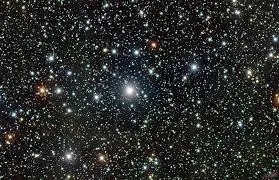
NASA’s Chandra X-ray Observatory has identified a massive X-ray-emitting bubble surrounding HD 61005, a young Sun-like star located roughly 115 light-years from Earth in the constellation Puppis. The discovery offers rare insight into the turbulent early stages of stars similar to our Sun.
HD 61005 is estimated to be around 40 million years old — a cosmic adolescent compared to the Sun’s 4.6 billion years. During this early phase, stars are known to exhibit intense magnetic activity and powerful stellar winds, both of which can generate high-energy radiation detectable in X-rays.
Understanding the Giant X-Ray Structure
According to researchers, the observed X-ray bubble likely forms as fast-moving stellar winds collide with surrounding material in the star’s environment. These winds, composed of charged particles streaming away from the star, create shock fronts that heat nearby gas to millions of degrees — hot enough to emit X-rays.
Such extended X-ray features are rarely observed around Sun-like stars, making this detection particularly significant. The structure appears to envelop the star and may interact with its surrounding debris disk — a ring of dust and rocky material left over from planet formation.
Clues About Planetary Formation
HD 61005 is already well known among astronomers for its distinctive debris disk, sometimes nicknamed “The Moth” because of its unusual shape in optical images. The new X-ray findings suggest that high-energy radiation and stellar winds could be actively reshaping this disk.
Scientists believe these energetic processes may play a key role in determining whether emerging planets can retain atmospheres. Powerful X-ray emissions in a star’s early life can strip gases from young planets or alter their chemical evolution.
Studying HD 61005 provides a glimpse into what our own solar system may have experienced billions of years ago, when the young Sun was far more active than it is today.
A Window Into the Sun’s Past
Because HD 61005 shares similarities with the early Sun, astronomers consider it a valuable natural laboratory. Observations like this help scientists reconstruct how stellar activity evolves over time and how it affects nearby planetary systems.
The Chandra Observatory’s ability to detect faint X-ray emissions allows researchers to probe environments that are otherwise invisible in optical light. Continued observations could reveal whether such bubbles are common around young Sun-like stars or represent a rare phenomenon.
Why This Discovery Matters
The detection adds to growing evidence that young stars can dramatically influence their surroundings through energetic outflows. Understanding these processes is essential for refining models of star and planet formation.
As astronomers continue to analyze the data, HD 61005 may provide deeper answers about how solar systems are shaped — and how conditions suitable for life eventually emerge.