 TECH TIMES NEWS
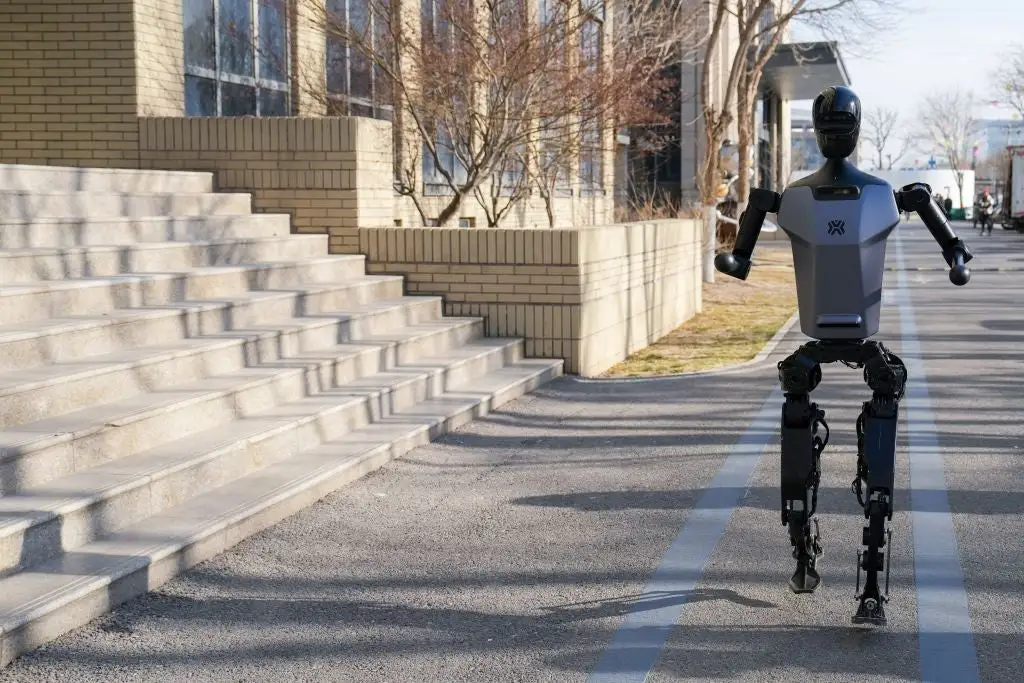
In a groundbreaking blend of endurance and engineering, a new milestone was set this week as a team of humanoid robots successfully completed the world’s first half-marathon designed exclusively for bipedal machines. Held in Osaka, Japan, the event marked a dramatic leap forward in the field of robotics and artificial intelligence.
Dubbed the "Mecha-Marathon 2025," the event saw eight state-of-the-art humanoid robots from research teams across the globe participate in a 21.1-kilometer race through a closed urban circuit. Engineers, AI specialists, and robotics enthusiasts gathered to witness this historic run—one that not only tested physical capabilities but also marked a symbolic stride toward integrating robotics more closely into human environments.
A New Era in Robotics Mobility
Unlike robotic vehicles or quadrupeds, humanoid robots face significantly greater challenges in long-distance locomotion. Their two-legged structure mimics human gait, making balance, terrain adaptation, and energy efficiency key hurdles. This event was a rigorous test of those very capabilities.
Each robot was required to complete the race unaided—no remote control, no tethering, and no external assistance. They relied solely on their onboard AI systems, sensors, and custom-built locomotion algorithms to navigate the course.
One standout competitor was "Atlas-RX", developed by a Japanese-Swiss collaborative team. Standing at 1.8 meters and weighing 75 kilograms, Atlas-RX crossed the finish line in just over 5 hours, showcasing an incredible display of balance control and adaptive pacing. The robot made micro-adjustments in real time to compensate for fatigue in its servos and joint motors—something that even a few years ago was considered science fiction.
Not Just a Stunt: Practical Implications
Though the idea of robots jogging through city streets may seem whimsical, experts emphasize the broader implications.
"This event isn’t about spectacle—it’s about pushing the boundaries of real-world robotics," said Dr. Naomi Ishikawa, director of humanoid research at Osaka Robotics Institute. "We're testing how these machines can operate in unpredictable conditions for extended periods. That’s critical for applications in disaster response, caregiving, and autonomous delivery systems."
In particular, the humanoid format is seen as crucial for environments designed for humans—such as staircases, doorways, and public infrastructure—where wheels or tracks are limited. Long-distance mobility could allow humanoid robots to be deployed in large-scale search-and-rescue missions or to assist in emergencies where human access is restricted.
How They Trained
Interestingly, the robots didn't simply walk or run at a fixed pace. Many used machine learning algorithms and simulation environments to "train" for the event. Over weeks and months, their AI cores logged virtual kilometers in simulated terrains, gradually refining stride patterns, posture control, and even heat management in their motors.
Some competitors, like South Korea’s "HAL-Runner", used bio-inspired designs that mimic muscle and tendon movement, enabling more fluid motion and reduced energy consumption. HAL-Runner finished mid-pack but impressed observers with its natural gait and efficiency.
The Road Ahead
The successful completion of the Mecha-Marathon raises questions—and excitement—about what comes next. While a full 42-kilometer humanoid marathon remains a distant goal, organizers say they are already planning a cross-country relay challenge for 2026, where robots will traverse a variety of terrains including hills, gravel, and stairs.
As humanoid robots continue to evolve, their integration into daily life may move from novelty to necessity.
"We’re witnessing the birth of a new type of athlete—one that doesn’t sweat, doesn’t tire, but learns and adapts faster than we ever imagined," said Dr. Ishikawa.