 TECH TIMES NEWS
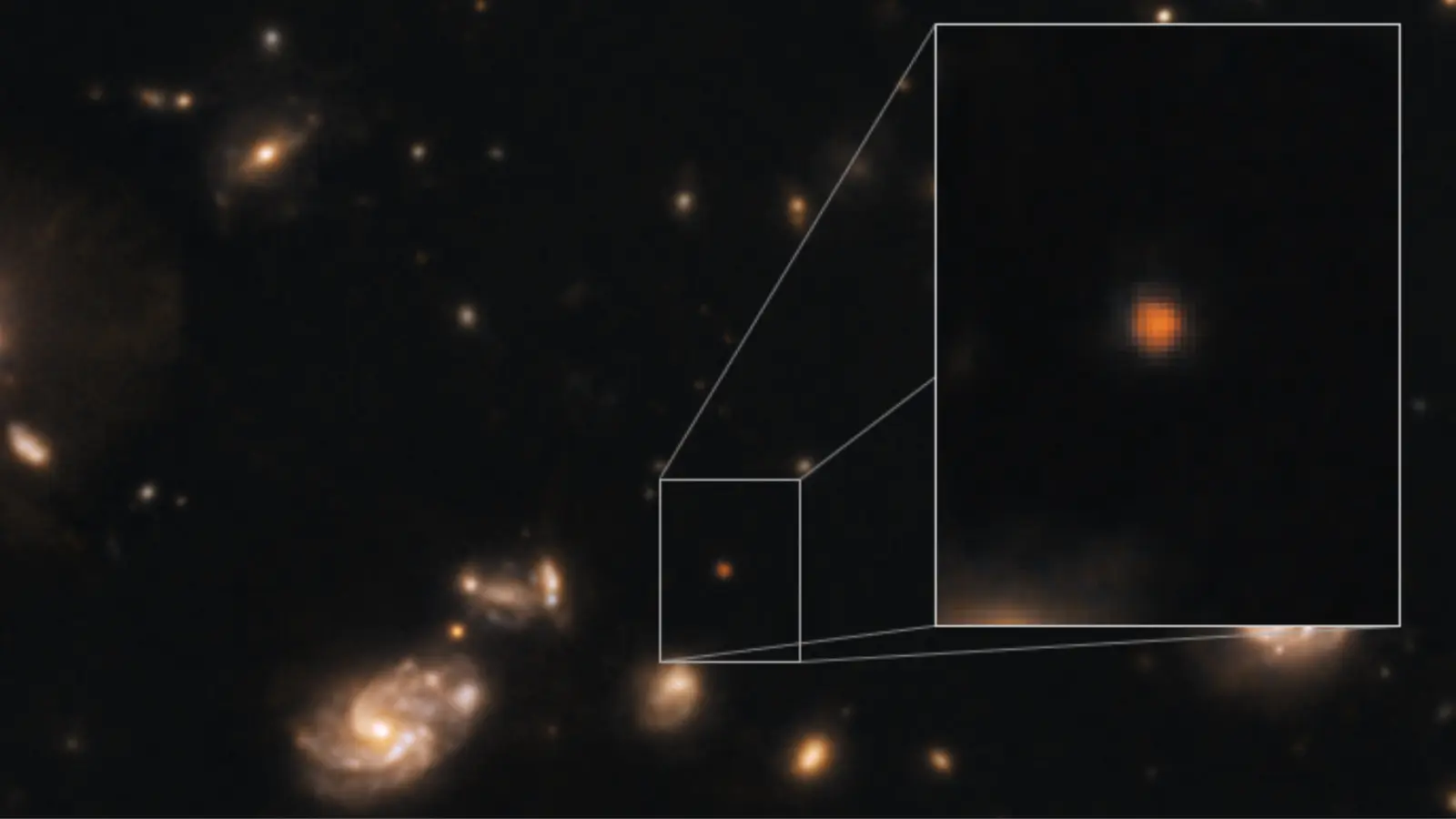
Astronomers using the James Webb Space Telescope (JWST) report that they may have detected signs of the universe’s earliest generation of stars — the mysterious “Population III” stars. These stars are believed to have formed only a few hundred million years after the Big Bang, blazing with extreme temperatures and composed purely of hydrogen and helium.
Why Population III Stars Matter
Population III stars have long been considered the building blocks of modern cosmic structure. Completely free of heavy elements, they were thought to be massive, short-lived, and responsible for creating the first metals that later enriched galaxies, planets, and eventually life. Yet despite decades of research, no direct observation had ever been confirmed — until now.
Unusual Spectral Signatures Detected
Webb’s latest deep-field observations revealed an unusual set of spectral features in a distant galaxy cluster. Scientists noted a lack of expected metal lines and an unexpectedly intense ultraviolet radiation profile — both strong hints of Population III star formation.
Researchers say these measurements don’t resemble any known star types seen in the modern universe, suggesting a completely primordial stellar population.
A Discovery Enabled by Webb’s Infrared Power
The potential discovery was made possible by JWST’s infrared capabilities, which allow it to peer through cosmic dust and detect light stretched across billions of light-years. The galaxies studied are located at a redshift so high that their light comes from a time when the universe was less than 500 million years old.
Webb’s sensitivity has opened a new window into this era — one that previous telescopes could only theorize about.
Scientists Urge Caution but Express Excitement
While the evidence is compelling, astronomers emphasize that further analysis is needed. Follow-up observations are already planned to measure more precise chemical signatures and confirm whether the detected stars truly belong to the elusive Population III class.
Still, excitement is growing within the scientific community. If confirmed, this would mark one of the most groundbreaking findings in modern astronomy — a direct look at the cosmos at the moment it began forming complex structure.
What Comes Next
NASA and international teams are preparing additional Webb observations in the coming months. These follow-ups aim to verify the chemical composition of the suspected proto-galaxies and build a clearer picture of how the universe transitioned from darkness to light.