 TECH TIMES NEWS
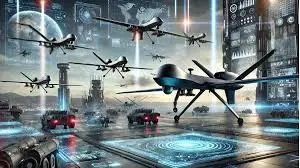
As the global drone market continues its exponential rise, so too does the threat posed by rogue or weaponized drones. From airport disruptions and smuggling contraband into prisons to aiding espionage or even battlefield strikes, unmanned aerial vehicles (UAVs) are being weaponized in ways regulators and security agencies are racing to understand—and counter. In response, a new wave of anti-drone technologies is emerging, blending old-world ingenuity with cutting-edge technology to safeguard airspace and infrastructure.
The Growing Drone Threat
Drone incidents have surged over the past five years. According to a recent report by the Global Security Technology Council, unauthorized drone activity near sensitive sites has more than doubled since 2020. Airports, government facilities, and even sports arenas are increasingly on high alert. The risks are multifaceted: surveillance, payload delivery, disruption of operations, and even targeted attacks.
"In the wrong hands, drones can be the perfect tool for asymmetric warfare or criminal activity," says Lt. Col. Arman Davison, a defense analyst and former military drone operator. “They’re cheap, agile, and often go undetected until it's too late.”
Anti-Drone Arsenal: Nets, Microwaves, and AI
To combat this rising threat, governments and private companies are investing in anti-drone systems—an umbrella term covering a wide array of countermeasures, from physical to digital.
1. Net-Based Interceptors
Though it may sound low-tech, launching nets—either from ground-based cannons or from interceptor drones—is proving highly effective in close-range engagements. These systems physically ensnare a target drone mid-air, bringing it down intact for forensic analysis.
“Net guns are especially useful in urban settings where minimizing collateral damage is essential,” says Maria Chen, CTO of SkySafe Solutions, a San Diego-based security firm. “They’re reliable, portable, and don’t jam other communication systems.”
2. RF Jamming and Protocol Hijacking
Radio frequency (RF) jamming is another popular strategy. By disrupting the control signal between the drone and its operator, many UAVs will simply initiate a ‘return to home’ procedure or drop harmlessly. More advanced systems go a step further: hijacking the drone’s communication protocols to seize control.
Israeli defense contractor Rafael Advanced Defense Systems recently unveiled an AI-powered protocol hijacking tool capable of taking over multiple commercial drone models in flight. “We’re not just neutralizing the drone—we’re using its own software against it,” a spokesperson claimed.
3. Directed Energy Weapons
For high-risk zones, such as military bases or national landmarks, some agencies are deploying directed energy weapons, including high-powered microwaves and lasers. These can disable drones at a distance, frying their circuits without explosive force.
The U.S. Air Force confirmed last year that it had operationally tested the Tactical High Power Microwave Operational Responder (THOR) system in real-world conditions. Officials report that it successfully neutralized drone swarms in seconds.
Challenges and Controversies
Despite these advancements, anti-drone measures are not without limitations. RF jamming, for instance, can interfere with civilian communications. Protocol hijacking, meanwhile, raises legal concerns about interception and cyber warfare laws. Physical takedowns risk collateral damage in crowded areas, and high-energy weapons come with considerable cost and complexity.
There’s also the issue of identification. “Before you shoot down a drone, you need to know if it’s friend or foe,” says Dr. Elaine Gupta, a researcher in drone traffic control at MIT. “We need real-time identification systems that integrate with civil aviation protocols.”
Future of Drone Defense
Looking ahead, experts predict a greater reliance on integrated defense networks combining radar, acoustic sensors, and AI-enhanced visual recognition. Startups and military contractors alike are developing platforms capable of detecting and classifying drones in under two seconds, then recommending the optimal response based on location, risk level, and surrounding population density.
Some cities, including Tokyo and Dubai, are exploring permanent “drone dome” systems—a kind of invisible net that monitors and manages all UAV traffic over critical infrastructure zones.
Conclusion
As drones become more prevalent in commercial, recreational, and military sectors, the importance of counter-drone strategies will only grow. Whether it’s a smart net launched by a fast-moving quadcopter or a sophisticated electronic hijack executed remotely, these tools are forming a critical new layer of defense in the digital age.
“The battlefield is no longer just on the ground,” warns Lt. Col. Davison. “It’s in the air, often invisible, and it’s already here.”