 TECH TIMES NEWS
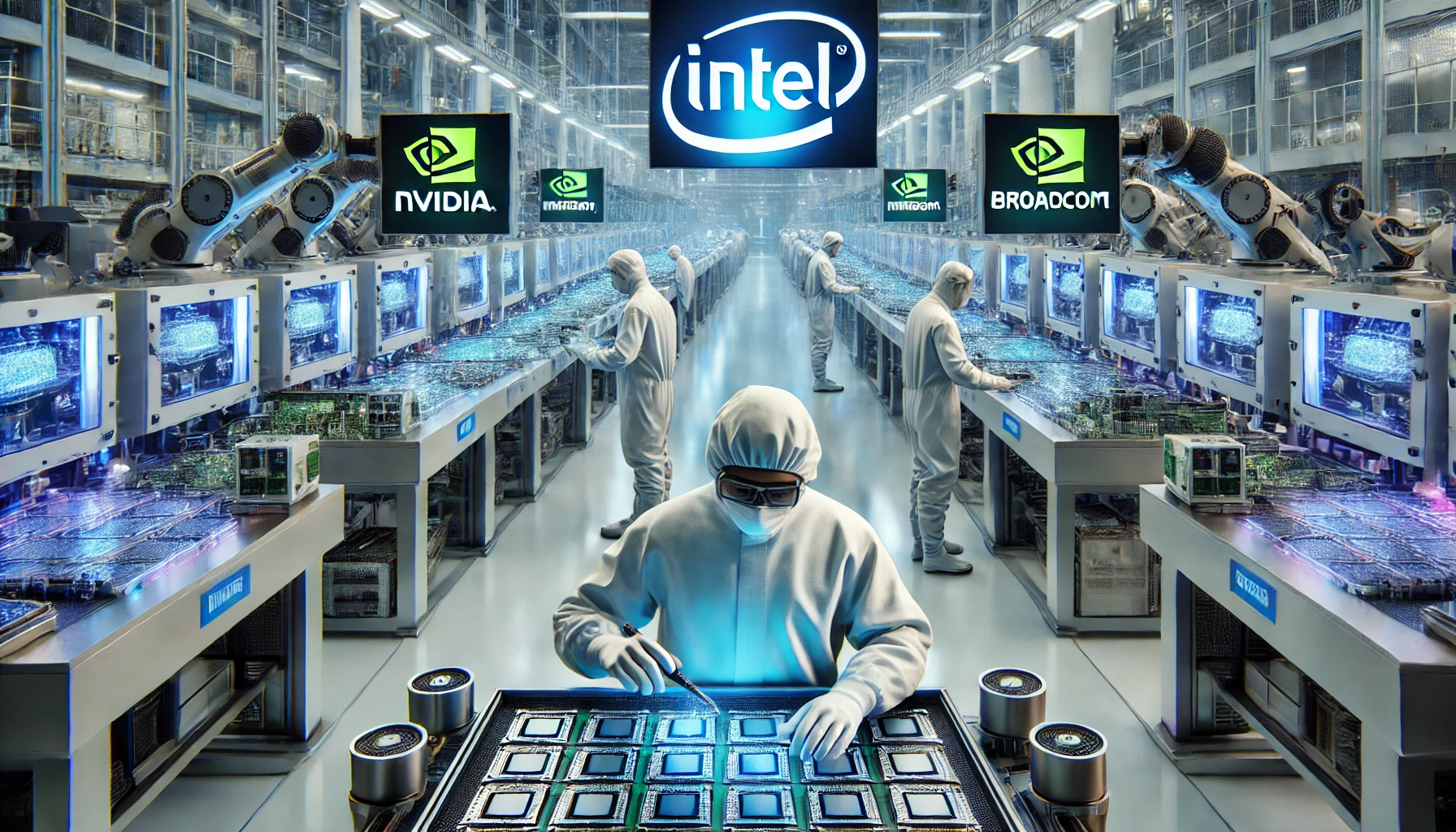
In a major development for the semiconductor industry, Nvidia and Broadcom are reportedly testing Intel’s advanced manufacturing process, marking a potential shift in chip production dynamics. The move highlights Intel’s growing ambition to establish itself as a key player in the contract chipmaking business, traditionally dominated by Taiwan’s TSMC and South Korea’s Samsung.
Intel Attracts Big Customers
Intel’s foundry business, Intel Foundry Services (IFS), has been aggressively positioning itself as a leading alternative to TSMC. With massive investments in cutting-edge chip fabrication technology, Intel is offering its advanced nodes, including Intel 18A, to external clients.
Industry insiders suggest that Nvidia and Broadcom, two of the biggest names in the semiconductor space, are evaluating Intel’s manufacturing capabilities to determine whether they can be used for future chip production. If successful, this could diversify the supply chain and reduce the industry’s reliance on TSMC, which currently fabricates most of Nvidia’s GPUs and Broadcom’s custom chips.
Why Nvidia and Broadcom Are Testing Intel’s Process
Several factors are driving Nvidia and Broadcom to consider Intel as a foundry partner:
- Supply Chain Diversification: TSMC’s dominance and increasing demand have led to production bottlenecks, making alternatives attractive.
- Advanced Manufacturing Technology: Intel’s 18A process node is expected to compete with TSMC’s and Samsung’s most advanced nodes.
- Geopolitical Considerations: With U.S. government support for domestic chip manufacturing, Intel’s U.S.-based foundries could provide a strategic advantage.
Intel’s Race to Compete with TSMC and Samsung
Intel CEO Pat Gelsinger has repeatedly emphasized that Intel aims to be the second-largest global foundry by 2030. The company has committed billions to expanding its U.S. and European chip fabrication facilities, with the goal of attracting major semiconductor firms.
If Nvidia and Broadcom decide to shift part of their chip production to Intel, it could reshape the semiconductor industry’s competitive landscape. However, Intel will need to prove its manufacturing capabilities and deliver chips at the quality and scale that companies like Nvidia demand.
What’s Next?
While testing is underway, neither Nvidia nor Broadcom have announced formal agreements to use Intel’s manufacturing process for mass production. If Intel’s technology meets their standards, it could lead to long-term collaborations that challenge the dominance of TSMC and Samsung in advanced chipmaking.
As the semiconductor race heats up, all eyes will be on Intel to see if it can successfully establish itself as a leading contract chip manufacturer for some of the world’s biggest tech companies.