 TECH TIMES NEWS
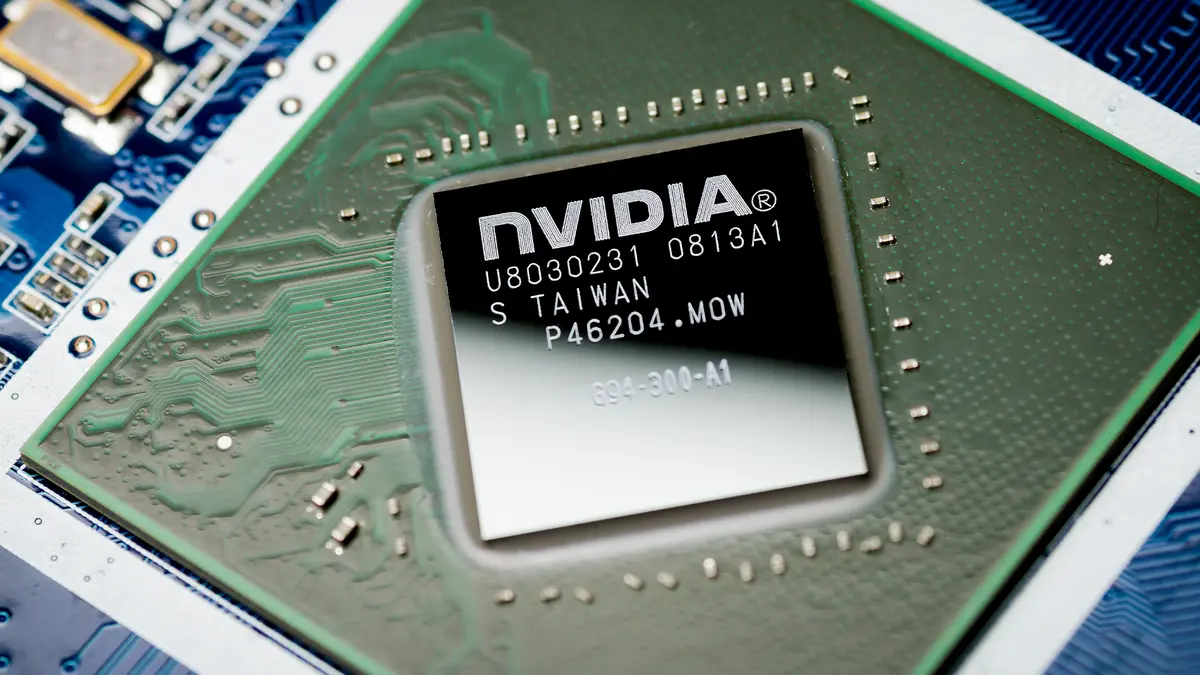
In the midst of an escalating technological standoff between the United States and China, Nvidia, the American chip giant, finds itself entangled in a high-stakes geopolitical game that could reshape the global semiconductor industry. Once a relatively neutral player in the broader East-West rivalry, Nvidia is now squarely in the spotlight, a symbol of American innovation—and a strategic asset closely watched by both Washington and Beijing.
A Giant at the Heart of the AI Race
Nvidia’s rise from a graphics card manufacturer to the world’s leading AI chip designer has been meteoric. Its GPUs power everything from gaming rigs to cutting-edge AI systems and supercomputers. As artificial intelligence becomes the new battleground of technological supremacy, Nvidia’s hardware has emerged as a key ingredient in training large language models and machine learning algorithms.
Its flagship H100 and A100 chips are considered the gold standard for AI workloads, and major players—from OpenAI to Meta—depend on Nvidia’s silicon to drive their AI ambitions. However, this dominance also makes the company a strategic concern for governments keen on controlling critical technologies.
U.S. Export Controls: A Blow to Business
In 2022 and 2023, the U.S. government imposed sweeping export controls targeting high-end semiconductor technology and equipment to China. The goal was clear: slow down Beijing’s AI development and reduce reliance on American tech. Nvidia was forced to halt shipments of its most advanced chips to Chinese customers, including tech giants like Alibaba, Tencent, and Baidu.
To navigate around these restrictions, Nvidia created less powerful variants like the A800 and H800 chips, specifically tailored to comply with U.S. guidelines. However, further restrictions rolled out in late 2023 closed even those loopholes, effectively cutting off the Chinese market from Nvidia’s advanced hardware.
This has led to short-term losses for Nvidia, which previously generated a significant portion of its data center revenue from Chinese clients. The company has downplayed the impact, citing robust demand elsewhere, but analysts warn that over time, the loss of the world’s second-largest economy could become more pronounced.
China’s Response: Self-Reliance and Acceleration
Beijing has not taken these restrictions lightly. In response, the Chinese government has doubled down on its strategy of technological self-sufficiency. Billions of dollars are now being funneled into domestic chipmakers like Huawei’s HiSilicon, SMIC, and startups such as Biren Technology—all aiming to produce homegrown alternatives to Nvidia’s AI chips.
While these efforts are still catching up in terms of raw performance and manufacturing capabilities, recent reports indicate that China is making surprising progress. In fact, Huawei’s latest Ascend chips and Biren’s BR100 are inching closer to Nvidia’s performance benchmarks, particularly for localized use-cases where power efficiency and cost matter more than peak capability.
The Geopolitical Gamble
For Nvidia, the larger concern is not just business—it’s about being a pawn in a broader geopolitical struggle. Washington sees companies like Nvidia as critical national assets and is eager to protect them from espionage and unfair competition. There’s even speculation that tighter restrictions could soon include limits on collaborations, licensing, or even access to certain foreign markets.
On the other hand, China is accelerating its push to decouple from Western technology entirely. If successful, this could ultimately lead to the rise of parallel ecosystems: one dominated by U.S. tech and the other by Chinese alternatives—a scenario that would fracture the global semiconductor supply chain and limit Nvidia’s international influence.
Navigating an Uncertain Future
Nvidia CEO Jensen Huang has diplomatically acknowledged the challenge, calling the export restrictions a “significant headwind.” Yet he remains optimistic about growth in AI, enterprise computing, automotive, and gaming sectors. The company’s recent $40 billion revenue milestone underscores its strength, but the long-term trajectory depends on how effectively it can adapt to shifting global politics.
To stay ahead, Nvidia is also exploring expanded manufacturing partnerships outside of Taiwan, including collaborations with TSMC in the U.S. and plans to diversify into software and full-stack AI platforms. The company knows that silicon alone won't be enough in a world where access to markets and political alliances can dictate success.
Conclusion
Nvidia’s position in the tech cold war is emblematic of the new reality for many global tech firms. As superpowers spar over chips, data, and dominance, companies like Nvidia must walk a fine line—balancing innovation with regulation, profits with principles, and technology with diplomacy. The coming years will test not only Nvidia’s engineering brilliance but also its geopolitical agility.