 TECH TIMES NEWS
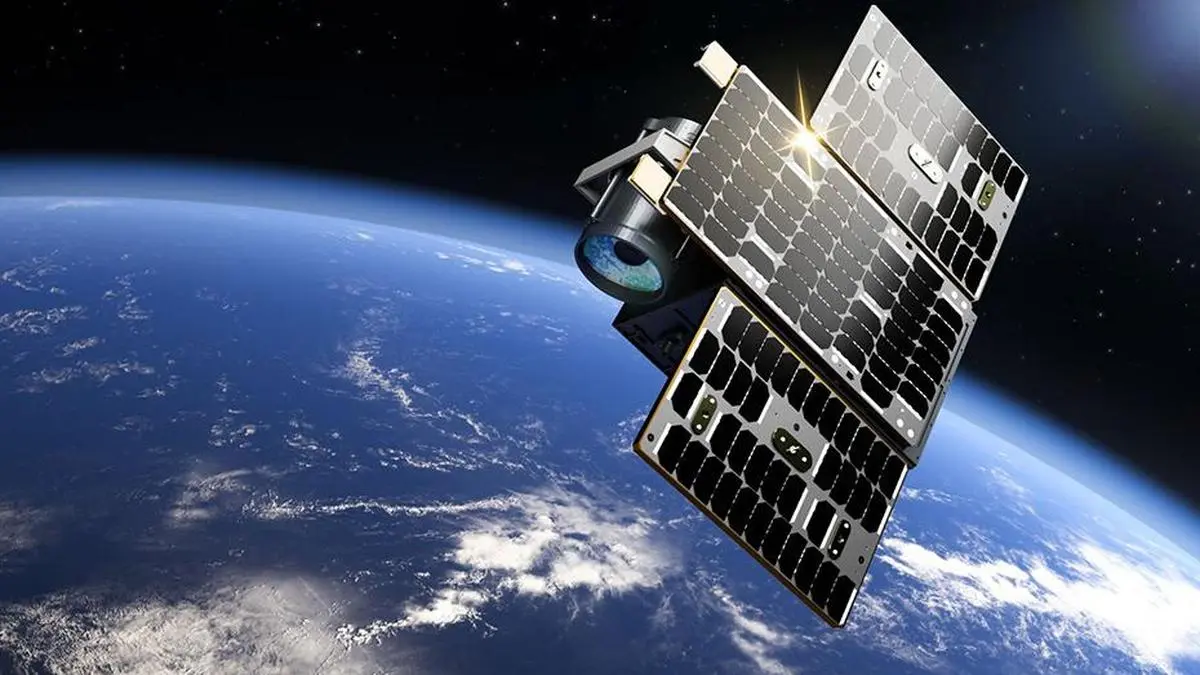
Indian space-tech startup Pixxel is gearing up for a milestone moment in 2026: the launch of what it describes as India’s first orbital data centre satellite. Unlike traditional Earth observation satellites that simply capture and transmit raw data back to ground stations, this new system will process data directly in orbit—a shift that could redefine how quickly and efficiently space-based insights are delivered.
At its core, the mission reflects a broader transition from passive data collection to active, real-time intelligence generation in space.
What Makes an Orbital Data Centre Different
Conventional satellites act like cameras in the sky, capturing massive volumes of imagery that must be sent back to Earth for processing. This creates bottlenecks—limited bandwidth, higher latency, and delays in decision-making.
Pixxel’s approach flips that model.
By integrating onboard computing infrastructure, the satellite can filter, process, and analyze data before transmitting only the most relevant insights. This reduces the need for constant data downlinking and allows for near real-time applications, especially in scenarios where speed is critical.
In practical terms, it’s similar to moving from cloud computing to edge computing—except the “edge” is now in orbit.
Powered by Hyperspectral Imaging
Pixxel has built its reputation around hyperspectral imaging technology, which captures data across hundreds of spectral bands. This enables detection of details invisible to standard optical satellites—such as soil health variations, crop stress, mineral composition, or pollution levels.
When combined with onboard processing, this capability becomes even more powerful. Instead of sending terabytes of raw spectral data to Earth, the satellite can identify anomalies, classify materials, or flag changes instantly, delivering actionable intelligence rather than raw imagery.
This is particularly valuable for sectors like:
- Agriculture: Monitoring crop health and predicting yields
- Climate Science: Tracking emissions, deforestation, and water quality
- Defense & Security: Enhancing surveillance with faster insights
- Energy & Mining: Detecting resource signatures with precision
Why This Matters for India’s Space Ecosystem
Pixxel’s initiative signals a maturing phase for India’s private space sector. Over the past few years, policy reforms and ISRO’s push for commercialization have enabled startups to move beyond experimental missions toward infrastructure-level innovation.
Launching an orbital data centre places Pixxel in a category that’s still emerging globally. While companies in the US and Europe are exploring similar architectures, large-scale deployment remains limited.
For India, this represents:
- A step toward data sovereignty in space-based intelligence
- Reduced reliance on foreign satellite data pipelines
- Stronger positioning in the global geospatial data economy
The Broader Trend: Computing Moves to Space
Pixxel’s plan aligns with a growing global shift toward in-orbit computing and autonomous satellites. As satellite constellations scale up, transmitting all raw data back to Earth becomes impractical.
Instead, companies are exploring ways to:
- Process data closer to the source
- Use AI models directly in orbit
- Enable satellites to communicate and collaborate with each other
This trend is often described as the evolution toward a “space cloud”—a distributed computing layer operating beyond Earth.
Challenges Ahead
Despite its promise, the concept isn’t without hurdles.
Building reliable computing systems that can withstand radiation, extreme temperatures, and limited power budgets is technically complex. There’s also the challenge of software updates in orbit, cybersecurity risks, and ensuring long-term operational stability.
Moreover, the business model depends on whether customers are willing to pay for processed insights over raw data, a shift that requires trust and proven accuracy.
What Readers Should Take Away
Pixxel’s upcoming launch isn’t just another satellite mission—it’s a signal of where the industry is heading. The value in space is moving up the stack, from data collection to data interpretation and decision-making.
If successful, this orbital data centre could:
- Shorten the time between observation and action
- Reduce costs associated with data transmission
- Enable entirely new real-time applications across industries
In simple terms, space is no longer just a place to observe Earth—it’s becoming a place to compute, analyze, and decide.