 TECH TIMES NEWS
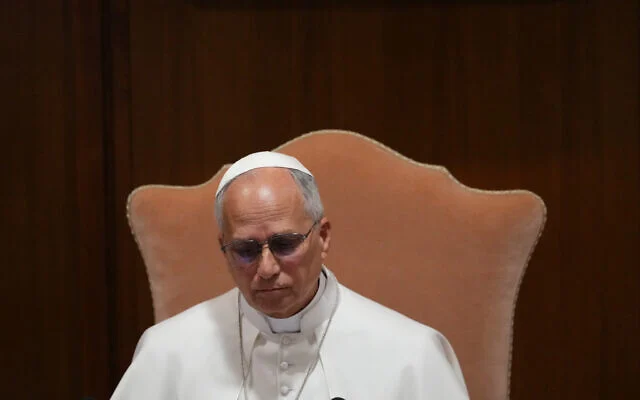
Pope Leo XIV has delivered one of the strongest warnings yet from a global religious institution on the rapid rise of artificial intelligence, urging the world to “disarm” AI systems before they outpace human ethical control.
In a wide-ranging manifesto released through the Vatican this week, the Pope argued that artificial intelligence must remain subordinate to human dignity, democratic values, and social responsibility. The document calls for stronger international oversight of advanced AI technologies, particularly in areas involving warfare, surveillance, disinformation, and labor displacement.
The manifesto arrives at a time when governments and technology companies are racing to develop increasingly powerful AI systems, often with limited global consensus on safety standards or long-term societal impacts.
Strong Warning Against Autonomous Decision-Making
At the core of Pope Leo XIV’s message is a concern that AI systems are gradually being granted influence over decisions that should remain firmly under human judgment.
The Pope warned against what he described as the “delegation of conscience” to machines, arguing that algorithms cannot replace moral reasoning, empathy, accountability, or spiritual understanding. He emphasized that while AI can improve productivity and scientific progress, it should never become a substitute for human responsibility in matters involving justice, warfare, education, healthcare, or governance.
The manifesto specifically criticized the development of autonomous weapons systems capable of selecting and engaging targets without direct human intervention. Such technologies, the Vatican said, risk lowering the threshold for conflict while reducing moral accountability for violence.
Global concern over AI-powered military systems has intensified in recent years. According to the Stockholm International Peace Research Institute (SIPRI), defense spending on autonomous and AI-assisted military technologies has increased significantly since 2022, with major powers investing heavily in drone warfare, predictive targeting systems, and battlefield automation.
AI’s Impact on Society and Employment Highlighted
Beyond military applications, Pope Leo XIV also focused on the economic and social disruptions caused by AI-driven automation.
The manifesto warned that unchecked deployment of generative AI and machine learning systems could deepen inequality by concentrating technological power within a small number of corporations and nations. The Pope urged policymakers to protect workers vulnerable to automation while ensuring that technological progress benefits society broadly rather than exclusively enriching dominant tech firms.
The concern reflects broader global debates surrounding the future of employment. Reports from organizations such as the International Monetary Fund (IMF) and the World Economic Forum have projected that AI could significantly reshape labor markets over the next decade, particularly in administrative, customer-service, media, and entry-level white-collar roles.
At the same time, the Vatican acknowledged that AI also presents opportunities in healthcare, climate research, accessibility, and education when deployed responsibly and transparently.
Vatican Calls for International AI Regulation
A major section of the manifesto calls for coordinated international regulation rather than fragmented national approaches.
Pope Leo XIV urged governments to establish legally enforceable safeguards covering transparency, data protection, algorithmic accountability, and human oversight. The document also called for stronger protections against AI-generated misinformation and deepfake technologies capable of manipulating public opinion or destabilizing democratic institutions.
The Vatican’s intervention comes as policymakers worldwide struggle to keep pace with AI development. The European Union has already moved forward with its landmark AI Act, while the United States, China, and the United Kingdom continue developing separate regulatory frameworks.
Technology analysts say the lack of globally aligned standards could create uneven oversight, allowing companies to exploit regulatory gaps across jurisdictions.
Ethical Debate Around AI Continues to Intensify
The Pope’s manifesto adds moral and philosophical weight to a debate that has largely been dominated by governments, researchers, and technology executives.
Over the past two years, prominent AI scientists and industry leaders have repeatedly warned about risks associated with advanced AI systems, including misinformation, cyber manipulation, mass surveillance, and potential loss of human control over highly autonomous technologies.
Several researchers have also argued that the pace of AI commercialization is outstripping the development of ethical safeguards. Critics contend that competition among technology companies has accelerated deployment timelines while reducing emphasis on transparency and independent auditing.
By framing AI as not only a technical challenge but also a moral and human issue, the Vatican appears to be positioning itself as an active voice in the global governance conversation surrounding emerging technologies.
Human Dignity Placed at the Center of Technology Debate
A recurring theme throughout the manifesto is the idea that technological advancement must serve humanity rather than redefine it.
Pope Leo XIV stressed that innovation should strengthen human creativity, relationships, and freedom instead of weakening social trust or concentrating power in automated systems. The document repeatedly emphasized the importance of preserving human agency in an era increasingly shaped by algorithmic decision-making.
The Pope also urged educators, religious leaders, scientists, and policymakers to collaborate on building ethical frameworks capable of guiding future AI development responsibly.
Experts believe the Vatican’s position could resonate strongly in regions where concerns about digital ethics, surveillance, and social inequality are already influencing public debate over emerging technologies.
Growing Global Pressure for Responsible AI Development
The manifesto arrives amid mounting international pressure for clearer AI governance standards.
Governments, universities, and civil society groups are increasingly debating how to balance innovation with safety, especially as generative AI tools become more powerful and accessible. Concerns surrounding election interference, synthetic media, data privacy, and AI-generated misinformation have intensified ahead of several major global elections.
While technology firms argue that AI can deliver enormous economic and scientific benefits, critics warn that insufficient oversight could create long-term societal risks difficult to reverse once systems become deeply integrated into public infrastructure and daily life.
Pope Leo XIV’s appeal for the “disarming” of AI is unlikely to slow technological development directly. However, it significantly strengthens the growing international argument that ethical boundaries and human accountability must remain central to the future of artificial intelligence.
Conclusion
With this manifesto, Pope Leo XIV has positioned the Vatican as a major moral voice in the global AI conversation. Rather than rejecting technological innovation outright, the Pope’s message advocates controlled, transparent, and human-centered development designed to protect dignity, peace, and democratic stability.
As artificial intelligence continues reshaping economies, warfare, communication, and governance, the Vatican’s intervention reflects a broader reality: the debate over AI is no longer only about technology — it is increasingly about the future values that will shape human society itself.