 TECH TIMES NEWS
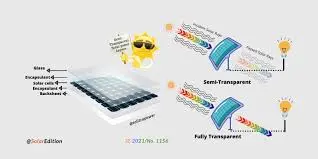
Researchers have achieved a groundbreaking milestone in solar innovation by developing semi-transparent solar cells that combine high efficiency with optical clarity, paving the way for energy-harvesting windows and building facades. The latest prototypes have surpassed 15% power conversion efficiency, setting a new benchmark for transparent photovoltaics (TPVs).
How Semi-Transparent Solar Cells Work
Unlike traditional opaque solar panels, semi-transparent cells use specialized perovskite and organic materials that allow visible light to pass through while capturing infrared and ultraviolet light for energy generation. This dual capability makes them ideal for architectural integration, especially in skyscrapers and glass-heavy modern structures.
Breaking Efficiency Records
The record-setting design, achieved by an international team of scientists from the University of Michigan and KAUST, utilizes a tandem cell configuration combining perovskite and organic photovoltaic layers. This innovation enhances energy capture while maintaining up to 60% visible transparency—a significant leap over previous models that struggled to balance power and aesthetics.
Building-Integrated Photovoltaics (BIPV) on the Rise
These new solar cells could transform urban energy systems, turning office towers, apartment blocks, and even vehicles into self-sustaining power sources. Known as Building-Integrated Photovoltaics (BIPV), this technology could drastically reduce city carbon emissions and energy costs.
Commercial Viability and Manufacturing
The research team emphasizes that the materials used are low-cost and scalable, with the potential for mass production through roll-to-roll printing. Experts predict that within the next five years, these semi-transparent solar panels could be commercially available for smart windows, greenhouses, and automotive glass applications.
Sustainability and Future Impact
Beyond energy generation, these solar cells enhance building insulation and reduce heat transfer, contributing to energy efficiency even when sunlight is low. With global initiatives pushing for net-zero emissions, semi-transparent solar panels could soon play a crucial role in sustainable architecture and renewable energy adoption worldwide.