 TECH TIMES NEWS
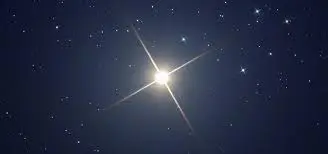
Venus has once again captured global attention as the brightest object visible in the early morning sky, outshining every star and even rivaling the Moon under the right conditions. Often referred to as the “Morning Star,” Venus owes its brilliance not to size or heat, but to a unique combination of proximity, reflectivity, and orbital position relative to Earth.
Closer to Earth Than Any Other Planet
One of the biggest reasons Venus appears so bright is its relative closeness to Earth. As Earth’s nearest planetary neighbor, Venus can approach within about 38 million kilometers. This proximity allows sunlight reflected from Venus to reach Earth with far greater intensity than light from distant stars or planets like Jupiter and Saturn.
Extreme Reflectivity Amplifies Its Glow
Venus is wrapped in thick clouds composed mainly of sulfuric acid, making it the most reflective planet in the solar system. Scientists estimate that Venus reflects nearly 75% of the sunlight that hits it. This high reflectivity, known as albedo, turns Venus into a cosmic mirror, amplifying its visibility even during twilight hours.
Perfect Orbital Position Creates the “Morning Star” Effect
Venus orbits closer to the Sun than Earth, which means it is always seen either just before sunrise or just after sunset. When Venus appears in the eastern sky before dawn, it earns the title “Morning Star.” During this phase, the planet is positioned so that a large portion of its sunlit side faces Earth, maximizing brightness.
Phases of Venus Enhance Visibility
Much like the Moon, Venus goes through phases. When it appears as a crescent but is also closer to Earth, the planet can reach peak brightness. Astronomers note that Venus can shine at a magnitude of around –4.7, making it the brightest natural object in the night sky after the Moon.
Clear Skies Make Venus Hard to Miss
Venus’s intense brightness allows it to punch through light pollution, haze, and even thin clouds. For observers in urban environments, this makes Venus one of the easiest celestial objects to spot without telescopes or binoculars, adding to its cultural and astronomical significance.
A Familiar Sight Across Civilizations
Throughout history, Venus has been observed and documented by ancient civilizations, often mistaken for two separate objects—one in the morning and one in the evening. Today, modern astronomy explains this illusion through Venus’s orbital mechanics, reaffirming why it remains one of the most fascinating objects in Earth’s sky.