 TECH TIMES NEWS
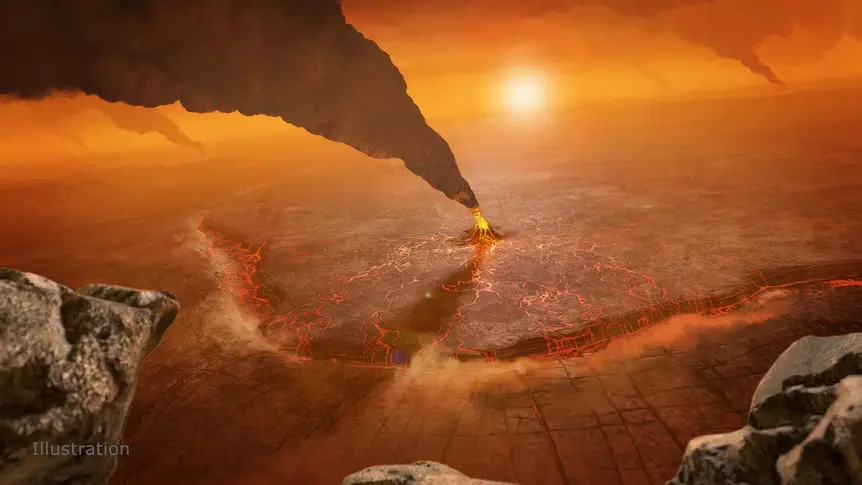
Scientists studying radar imagery and geological models of Venus have proposed that the planet may conceal a vast underground tunnel formed by ancient volcanic eruptions. The feature, believed to be a large lava tube, could stretch for dozens—or even hundreds—of kilometres beneath the planet’s surface, making it one of the most significant geological structures ever hypothesized beyond Earth.
Researchers suggest that during Venus’ more volcanically active past, intense lava flows may have carved enormous hollow channels beneath hardened crust layers. These formations are similar in principle to lava tubes found on Earth, the Moon, and Mars, but the extreme volcanic conditions on Venus could have produced structures of unprecedented scale.
Radar Observations Hint at Subsurface Cavities
The new hypothesis is based on detailed analysis of radar data collected by past missions, including NASA’s Magellan spacecraft. Scientists observed long, sinuous surface channels and collapse-like features that resemble skylights—openings that form when the roof of a lava tube gives way.
These surface indicators point toward the possibility of hollow voids beneath the planet’s thick crust. Because Venus is shrouded in dense clouds, radar remains one of the few effective tools for mapping its terrain. Subtle surface depressions and linear formations have fueled speculation that large underground cavities may exist.
Venus’ Intense Volcanism Could Support Mega Lava Tubes
Venus is widely regarded as one of the most volcanically active planets in the Solar System. Its surface shows vast plains of solidified lava, massive shield volcanoes, and long volcanic channels. Scientists believe that lava on Venus may have been hotter and more fluid than on Earth, allowing it to travel much farther before cooling.
This extreme environment could have enabled the formation of unusually large lava tubes. On Earth, such tubes can extend several kilometres. On the Moon and Mars, lower gravity has allowed even longer structures. Given Venus’ volcanic intensity, experts say underground tunnels there might dwarf those found elsewhere.
Implications for Planetary Science and Future Missions
The existence of large lava tubes on Venus would have major implications for understanding the planet’s geological history. It could offer new insights into how Venus evolved differently from Earth despite their similar sizes and compositions.
Future missions such as NASA’s VERITAS and ESA’s EnVision spacecraft are expected to provide higher-resolution radar mapping of Venus’ surface. These missions could help confirm whether the suspected collapse features truly indicate subterranean tunnels.
If proven, such structures would reshape scientific understanding of Venusian volcanism and internal dynamics.
Could Underground Tunnels Offer Clues to Habitability?
While Venus’ surface conditions are extremely hostile—featuring crushing pressure and temperatures hot enough to melt lead—subsurface environments sometimes raise intriguing scientific questions. On other planetary bodies, lava tubes are considered potential shelters from radiation and harsh climates.
Although Venus remains one of the least hospitable worlds in the Solar System, identifying underground cavities would expand scientific discussion about planetary evolution and geological processes in extreme environments.