 TECH TIMES NEWS
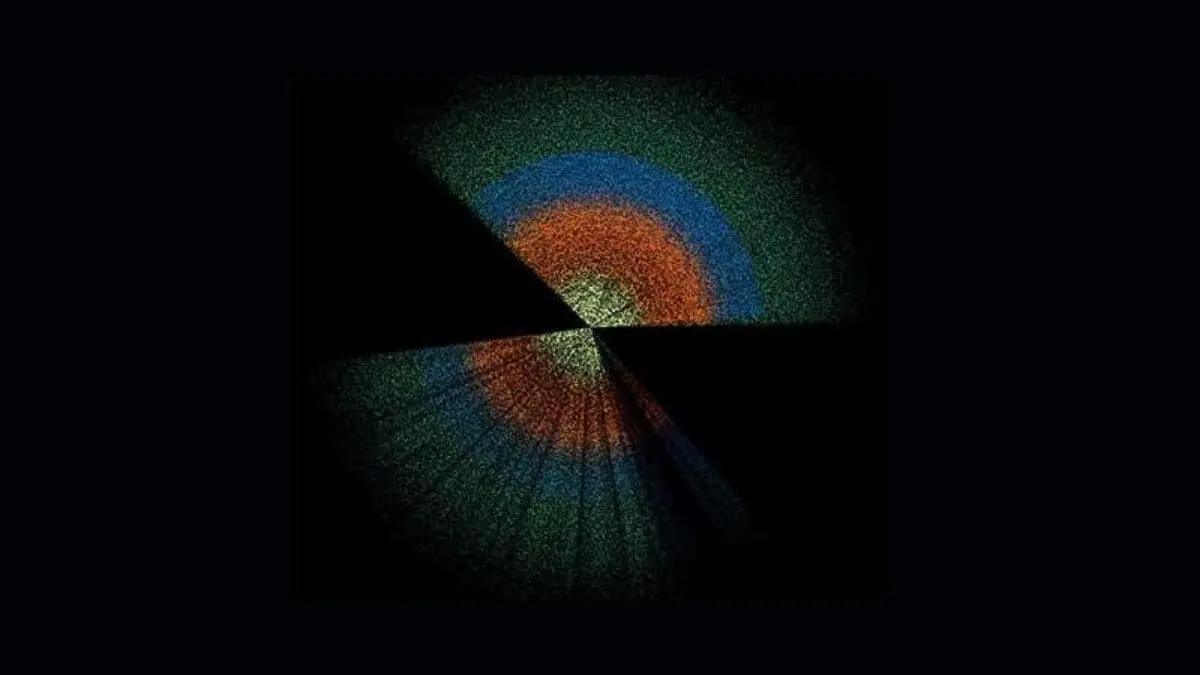
A new scientific study is stirring debate in the astrophysics community by suggesting that dark matter — the mysterious substance believed to make up nearly 85 percent of the universe’s mass — may not exist at all. Instead, researchers propose that gravity itself could behave differently at vast cosmic scales, potentially eliminating the need for dark matter in explaining galactic motion.
For decades, dark matter has been the leading explanation for why galaxies rotate faster than predicted by classical Newtonian and Einsteinian physics. However, the latest findings argue that the discrepancies attributed to dark matter might instead signal an incomplete understanding of gravity.
Rethinking Gravity at Cosmic Distances
The study explores alternative gravity models that modify how gravitational forces operate over extremely large distances. According to researchers, the laws of gravity that accurately describe planetary motion within our solar system may not function identically across intergalactic scales.
These modified gravity theories suggest that gravitational pull could strengthen or behave differently in low-acceleration environments, such as the outer edges of galaxies. This adjustment could naturally explain galaxy rotation curves without invoking invisible matter.
Galaxy Rotation Without Invisible Mass
One of the strongest pieces of evidence for dark matter has been the way galaxies rotate. Stars at the edges of galaxies move at speeds that, under standard physics, should cause them to fly apart. Dark matter was proposed as an unseen mass providing the extra gravitational glue.
However, the new research demonstrates that certain gravity models can reproduce observed galactic rotation patterns without requiring additional unseen mass. Researchers argue that these results align closely with astronomical data gathered from modern telescopes.
Implications for Cosmology
If gravity behaves differently at cosmic scales, the implications would be profound. Modern cosmology — including models of galaxy formation, gravitational lensing, and the cosmic microwave background — heavily depends on dark matter.
Eliminating dark matter would require scientists to revise fundamental theories about the structure and evolution of the universe. However, experts caution that dark matter remains strongly supported by multiple independent observations, including large-scale structure formation and gravitational lensing effects.
Scientific Community Remains Divided
While the study presents compelling mathematical models, many astrophysicists emphasize that modified gravity theories must explain all cosmic observations as effectively as dark matter does. So far, no alternative model has fully replaced dark matter across every scale of observation.
Researchers note that upcoming space missions and next-generation telescopes could provide higher precision data to test whether gravity truly behaves differently in deep space.
The Future of the Dark Matter Mystery
Despite decades of experimental efforts, dark matter particles have never been directly detected. This absence of direct evidence has fueled alternative theories like modified gravity.
Whether dark matter is eventually discovered or gravity is redefined, the new study underscores a central principle of science: even the most widely accepted theories remain open to challenge when new evidence emerges.