 TECH TIMES NEWS
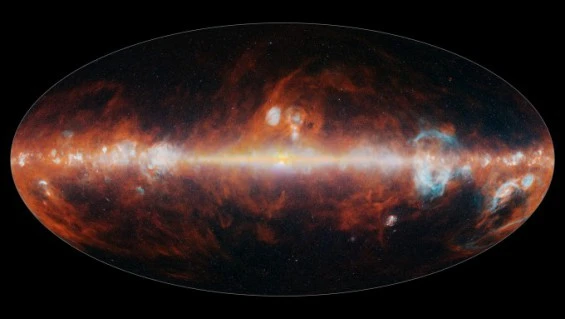
NASA’s SPHEREx (Spectro-Photometer for the History of the Universe, Epoch of Reionization and Ices Explorer) has identified an interstellar comet actively releasing gas and organic molecules as it passes through our solar system. The detection marks a significant milestone for the infrared space observatory, which is designed to survey the sky in hundreds of wavelengths.
Unlike typical comets originating from the Kuiper Belt or Oort Cloud, this object formed around another star before being ejected into interstellar space. Its arrival provides scientists with a rare opportunity to analyze material that predates our solar system’s formation.
Infrared Technology Reveals Chemical Composition
SPHEREx uses infrared spectroscopy to break down light emitted or absorbed by celestial objects. By studying specific wavelengths, researchers can identify chemical fingerprints in space. Observations show that the comet is venting gas and carrying complex organic molecules — carbon-based compounds that are considered building blocks for life.
Scientists note that detecting such molecules in an interstellar object is especially exciting. It suggests that the ingredients necessary for life may be common throughout the galaxy, potentially traveling vast distances aboard wandering comets.
Flaring Activity Signals Active Surface
Data indicates that the comet brightened as volatile materials on its surface warmed while approaching the Sun. This heating caused frozen gases to sublimate, forming a glowing coma — the cloud of gas and dust surrounding the nucleus.
The flaring behavior provided ideal conditions for SPHEREx to study its chemical output. Researchers say the intensity and composition of the emissions offer clues about the environment in which the comet originally formed.
Clues to the Galaxy’s Chemical Evolution
SPHEREx’s broader mission is to map the sky in infrared light and trace the distribution of water, ice, and organic molecules across the Milky Way. Discoveries like this interstellar comet help fulfill that goal by offering direct samples — albeit remotely observed — of material forged in distant planetary systems.
By comparing its composition with comets native to our solar system, astronomers can identify similarities and differences in chemical evolution across star systems. Early findings suggest that complex chemistry may not be unique to our cosmic neighborhood.
A Growing List of Interstellar Discoveries
This object joins a small but growing list of known interstellar visitors, following earlier discoveries that confirmed such wanderers occasionally pass through our solar system. Each new detection improves scientific understanding of how planetary systems form and exchange material across the galaxy.
Researchers emphasize that SPHEREx’s wide-field infrared capabilities make it uniquely suited for spotting and analyzing transient objects like this one. As the mission continues scanning the sky, more discoveries could soon follow.
Looking Ahead
NASA scientists plan to continue monitoring the comet as it travels through the inner solar system. Additional observations may refine estimates of its size, rotation, and full chemical inventory.
The discovery underscores how next-generation space telescopes are transforming the study of cosmic origins. With SPHEREx now operational, astronomers are gaining an unprecedented view into both the distant universe and unexpected visitors from beyond it.