 TECH TIMES NEWS
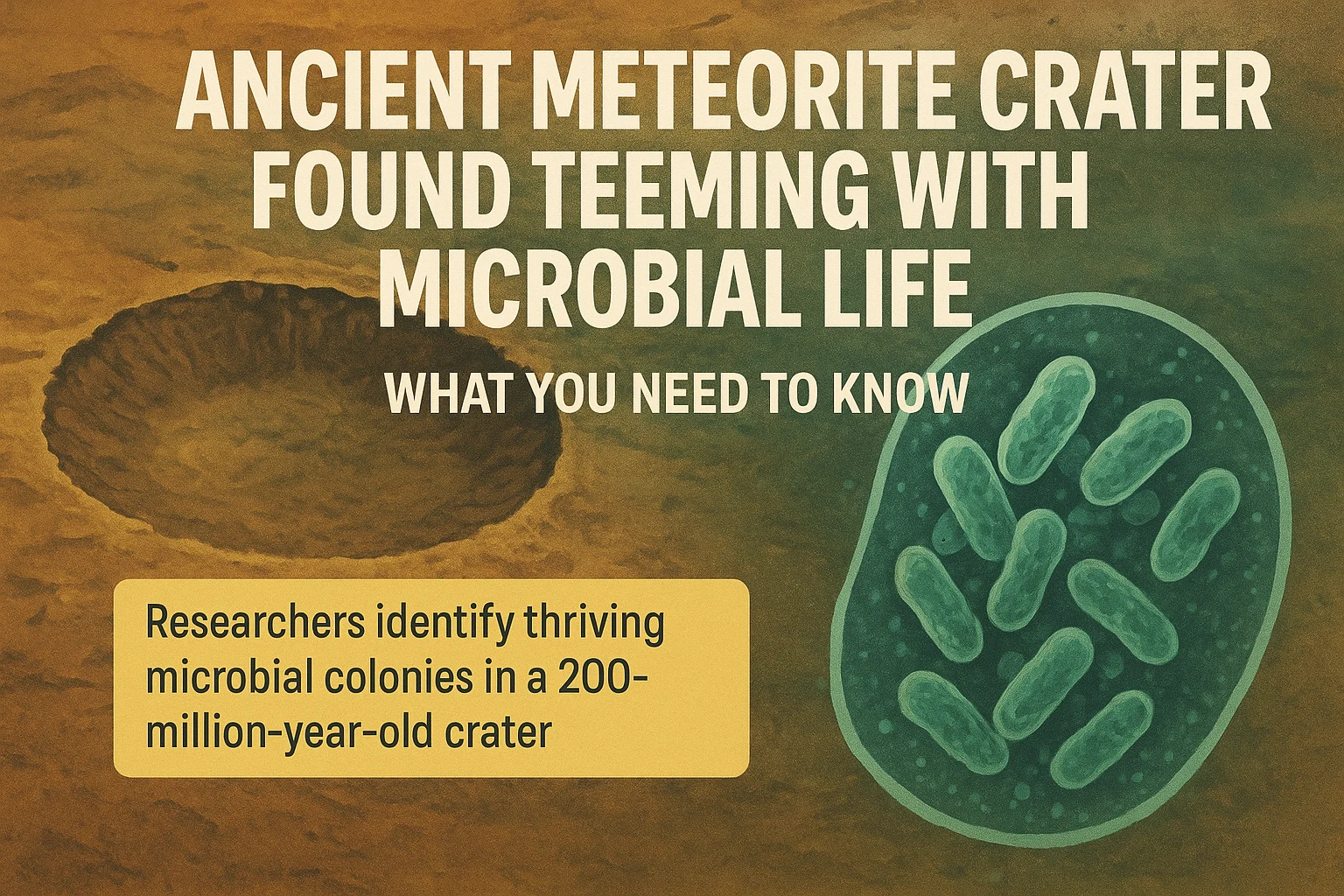
A recent study has revealed that ancient meteorite craters, long considered barren, may actually harbor microbial life. Researchers analyzed samples from a 200-million-year-old impact crater and identified thriving microbial colonies capable of surviving extreme environmental conditions.
Study Highlights Extreme Survival
The microorganisms discovered are extremophiles—organisms that can withstand high radiation, low nutrients, and extreme temperatures. Scientists believe that the crater’s unique mineral composition and microenvironments create niches for microbial colonization, demonstrating nature’s remarkable adaptability.
Implications for Astrobiology
This discovery has significant implications for astrobiology. If microbial life can survive in the harsh conditions of Earth’s meteorite craters, similar environments on Mars or other celestial bodies might also support life. The findings encourage researchers to investigate impact sites beyond Earth as potential habitats.
Geological and Biological Connection
By studying these craters, scientists gain insights into the intersection of geology and biology. Meteorite impacts may create ecosystems that persist for millions of years, offering clues about the resilience of life and the Earth’s evolutionary history.
Future Research Directions
The research team plans to explore other ancient craters worldwide to map microbial diversity and understand how impact events influence colonization. Such studies could reshape our understanding of life’s adaptability and the conditions that sustain it.