 TECH TIMES NEWS
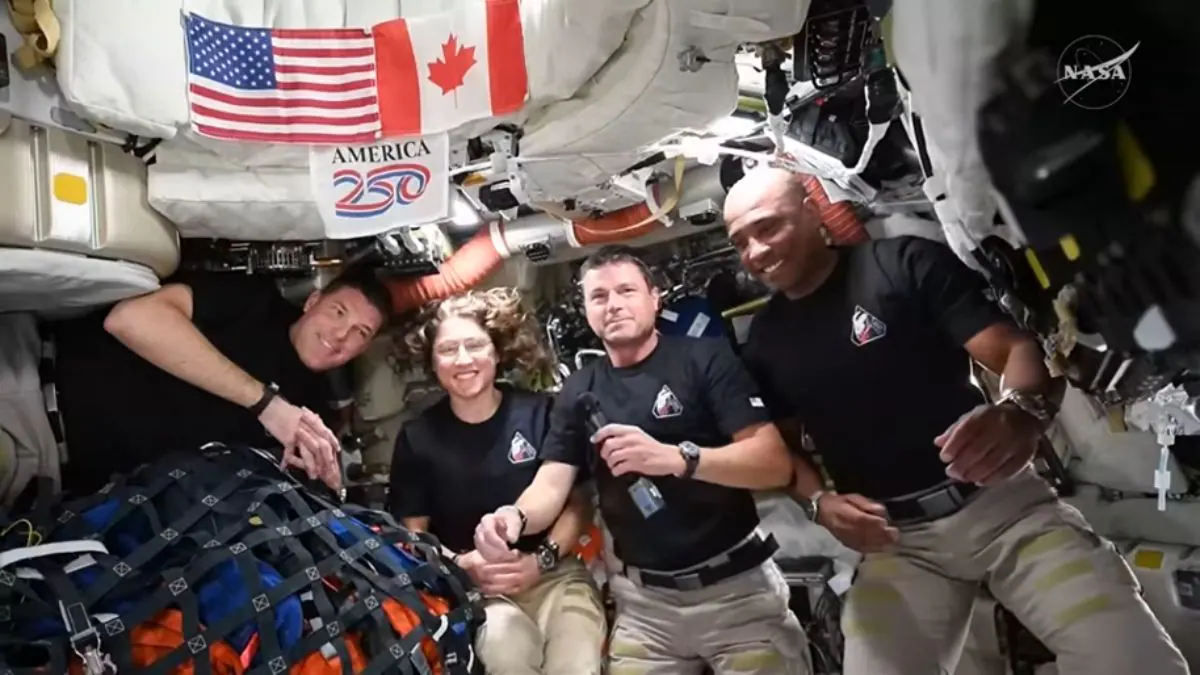
In a defining moment for NASA’s Artemis II mission, astronauts aboard the Orion spacecraft have successfully taken manual control of the vehicle, demonstrating their ability to navigate and operate independently in deep space. This exercise is not just symbolic—it’s a crucial validation of human-in-the-loop control systems designed for future lunar and deep-space missions.
Unlike automated sequences that dominate most spaceflight operations, manual piloting ensures astronauts can respond to unexpected scenarios. NASA engineers have long emphasized that crew autonomy is essential, especially for missions venturing beyond low Earth orbit where communication delays can impact decision-making.
What Exactly Did the Astronauts Test?
During this phase of the mission, the Artemis II crew executed a series of high-priority system checks and operational drills. These included:
- Manual attitude control of the Orion capsule using onboard thrusters
- Navigation verification, ensuring alignment with planned return trajectory
- Life-support system monitoring, validating cabin pressure, oxygen flow, and thermal regulation
- Communication system checks, simulating real-world signal delays
Each of these tests feeds directly into NASA’s certification pipeline for future crewed lunar landings. The goal is simple but critical: eliminate uncertainties before astronauts attempt more complex operations near the Moon.
Why This Matters for Artemis III and Beyond
Artemis II is not a landing mission—it’s a proving ground. Every maneuver, every test, and every astronaut input contributes to refining the systems that will eventually carry humans back to the lunar surface under Artemis III.
Manual control exercises, in particular, address one of the biggest challenges in space exploration: operational resilience. If automated systems fail or behave unexpectedly, astronauts must be capable of taking over instantly. This capability becomes even more important for missions in deep space, where immediate ground intervention isn’t always possible.
Orion Spacecraft: Designed for Deep Space Reliability
The Orion capsule represents a new generation of human-rated spacecraft built specifically for long-duration missions beyond Earth orbit. Key features include:
- Advanced avionics systems for precise navigation
- Robust heat shield capable of withstanding extreme re-entry temperatures
- Enhanced life-support systems for extended missions
- Flexible control interfaces allowing both automated and manual operation
The recent in-space tests highlight Orion’s dual capability—automation backed by human control—making it a versatile platform for future exploration.
Preparing for the Most Critical Phase: Earth Re-Entry
With these tests completed, the Artemis II crew is now approaching one of the most demanding phases of the mission: re-entry into Earth’s atmosphere. Traveling at speeds exceeding 39,000 km/h, the spacecraft will rely heavily on its heat shield and precise trajectory alignment.
The manual control exercises conducted earlier serve as a safety net. Should any anomaly arise during descent, astronauts are now better prepared to intervene.
Expert Insight: Why Human Control Still Matters
Spaceflight has become increasingly automated, but Artemis II reinforces a key principle—humans remain central to exploration. According to aerospace experts, missions beyond low Earth orbit demand a hybrid approach where automation enhances efficiency, but human judgment ensures adaptability.
This balance is what will ultimately enable NASA to build a sustainable presence on the Moon and, eventually, prepare for missions to Mars.
The Bigger Picture: A Step Toward Lunar Return
Artemis II is more than a test flight—it’s a strategic milestone in NASA’s long-term exploration roadmap. By validating spacecraft systems, crew readiness, and operational protocols, the mission lays the groundwork for:
- Artemis III, which aims to land astronauts on the Moon
- Lunar Gateway development, a planned space station orbiting the Moon
- Future Mars missions, leveraging lessons learned from Artemis
Conclusion
The successful manual control and system testing aboard Artemis II underscore a simple but powerful reality: deep-space exploration is entering a new era where human capability and advanced technology work hand in hand. As the crew prepares for Earth return, the data gathered from these operations will shape the next generation of space missions—bringing humanity one step closer to a sustained presence beyond Earth.