 TECH TIMES NEWS
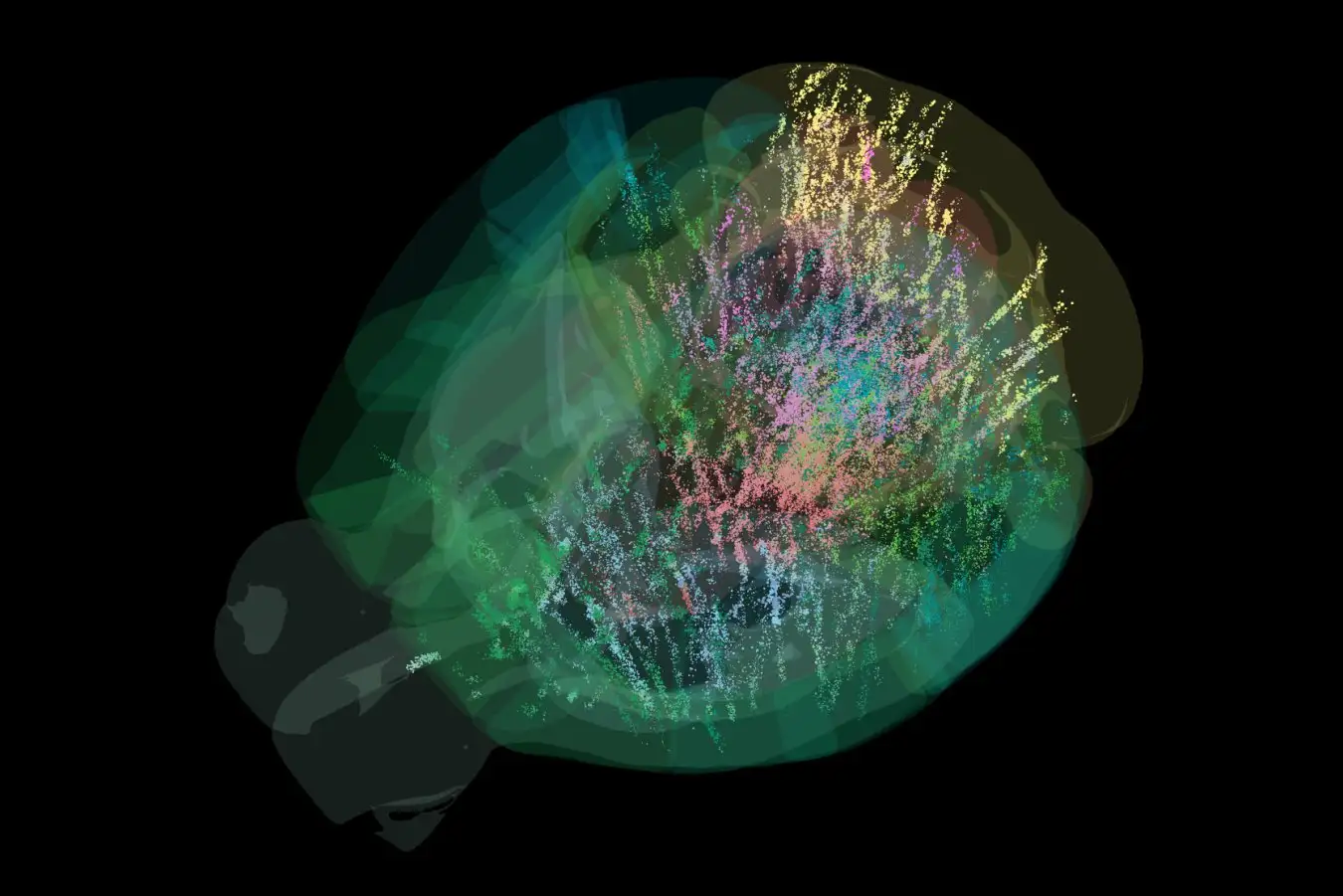
In a groundbreaking development, a team of international neuroscientists has successfully mapped brain activity across 95% of the mammalian brain, marking one of the most comprehensive studies of neural function ever conducted. This pioneering research opens new avenues for understanding cognition, memory, sensory perception, and mental health disorders.
The Scale of the Study
The researchers used advanced imaging technologies combined with artificial intelligence to record brain activity at unprecedented resolution. By mapping such a vast portion of the brain, the study offers insights into how neurons communicate and form complex networks that drive thought, behavior, and decision-making.
Unlocking the Brain’s Hidden Regions
Until now, much of the mammalian brain remained a mystery, with scientists only able to observe activity in limited regions. This study breaks through those barriers, revealing patterns in previously uncharted areas that are crucial for emotional regulation, sensory processing, and motor control.
Implications for Medicine and Technology
Experts believe this brain map could revolutionize neurological research, mental health treatments, and artificial intelligence systems inspired by biological networks. It could pave the way for breakthroughs in treating conditions such as Alzheimer’s disease, Parkinson’s, epilepsy, and depression by identifying the precise circuits involved.
A Step Toward Understanding Consciousness
Perhaps the most intriguing aspect of this achievement is its potential contribution to unraveling the enigma of consciousness. While scientists emphasize that full understanding remains distant, mapping nearly the entire mammalian brain provides a foundation to explore how consciousness arises from complex neural activity.
Future Prospects
The research team plans to expand this mapping to include more mammalian species and to deepen the analysis of individual brain regions. The ultimate goal is to create a universal reference that can guide neuroscience for decades to come.