 TECH TIMES NEWS
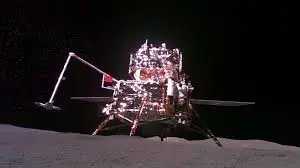
China’s Chang’e-6 lunar mission has made a historic discovery, revealing that samples collected from the Moon’s far side contain fragments from a water-rich asteroid. The findings, confirmed by a team of Chinese and international scientists, provide new clues about how volatile materials like water may have been delivered to the Moon during its early history.
Water Signatures Found in Lunar Soil
Researchers analyzing the Chang’e-6 samples identified hydrated minerals within tiny glassy beads and rock fragments. These minerals contain traces of hydroxyl (OH), a chemical signature linked to water. The discovery suggests that water-bearing asteroids collided with the Moon billions of years ago, depositing volatile compounds that could have influenced its surface composition.
Asteroid Origin Traced Through Chemical Composition
Spectroscopic analysis revealed the chemical fingerprint of carbonaceous chondrites—primitive meteorites known to harbor water and organic material. This indicates that the lunar far side, particularly the South Pole–Aitken Basin where Chang’e-6 landed, may have experienced impacts from water-rich celestial bodies originating from the outer solar system.
Implications for Lunar Evolution and Future Missions
The detection of water-bearing asteroid fragments reshapes scientists’ understanding of the Moon’s evolution. It implies that both the Earth and Moon may have shared common impactors delivering water in the early solar system. These insights could also guide future lunar exploration missions aimed at locating and utilizing in-situ water resources for human settlements.
China’s Growing Role in Space Science
The Chang’e-6 mission, launched in May 2024, marked the first successful sample return from the Moon’s far side—a region never directly studied before. With this discovery, China’s space program strengthens its scientific leadership, joining NASA and ESA in unraveling the mysteries of lunar geology and the origins of water in the inner solar system.