 TECH TIMES NEWS
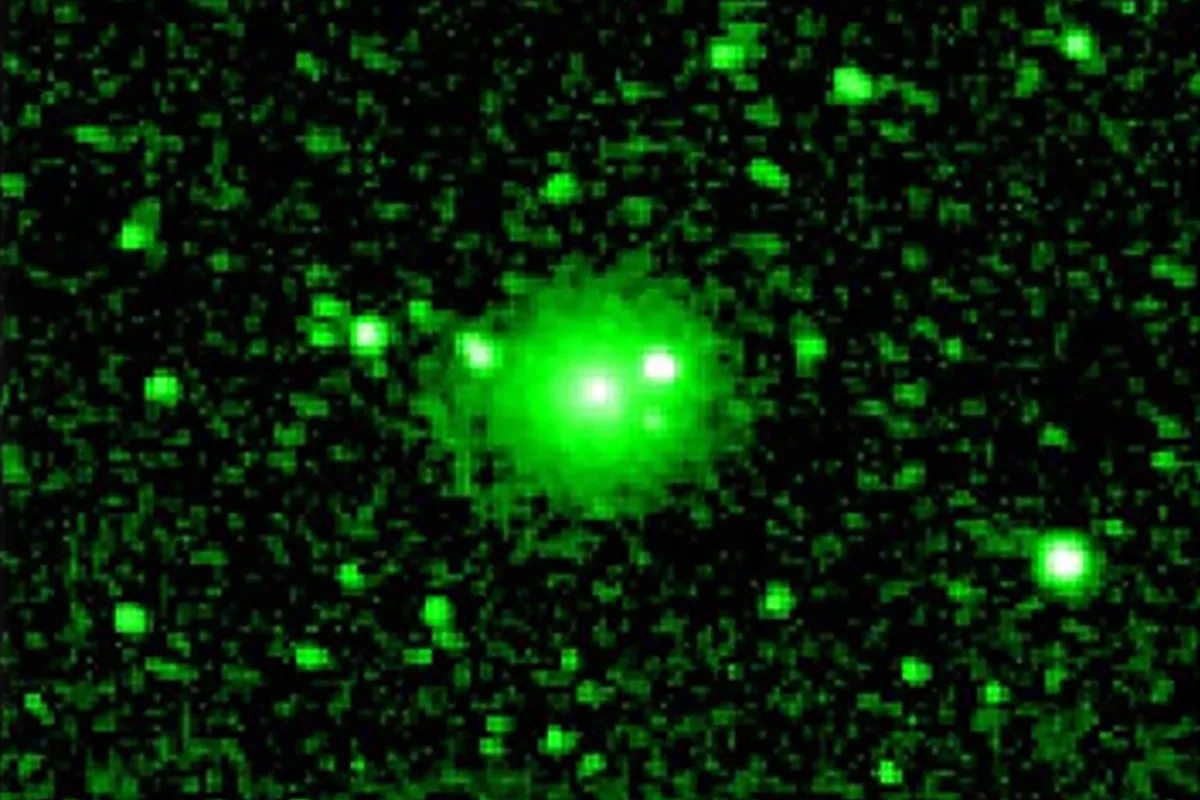
NASA’s SPHEREx space observatory has recorded a dramatic and unexpected outburst from the interstellar comet designated 3I/ATLAS, offering astronomers a rare opportunity to examine material originating from beyond our solar system. The sudden flare-up, detected in infrared wavelengths, revealed a significant surge in gas and dust emissions surrounding the comet’s nucleus.
3I/ATLAS is only the third confirmed interstellar object known to pass through our solar system, making every observation scientifically invaluable. Unlike typical comets that orbit the Sun, interstellar objects originate from entirely different star systems and travel through interstellar space before briefly visiting our cosmic neighborhood.
SPHEREx’s Infrared Eyes Capture the Explosion
The SPHEREx (Spectro-Photometer for the History of the Universe, Epoch of Reionization and Ices Explorer) mission is designed to conduct an all-sky spectral survey in infrared light. Its sensitive instruments allow it to detect molecular signatures and thermal changes invisible to optical telescopes.
During routine scanning, SPHEREx detected a sharp increase in brightness and material expansion around 3I/ATLAS. Scientists describe the event as a volatile outburst, likely triggered by rapid heating as the comet moved closer to the Sun. The heat may have caused frozen gases trapped beneath the surface to erupt violently into space.
The infrared data is expected to help researchers determine the chemical composition of the ejected material, potentially revealing differences between interstellar comets and those native to our solar system.
Unlocking Clues About Distant Star Systems
Interstellar comets act as cosmic time capsules. Because they formed around distant stars, their chemical fingerprints preserve information about planetary systems far beyond our own. By studying 3I/ATLAS’s outburst, astronomers hope to better understand the distribution of water ice, organic molecules, and other compounds in foreign star systems.
Preliminary analysis suggests the flare released a substantial cloud of dust and volatile compounds, temporarily increasing the comet’s brightness and expanding its coma. Such activity provides a direct look at subsurface material that would otherwise remain hidden.
Why This Observation Matters
The detection highlights SPHEREx’s growing role in space science. While the mission’s primary goal is to map the universe and trace cosmic history, its ability to monitor transient events demonstrates its versatility.
Researchers believe continued monitoring of 3I/ATLAS could reveal additional activity as it journeys through the inner solar system before eventually exiting back into interstellar space. Since these objects rarely pass close enough for detailed study, every dataset collected is considered extremely valuable.
A Short Visit with Long-Term Impact
Interstellar objects like 3I/ATLAS spend millions—sometimes billions—of years traveling between stars before briefly entering another system. Once its solar flyby concludes, it will continue its journey into deep space, unlikely to return.
For astronomers, however, the information gathered during this fleeting encounter may reshape understanding of planetary formation across the galaxy. With SPHEREx continuing its sky survey, scientists remain hopeful that more such cosmic visitors — and their explosive secrets — will soon be revealed.