 TECH TIMES NEWS
Highlight: How Boom-Time Profits Rewrote the Rules of Corporate Compensation
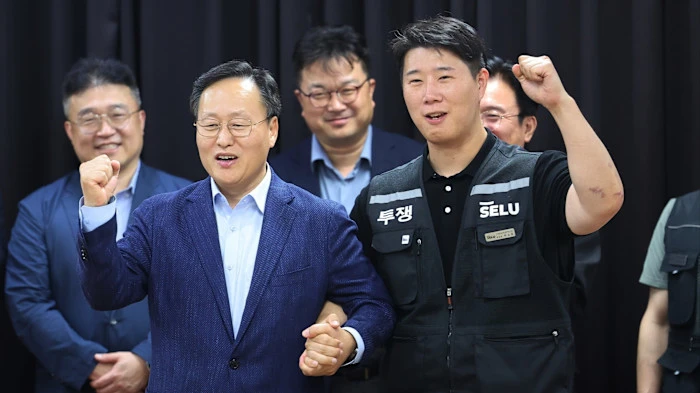
Samsung Electronics has officially closed a grueling five-month chapter of labor unrest, finalizing a landmark 10-year wage agreement that successfully averted a highly disruptive 18-day domestic strike. The finalized contract introduces a monumental shifting of corporate wealth directly into the pockets of the company’s engineering core, a move catalyzed by the global surge in artificial intelligence infrastructure. With Samsung's market capitalization crossing the $1 trillion threshold, unionized employees demanded an equitable share of the corporate windfall. The resulting contract permanently transforms how the tech giant compensates its workers, dismantling decades-old corporate pay structures.
+--------------------------------------------------------------------------+
|                      SAMSUNG LABOR AGREEMENT AT A GLANCE                 |
+--------------------------------------------------------------------------+
|  Voter Turnout: 95.5% (62,616 ballots cast out of 65,593 eligible)       |
|  Overall Approval Rate: 73.7%                                            |
|  Base Salary Increase: 4.1%                                              |
|  New Chip Bonus Structure: 10.5% of Semiconductor Operating Profits      |
|  Payout Form: Treasury Shares (distributed over a 3-year vest cycle)     |
+--------------------------------------------------------------------------+
Inside the Numbers: The Six-Figure Stock Payouts
Highlight: Uncapped Performance Incentives Bind Worker Wealth to Silicon Success
Under the terms of the newly ratified deal, Samsung has completely abolished its traditional bonus ceiling, which previously capped performance incentives at 50% of an employee's annual salary. Moving forward, the company will allocate a special semiconductor performance bonus equivalent to 10.5% of the Device Solutions (DS) division's operating profits, alongside an immediate 1.5% payout in cash.
For the roughly 78,000 workers eligible within the highly profitable semiconductor operations, the financial projections are staggering:
-
The Baseline Projections: If Samsung Electronics hits an estimated operating profit target of 300 trillion won ($200 billion) this year, a mid-level memory division employee with a base salary of 100 million won could bring home roughly 550 million won ($370,000 to $400,000) in special bonuses alone.
-
The Aggregate Picture: When combined with regular corporate profit incentives, top-tier chip engineers stand to take home upwards of 600 million won in total compensation for the year.
-
The Form of Payment: To preserve cash reserves and bind employee retention directly to long-term market valuations, these extraordinary bonuses will be paid out primarily in treasury shares, vesting incrementally over a three-year period.
The Great Internal Fracture: Semiconductor vs. Consumer Tech
Highlight: A Massive Disparity Exposes a Divided Workforce and Sparks Court Battles
While the macro-level numbers indicate a resounding victory for labor, the micro-level reality reveals a deeply fractured workforce. The agreement heavily privileges the high-margin semiconductor division while offering fractionally lower payouts to employees in the Device Experience (DX) wing—the division responsible for smartphones, televisions, and consumer home appliances.
The ballot boxes laid this demographic polarization completely bare. In the cross-affiliate Samsung Group United Union (SGUU), which is heavily dominated by semiconductor staff, a resounding 80.6% voted to ratify the contract. Conversely, within the National Samsung Electronics Union (NSEU)—which primarily represents non-semiconductor consumer electronics workers—an overwhelming 78.9% voted against the deal, with only 21.1% voting in favor.
"This deal is, at best, a mixed bag. It creates a vast incentive gap where chip workers take home up to six times more than their colleagues in other departments for the same corporate banner," notes an industry analyst.
The boiling resentment has already spilled into South Korea's legal system. A smaller faction of non-chip employees filed an emergency court injunction attempting to block the rollout of the agreement, alleging that the joint negotiation team systematically sidelined their economic interests. Though the court ultimately rejected the injunction to secure global supply chain stability, internal cultural friction remains at an all-time high.
The Broader Implications: A Ripple Effect Across East Asia
Highlight: Brain Drain Threats and Global Supply Risks Shape the Final Settlement
The immense pressure on Samsung to settle this dispute stems directly from the fierce geopolitical arms race defining modern technology. Competitors like SK Hynix have aggressively lured premium engineering talent by offering historically superior bonus structures. In the hyper-competitive global silicon landscape—where companies like Tesla and Nvidia are driving unprecedented demand for specialized AI hardware—Samsung simply could not risk a domestic talent drain to overseas firms or rival local foundries.
Furthermore, the economic stakes for South Korea made a prolonged strike unacceptable. Samsung Electronics single-handedly accounts for roughly 12.5% of the nation’s gross domestic product (GDP), and memory chips represent over a third of the country's entire export portfolio. Government mediators stepped in with sub-hour precision, helping finalize the parameters of the deal a mere 90 minutes before thousands of workers were set to walk off production lines.
Corporate Governance and Future Headwinds
Highlight: Shareholder Pushback and Capital Outlays Threaten Long-Term Margins
The historic labor compromise has quickly drawn sharp criticism from institutional investor networks. The Korea Shareholder Rights Movement Association has publicly opposed the deal, arguing that allocating un-capped fractions of billions in operating profits to employees via treasury stock dilutes equity value and requires formal shareholder resolutions.
To smooth over public and market anxieties, Samsung management accompanied the wage signing ceremony with a public apology and a pledge to invest 5 trillion won ($3.3 billion) over the next five years into a multi-tiered socio-economic ecosystem. This capital will be directed toward bolstering local tech supply chains, expanding domestic AI talent pipelines, and funding youth education.
Samsung has successfully insulated the immediate global technology supply chain from a devastating bottleneck, but the victory comes at the expense of its internal cohesion. Management now faces the daunting strategic challenge of maintaining productivity and morale across its non-chip divisions, proving that while money can avert a strike, it cannot easily bridge an systemic corporate divide.